

.jpg)
.jpg)
.jpg)
.jpg)
.jpg)
.jpg)
.jpg)
.jpg)
.jpg)
.jpg)
.jpg)
.jpg)
.jpg)
.jpg)
.jpg)
.jpg)
.jpg)
.jpg)
.jpg)
.jpg)
.jpg)
.jpg)
.jpg)
.jpg)
.jpg)
.jpg)
.jpg)
.jpg)
.jpg)
.jpg)
.jpg)
.jpg)
.jpg)
.jpg)
.jpg)
.jpg)
.jpg)
.jpg)
.jpg)
.jpg)




















Heading
Heading
Heading
Heading
Heading
Heading
Heading
Heading
Heading
Heading
Heading
Heading
Heading
Heading
Heading
Heading
Heading
Heading
Heading
Heading
Heading
Heading
Heading
Heading
Heading
Heading
Heading
Heading
Heading
Heading
Heading
Heading
Heading
Heading
Heading
Heading
Heading
Heading
Heading
Heading
Heading
Heading
Heading
Heading
Heading
Heading
Heading
Heading
Heading
Heading
Heading
Heading
Heading
Heading
Heading
Heading
Heading
Heading
Heading
Heading
Heading
Heading
Heading
Heading
Heading
Heading
Heading
Heading
Heading
Heading
Heading
Heading
Heading
Heading
Heading
Heading
Heading
Heading
Heading
Heading
Heading
Heading
Heading
Heading
Heading
Heading
Heading
Heading
Heading
Heading
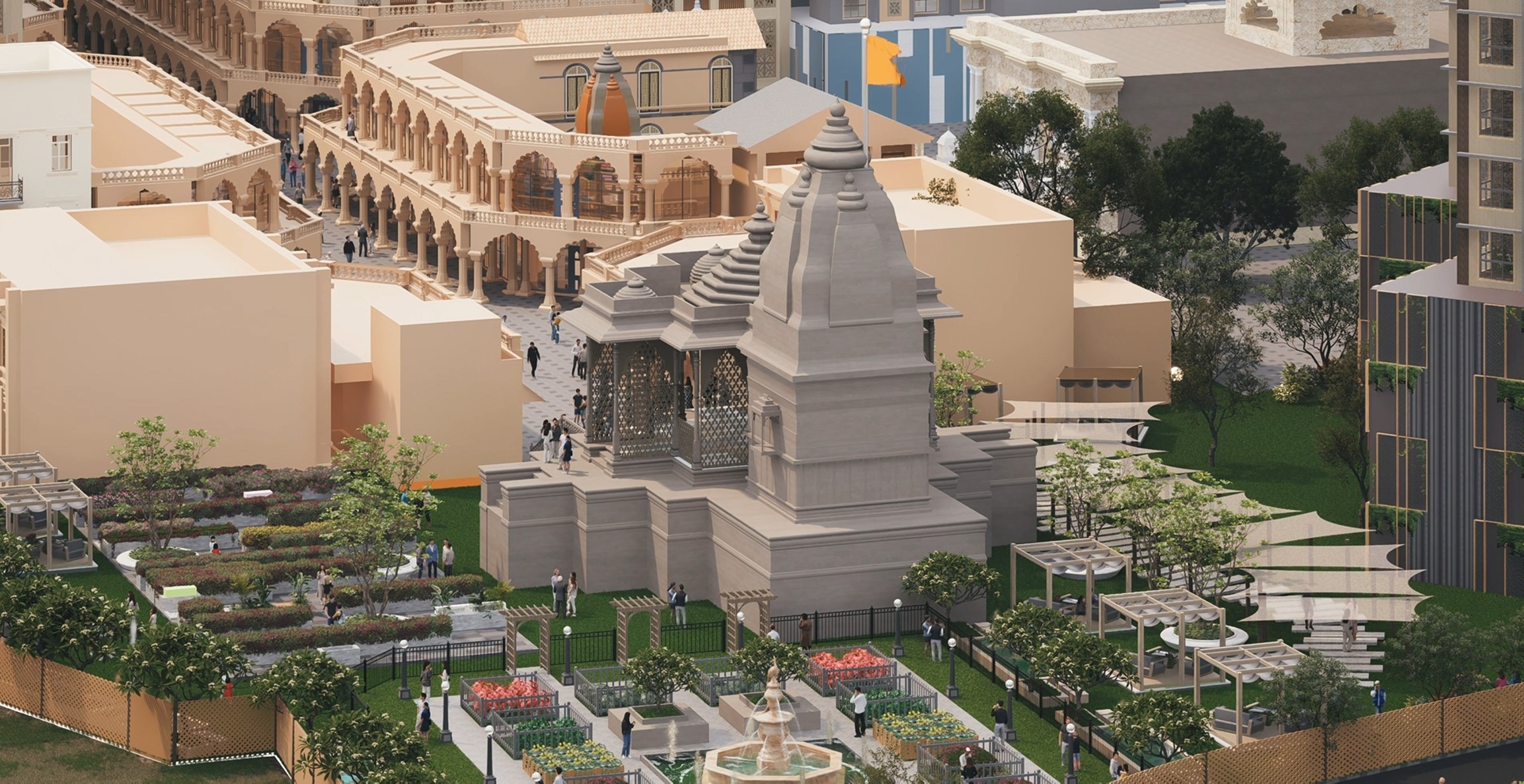
The Mahalaxmi Precinct is an ongoing spiritual development in Cumballa Hill, Mumbai, structured around one of the city's most cherished heritage temples. The project approaches the delicate task of urban precinct design adjacent to a sacred and historic structure with great spatial sensitivity, establishing a disciplined framework that elevates the temple's presence rather than competing with it.
The master plan establishes a strict spatial hierarchy in which the historic temple functions as the absolute primary anchor, governing the character, scale, and organization of every element in the surrounding urban environment. The precinct is organized as a carefully layered sequence of foreground gardens, transitional plazas, and defined built edges that create a graduated, ceremonial approach toward the sacred core. A formal landscape axis, anchored by a central water feature, reinforces the overall symmetry of the composition and channels pedestrian movement with quiet directional clarity toward the temple. The immediate foreground is articulated exclusively with low-profile architectural elements, a deliberate restraint that ensures the heritage structure retains its unobstructed visual dominance from all primary approach angles.
Peripheral buildings around the precinct employ a restrained, contemporary architectural language, with geometric, screened facades and integrated vertical landscaping. These modern insertions are designed to function as a neutral, disciplined backdrop, framing the temple without ever competing with it for visual or spatial attention. The inner precinct is strictly pedestrianized, with vehicular movement confined entirely to its outer boundaries, establishing a serene and genuinely protected urban enclave around the sacred site. The Mahalaxmi Precinct demonstrates that the most respectful act of architectural design in proximity to a heritage structure is, ultimately, the most disciplined act of restraint: a design that exists to serve and elevate what already exists rather than to announce itself.

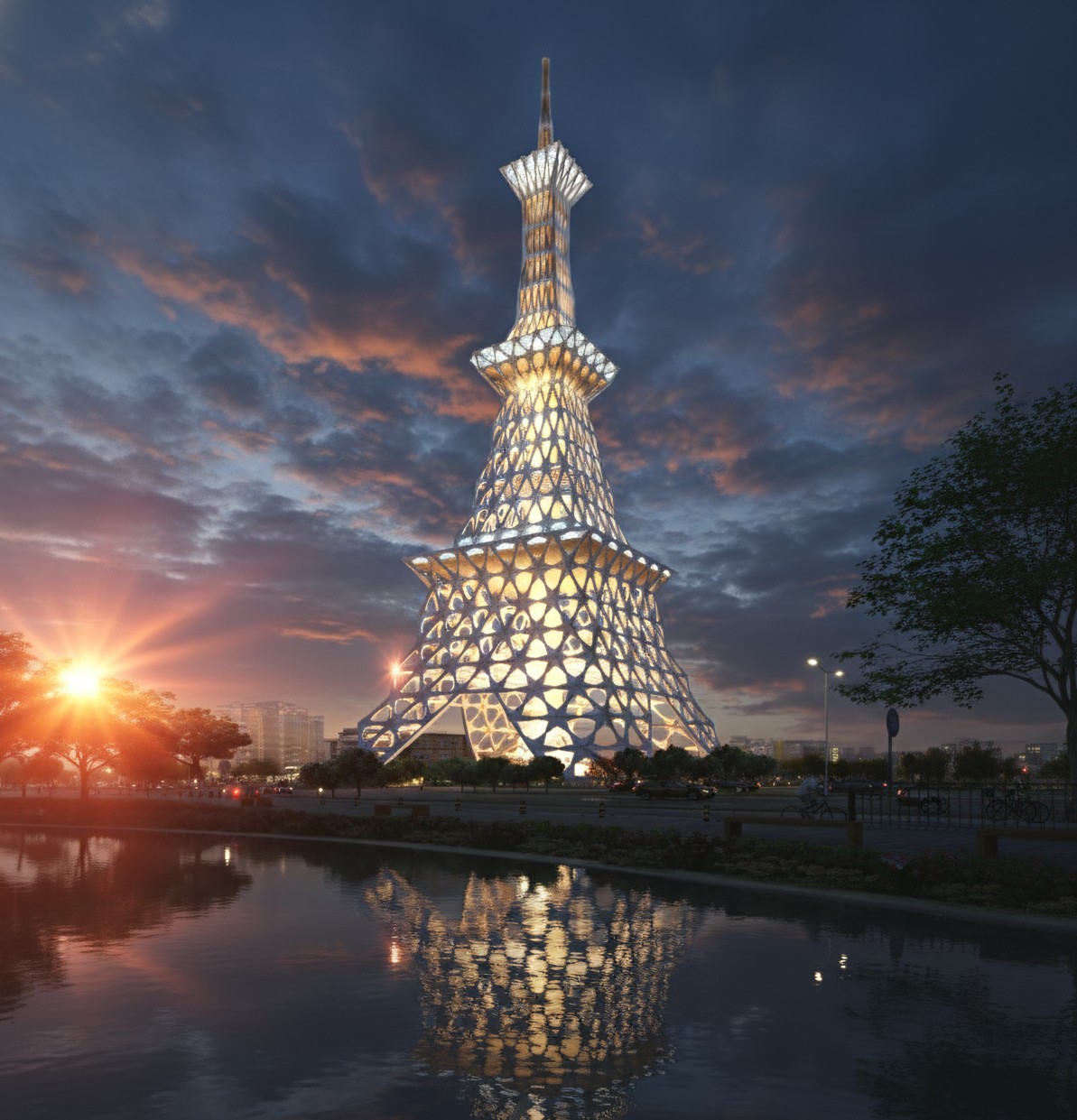
Iconic TV Tower 1 & 2 is a conceptual vertical landmark project presenting two distinct and radically different high-capacity telecommunications tower designs, each engineered to dominate the urban skyline through pure structural and geometric ambition.
Iconic TV Tower 1 pursues the logic of extreme verticality to its absolute limit. A hyper-slender continuous structural core provides relentless upward thrust, standing alone against the skyline as an undiluted expression of height and structural innovation. Near the pinnacle, a multi-level transmission and observation pod cantilevers dramatically outward from the central shaft, featuring a faceted, aerodynamic geometry enclosed in a sleek glass and metallic skin that gives the tower a complex, technologically assured crown. The lower shaft is deliberately tectonic, exposing the intricate structural bracing systems that stabilize the tower at its extraordinary height, making the engineering itself the aesthetic statement. A multi-story podium at the base anchors the tower firmly to the ground plane, housing expansive public concourses and exhibition spaces that bring civic life to the tower's feet.
Iconic TV Tower 2 takes a fundamentally different approach, pursuing dynamic form over pure vertical thrust. The architecture presents a continuously rotating floor plate configuration that generates a fluid, helical envelope of genuine sculptural complexity. This spiraling form is wrapped in an articulated diagrid structural exoskeleton that explicitly celebrates the building's rotational geometry, with expansive floor-to-ceiling glazing sitting behind the external framework to maximize panoramic views while mitigating direct solar gain. An aggressively angled, asymmetrical crown profile gives the tower a distinctive and immediately recognizable skyline signature. Rather than a conventional podium, Tower 2 meets the ground through a massive structural void that exposes the primary load-bearing columns and creates a dramatic, open-air public atrium at the building's base. Both towers share an uncompromising commitment to geometric complexity and structural bravado, each making the unmistakable case that a telecommunications tower can be, without qualification, a work of architecture.
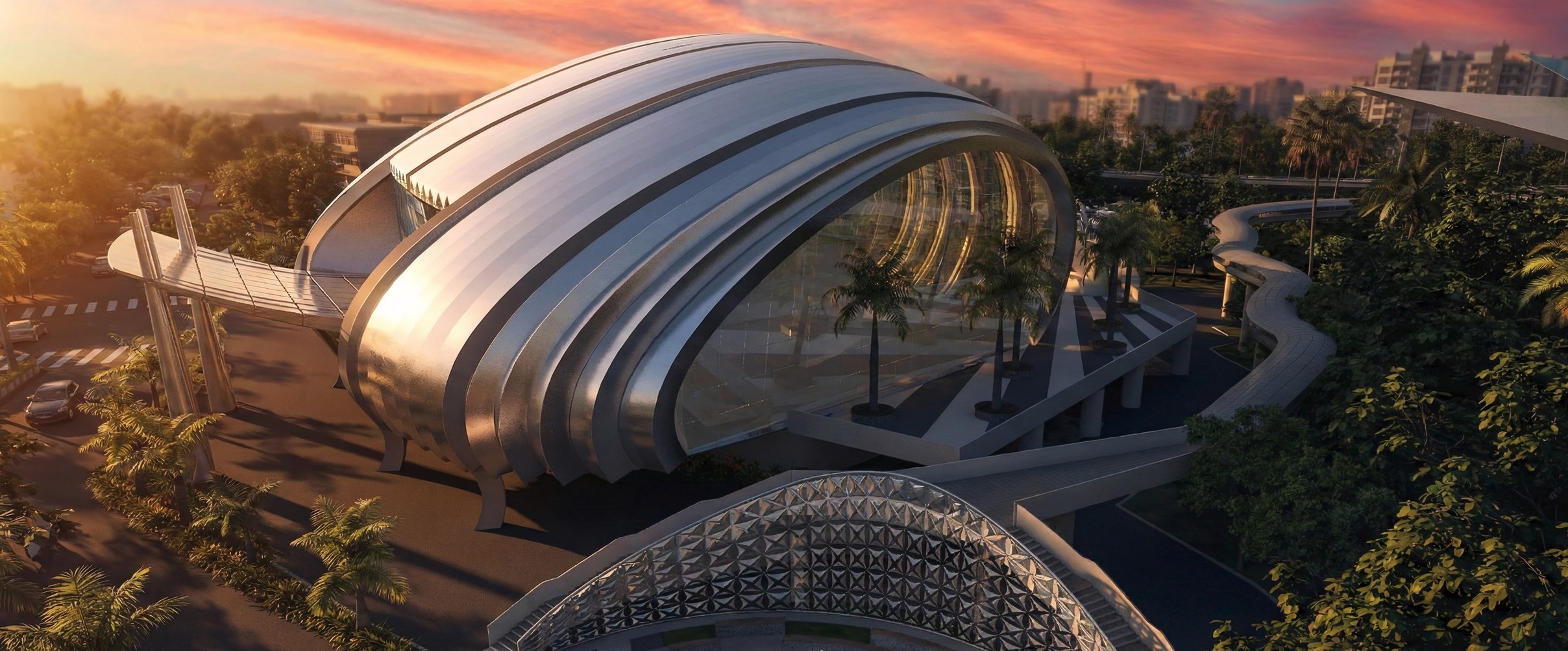
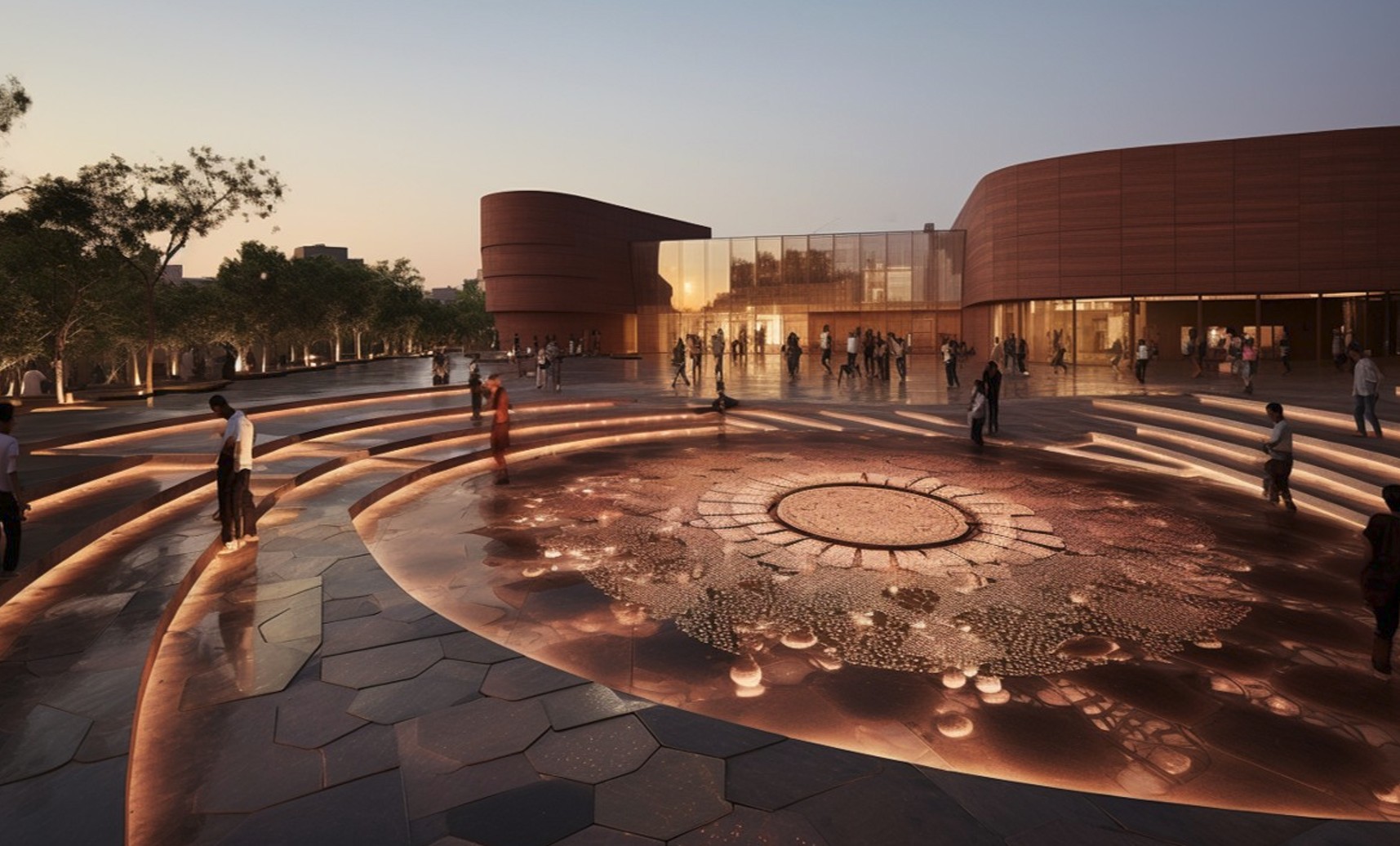
Balgandharva Rangamandir is a conceptual performing arts facility in Pune, Maharashtra, designed to function as a major cultural landmark within the city's civic fabric. The project approaches the performance venue typology with genuine architectural ambition, producing a building that is as compelling to experience from the street as it is from within the performance hall itself.
The complex is anchored by a central auditorium core, the spatial and programmatic heart of the entire development. This primary volume is enveloped by a massive, curvilinear acoustic shell that dictates the building's highly dynamic external form, its geometry driven entirely by the technical requirements of superior acoustic performance, a design decision that gives the building a distinctive and honest formal expression rooted in function. Continuous, fluid horizontal banding wraps around the entire structure, elegantly tracing and emphasizing its sweeping curvature and reinforcing the sense of a building in constant, graceful motion. A grand, multi-level glazed foyer functions as a transparent lantern at the building's primary face, making the internal public circulation and vibrant pre-show activity fully visible from the street, animating the civic frontage and drawing the city's gaze inward.
The entrance sequence is announced by a sweeping, cantilevered canopy projecting over a broad civic plaza, providing generous shelter and creating a dynamic, protected threshold that scales easily from the intimate to the ceremonial depending on the event within. The material palette sets up a rich and deliberate contrast between sleek metallic exterior cladding and warm, timber-lined interior surfaces glimpsed through the glazing, a pairing that beautifully communicates the transition from the public urban realm into the intimate world of performance. The master plan establishes a clear and efficient spatial hierarchy: generous public zones and foyers manage large audience flows and distribute them smoothly into the performance core. Loop circulation, strong internal sightlines, and carefully integrated transitional spaces ensure that the building functions both as a highly activated public cultural space and as a world-class venue for the performing arts.
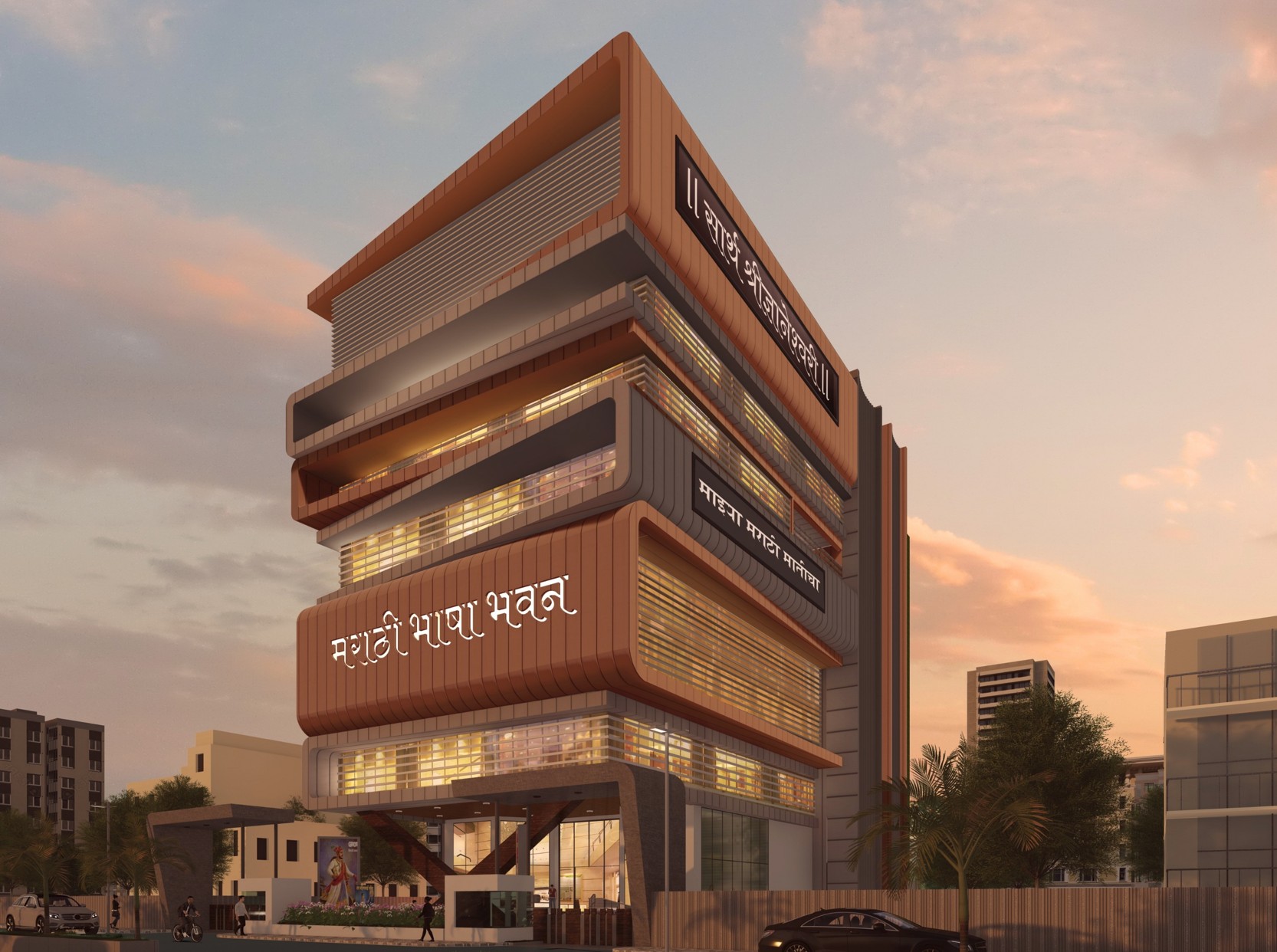
Marathi Bhasha Bhawan is a conceptual cultural institution designed as a formal competition entry in Santacruz East, Mumbai, envisioned to celebrate the Marathi language and its rich, centuries-deep cultural heritage. The architecture brings a bold and thoroughly contemporary presence to the project, one that is deliberately designed to stand out as a fresh, assertive intervention against Mumbai's predominantly Art Deco architectural context.
The building's conceptual form draws direct inspiration from a stack of books, a powerful and legible visual symbol of knowledge, literary tradition, and the accumulated cultural weight that the institution is meant to celebrate. The massing is realized through a bold, contemporary strategy of deep, dramatic cantilevers and pronounced vertical fins that create a highly textured, rhythmic facade of considerable sculptural energy. The building envelope is a complex and thoughtfully composed layering of solid, textured panels and recessed, full-height glazing that ensures a dynamic interplay of light and shadow across the elevation throughout the day. A multi-story entrance portal carves a generous, sheltered void into the primary volume, establishing an inviting and clearly legible public threshold that leads into active civic plazas and open, transparent lobbies below.
The front facade is elegantly crafted to capture the natural dynamism and movement of the Arabian Sea, offering carefully optimized vantage points across Marine Drive, making the building as much a framed viewpoint as it is an object to be viewed. Sequentially stepping elevated green terraces soften the building's robust, assertive form as it rises, introducing welcome greenery at every level. A disciplined structural grid, controlled openings, and a clearly organized circulation framework ensure that the building functions as a genuinely accessible and engaged public cultural interface. Marathi Bhasha Bhawan carries the ambition to be both a civic monument and a living cultural destination, and its architecture commits to both without compromise.
Gandhi Srushti is a conceptual, narrative-driven institutional development proposed as a world-class, 90-acre master-planned campus in Wardha, Maharashtra, dedicated to commemorating the life, teachings, and enduring legacy of Mahatma Gandhi. The project is conceived as a comprehensive cultural, educational, and recreational destination of national significance.
The architecture adopts an intricate, highly experiential spatial approach, with low-slung, interconnected pavilions organized around a central pedestrian promenade that functions as the organizing spine of the entire campus. The roofs are highly articulated throughout, utilizing dynamic, folded planes and extensive skylights to introduce beautifully diffused natural light into the thematic exhibition spaces below. Building envelopes employ a considered combination of textured masonry, expansive structural glazing, and intricately patterned solar shading screens, creating facades of depth and warmth. The overarching planning concept is profoundly chronological: the campus physically translates Gandhi's life journey into spatial form, guiding visitors through a curated sequence of spaces that unfold progressively and intentionally. The site is organized into five primary zones, covering Culture and Education, Entertainment and Tourism, Hospitality and Commerce, Ecology and Recreation, and Infrastructure and Utility, each with its own distinct character while remaining part of a unified, cohesive whole.
Key immersive attractions include a wax museum, a 1,000-year history gallery, a Charkha to Chandrayaan pavilion, 6D theatres, and an adventure park. The campus also integrates a Ram Mandir, premium hotel accommodations, and a deeply symbolic museum uniquely designed in the shape of the map of India. The central procession terminates at a massive, free-spanning tensile structure that shelters a grand communal gathering plaza, giving the journey a powerful spatial conclusion. Numerous standalone sculptural elements and formalized landscaping are woven throughout the site to reinforce the sequential narrative. Gandhi Srushti is architecture as storytelling at a scale where built form, landscape, and movement collectively become the medium through which an irreplaceable human legacy is kept vibrantly alive.
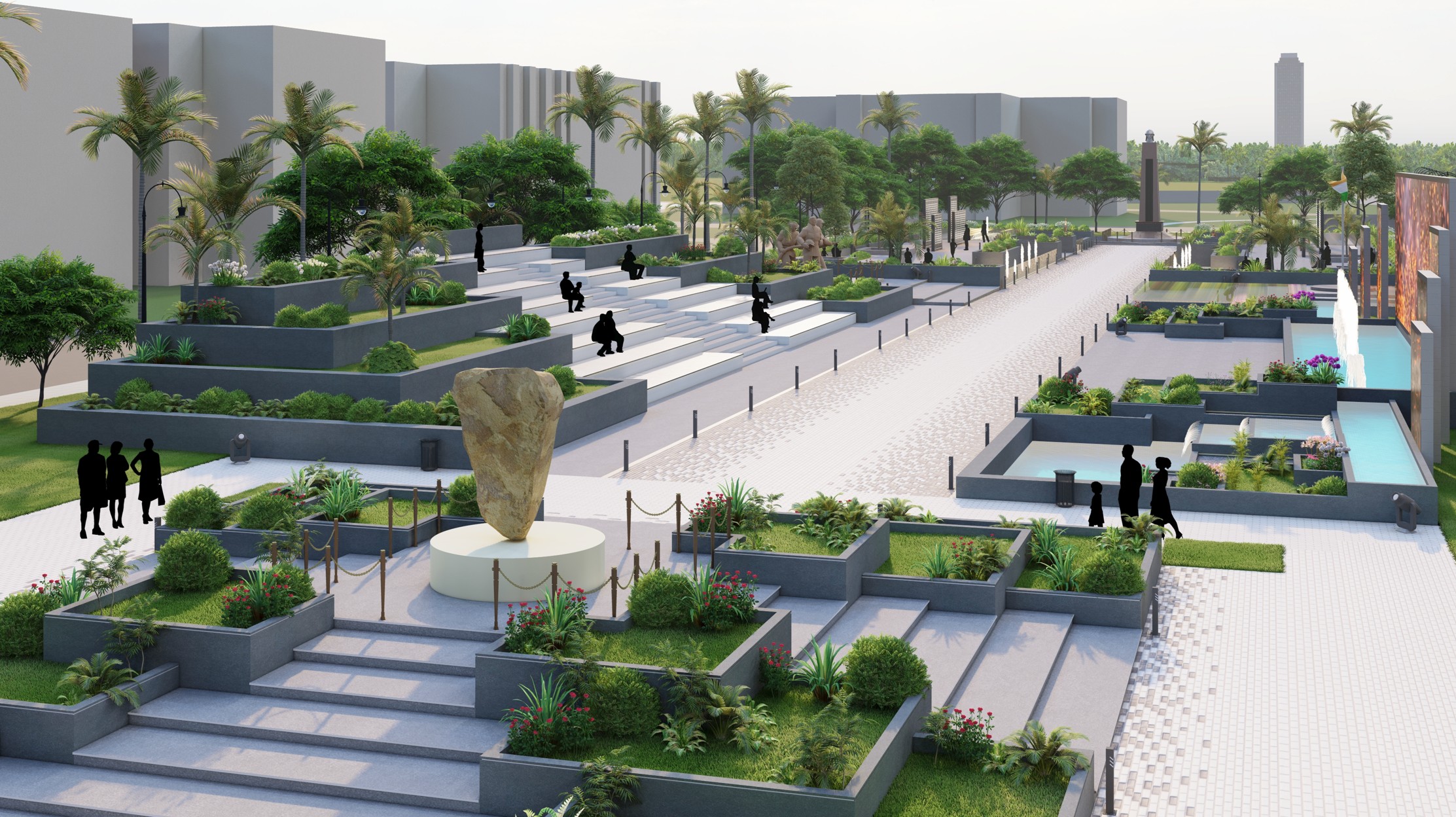
The National Fire Service Memorial is a proposed conceptual development in Nagpur, Maharashtra, designed to honor, in permanent architectural form, the fire service personnel who gave their lives in the line of duty. The project approaches memorial architecture with the seriousness and emotional precision the subject demands, deploying a language of austerity, raw materiality, and carefully structured spatial sequence to create an environment of genuine contemplative power.
The memorial is anchored by a central, towering obelisk named The Flame of the Brave, a vertical form that tapers aggressively toward the sky, serving as both the spatial and symbolic focal point of the entire development. This monument rises from a vast, starkly paved ceremonial plaza, and from it, radial pathways extend outward in all directions, representing the far-reaching impact of fire service across the city and guiding visitors through a defined commemorative sequence with quiet intention. Heavy, angular concrete retaining walls frame the primary procession route, creating a sense of enclosure and focused attention as visitors approach the central monument. A shallow, expansive reflecting pool surrounds the base of the obelisk, functioning as a continuous mirror that amplifies its verticality and introduces a moment of still, reflective water into an otherwise solid and austere material world.
The architectural material palette is composed with deliberate symbolic intent: exposed concrete, oxidized metal, and flame-textured stone are brought together to create a sensory dialogue between destruction and remembrance that is simultaneously raw and deeply moving. An interpretive gallery woven into the memorial chronicles the heroic stories of those being honored, providing education and narrative context alongside the contemplative silence of the plaza. The design carefully isolates the memorial from the surrounding urban context, creating a protected, introverted space where the visitor is drawn away from the city and into a moment of focused reflection. The National Fire Service Memorial is architecture that takes its commemorative duty with absolute conviction.
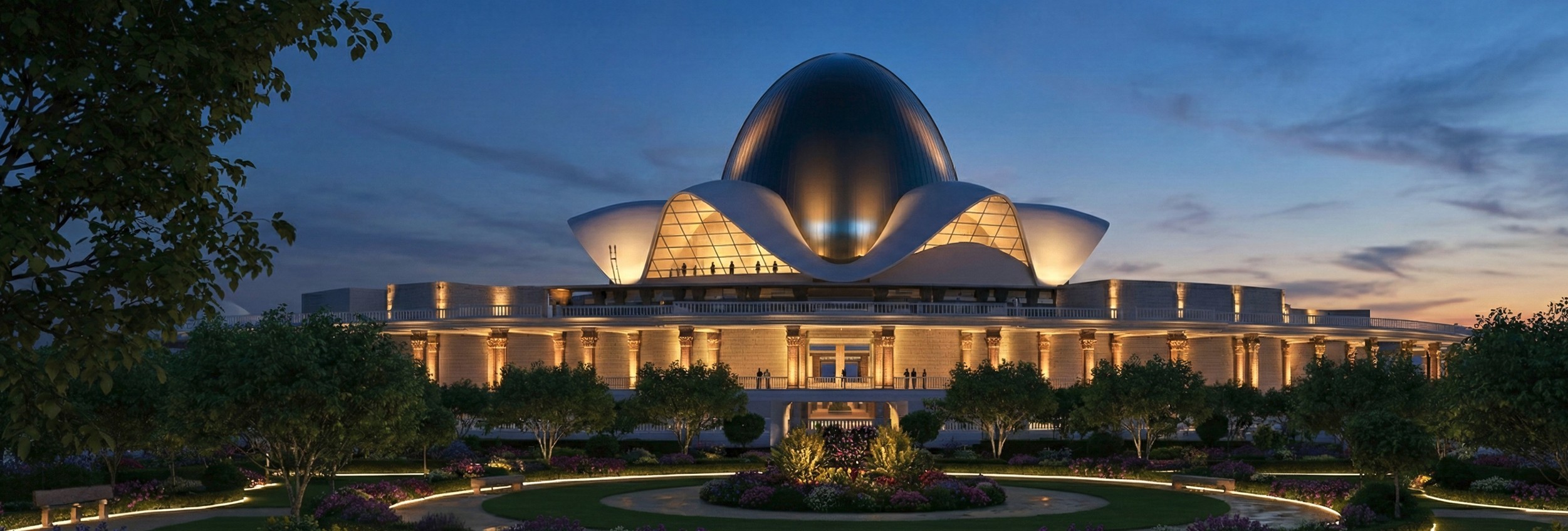
Anubhava Mantapa is a conceptual institutional complex proposed in Basavakalyan, Karnataka, conceived as an immersive Experience Pavilion and a profound architectural homage to the original 12th-century Anubhava Mantapa established by Basavanna, widely recognized as the world's first religious parliament. The design carries the full weight of that historical responsibility, translating the core principles of the Sharana Philosophy into physical form through an architecture of monumental scale, formal authority, and deep symbolic intent.
The project employs a rigorous neoclassical architectural language defined by strict symmetry, carefully controlled proportions, and a monumental scale that projects civic authority and historical permanence in equal measure. The massing centers on a massive, dominant dome structure housing a vast internal rotunda, flanked on either side by sprawling, linear administrative wings that extend the composition outward with a measured, ceremonial grandeur. The facades are heavily and richly articulated with grand colonnades, decorative cornices, and pronounced rusticated bases, creating elevations of considerable depth and visual weight that resonate with the architectural traditions of great institutional buildings across history. A monumental, elevated entrance portico, accessed via a sweeping formal staircase, serves as the primary ceremonial threshold, establishing the gravity and significance of the institution before the visitor has even entered.
The building envelope is clad in extensive stone, projecting a sense of enduring historical permanence. The intricately detailed central dome serves as a prominent skyline identifier, visible from a considerable distance and functioning as the symbolic apex of the entire composition. The site plan reinforces all of this with axial procession routes, geometric lawns, and symmetrical water features that guide movement with ceremonial deliberateness. Anubhava Mantapa is architecture conceived as an act of cultural memory, where every spatial decision serves the larger purpose of honoring and keeping alive a foundational moment in Indian intellectual and spiritual history.
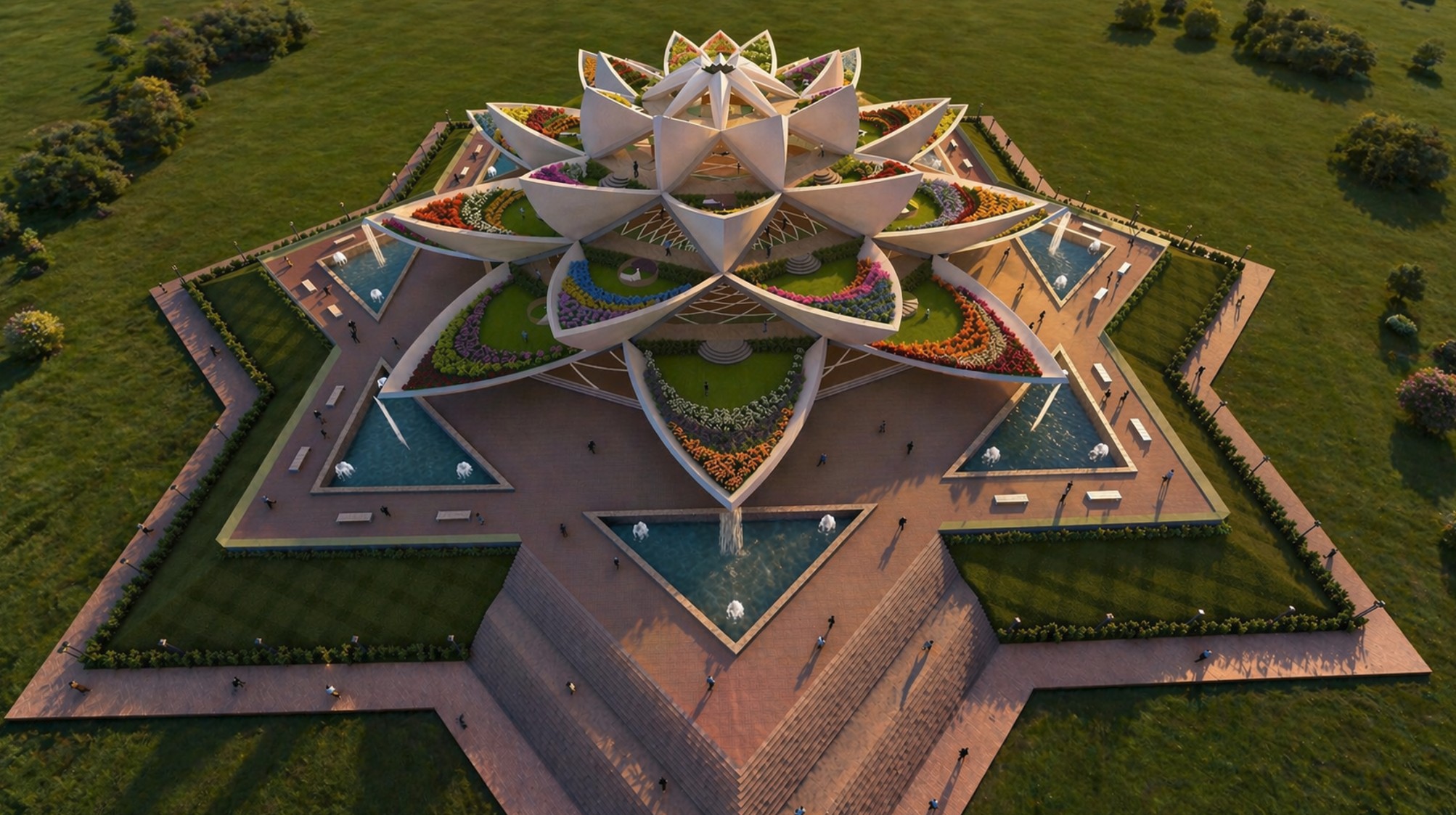
Kausum - Garland of India is a conceptual civic development in Ahmedabad, Gujarat, envisioned as a monumental, deeply symbolic urban landmark. The project is aptly named the Garland of India, and the architecture delivers on that poetic ambition through an extraordinary formal concept rooted in symbolic geometry, structural innovation, and genuine civic generosity.
The primary design strategy employs a highly irregular, non-rectilinear building footprint that completely rejects conventional architectural planning norms. The structure is defined by an intricate structural grid and exoskeleton system, from which a sweeping, aerodynamic canopy curves elegantly outward to form an expansive, sheltered public plaza, the architectural equivalent of open arms extending to the city. This monumental roof plane is realized through a complex diagrid framework, clad in a sleek, seamless envelope that integrates internal corridors and vertical connections to ensure seamless movement across all levels. The facades are remarkably porous, deploying massive, uninterrupted curtain walls that dissolve the boundary between the thematic exhibition spaces within and the surrounding landscape, making the distinction between inside and outside a matter of intention rather than enclosure.
Surrounding and embracing the core structure are striking, floral-themed landscaped petals that interact fluidly with a geometric network of reflecting pools and terraced pathways, giving the ground plane the layered, ornamental quality that the development's name evokes. A towering, sculptural focal element anchors the master plan as a powerful vertical counterpoint to the sprawling horizontal spread of the structure. The design prioritizes continuous spatial flow and community interaction, incorporating an inviting public plaza and a dedicated congregation space that collectively make Kausum not merely a building but a civic experience of genuine scale and symbolic resonance.
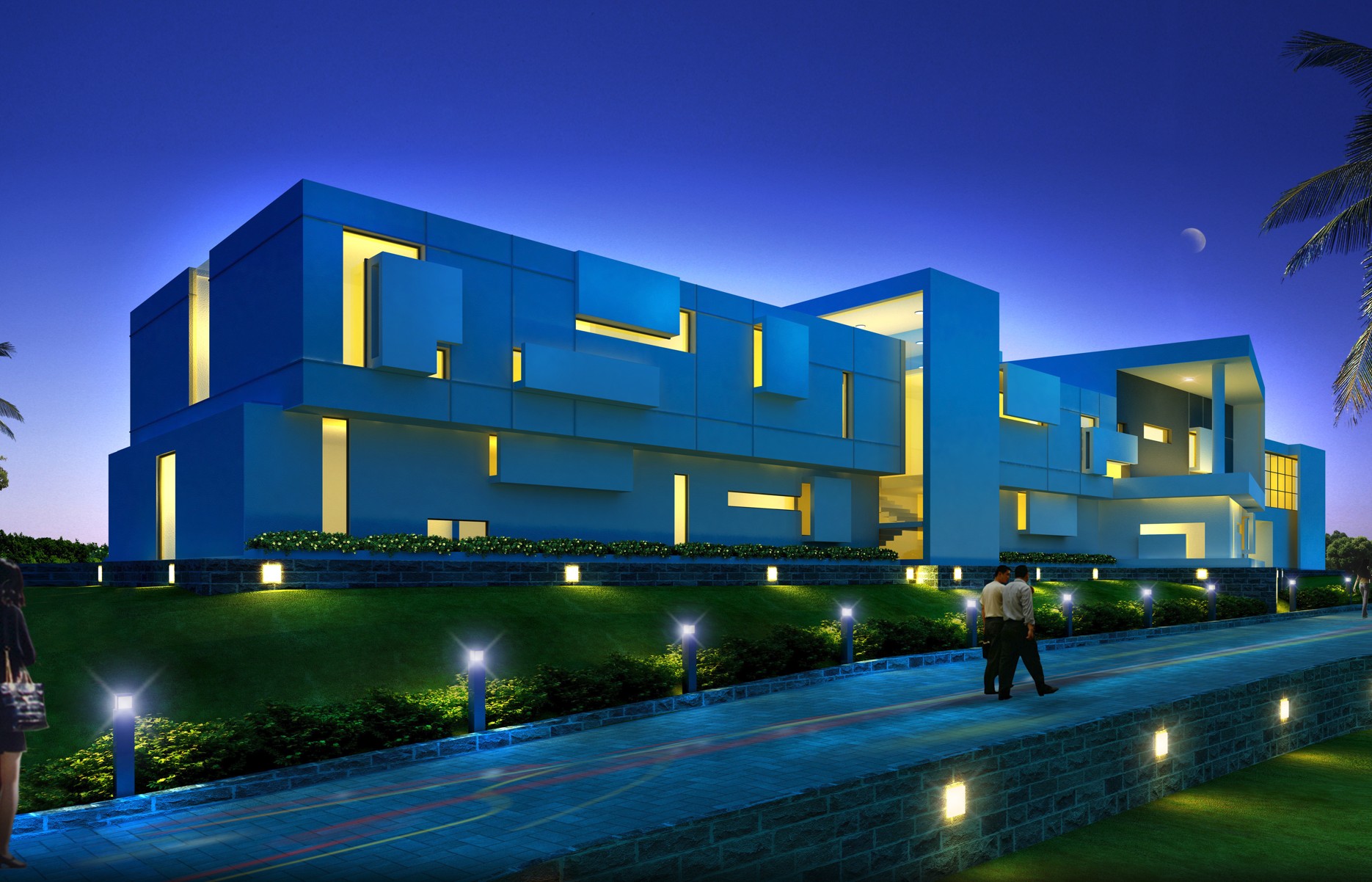
Sunshine Wellness Centre is a completed 2,044-square-meter inpatient detoxification facility for Dr. Goel in Vasai, Maharashtra. The project is a genuinely progressive contribution to healthcare architecture, consciously departing from the institutional rigidity of conventional clinical design in favor of a spatial philosophy that places psychological recovery and restorative comfort at the very center of every decision.
The facility embraces a hospitality-driven architectural language, with the massing utilizing a fluid, V-shaped layout composed of low-rise, interconnected volumes that immediately communicate a human scale and a welcoming openness absent from most healthcare typologies. Sweeping horizontal bands and expansive curved glazing wrap the primary elevations, maximizing panoramic views into the surrounding landscape and drawing abundant natural daylight deep into the interior spaces. Sophisticated, operable louver systems are integrated throughout the facade, providing dynamic and responsive light control alongside the patient privacy that an inpatient recovery environment requires. The entrance is announced by a dramatic, cantilevered pavilion that creates a hotel-style arrival sequence, thoughtfully integrated with landscaping and water elements, establishing a calm and reassuring tone from the very first moment of arrival.
Inside, the functional layout is organized as a continuous, intuitive loop that guides movement effortlessly between treatment zones, communal spaces, and private recovery areas, minimizing the disorientation that institutional environments can generate. Tranquil, light-filled courtyards sit at the heart of the facility, functioning simultaneously as organizational elements and as therapeutic healing gardens. Landscaped terraces and a dedicated yoga and meditation center at the rear of the development serve as seamless extensions of the clinical therapy zones, fully embodying the project's holistic approach. Sunshine Wellness Centre demonstrates that advanced medical infrastructure and genuinely restorative spatial experience are not competing ambitions but deeply complementary ones.
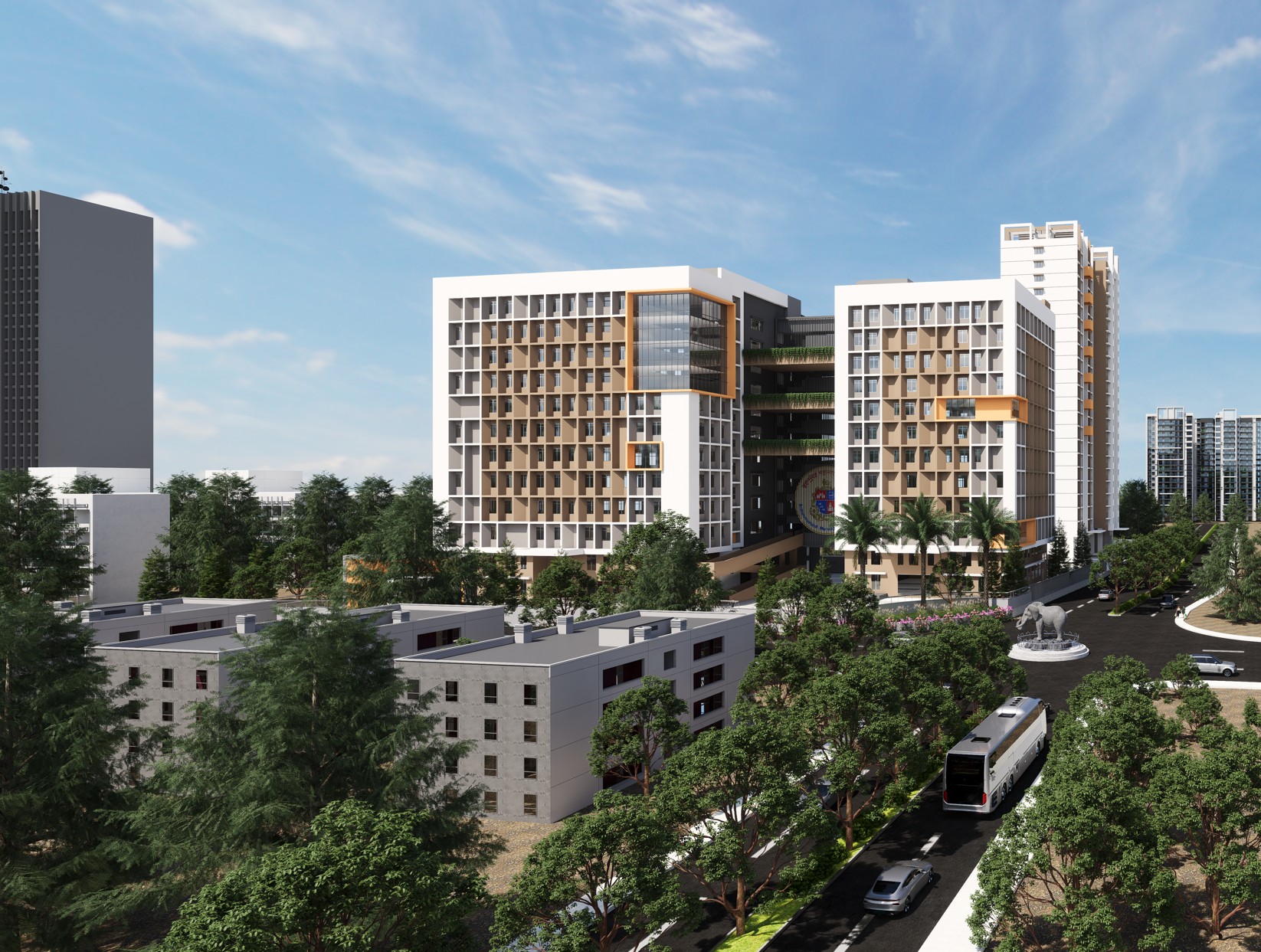
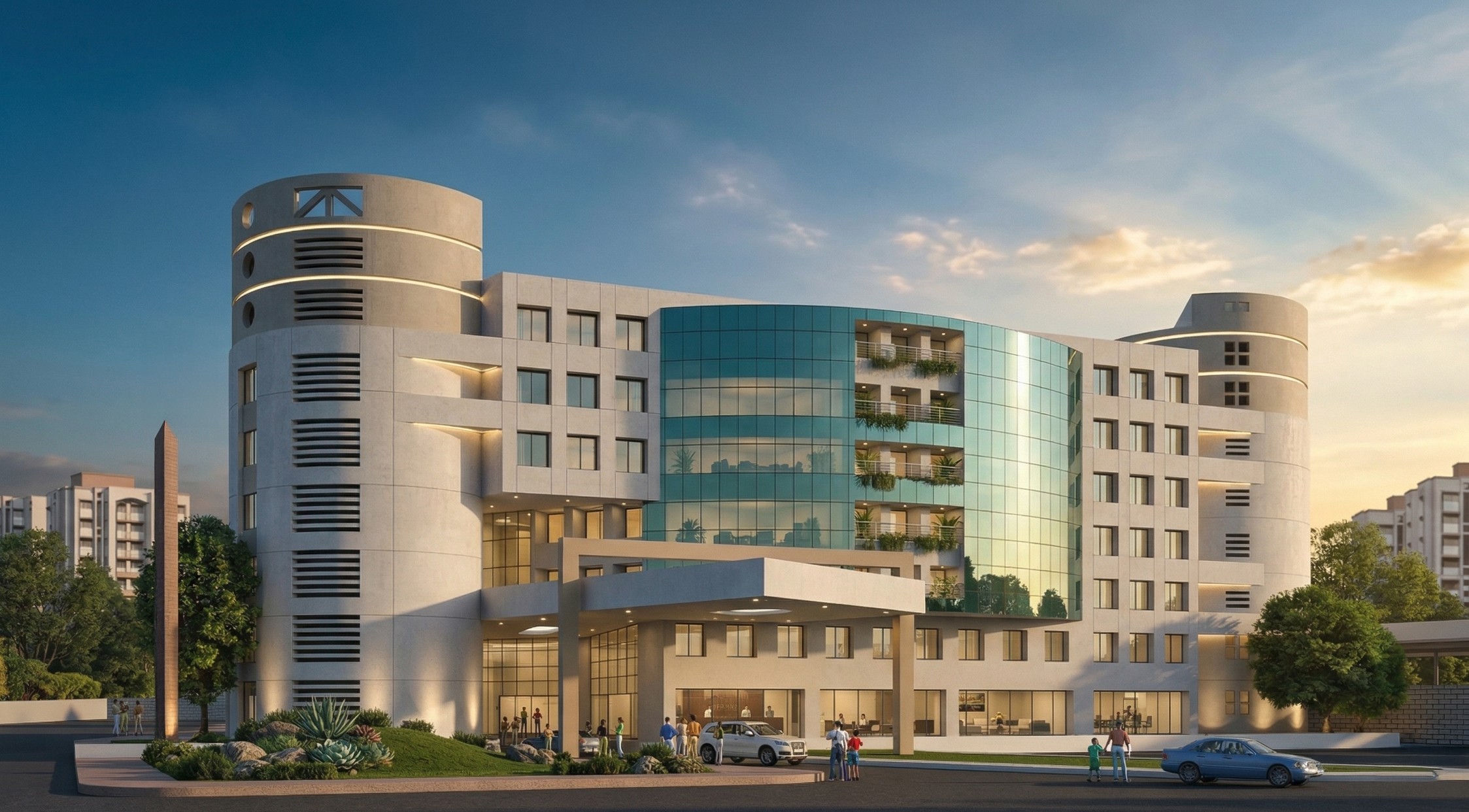
Siddharth Hospital is an ongoing 52,300-square-meter multi-functional healthcare facility in Goregaon West, Mumbai, developed for the BMC. The project takes the healthcare typology beyond purely utilitarian architecture, delivering a hospital that projects a genuinely sophisticated civic presence while remaining absolutely grounded in the operational demands of a high-capacity public medical institution.
The architecture presents a monumental, continuous facade defined by a sprawling, articulated mass with subtle geometric shifts that break down its considerable scale and prevent the building from reading as an undifferentiated institutional slab. The building envelope features a dynamic interplay of solid, textured panels and expansive, tinted curtain wall glazing, producing a facade of depth and visual interest that establishes a confident, modern civic character appropriate for a major public health facility. A prominent, multi-story atrium creates a grand, naturally illuminated central void within the building, functioning as the primary orientation and circulation hub for patients, visitors, and staff, and critically reducing the disorientation and stress that complex healthcare environments so often generate. Deeply recessed, sheltered pedestrian arcades at the ground level protect the building's entrances and clearly delineate emergency portals from general access points, ensuring that the most critical circulation decisions are made effortlessly.
The built form is composed of interconnected blocks arranged to create internal courtyards, allowing natural light and fresh air to penetrate deep into the facility, a significant environmental and psychological benefit for patients recovering within. Distinct pedestrian pathways for patients, staff, and services are rigorously maintained throughout the planning, minimizing overlap and ensuring the smooth, conflict-free operation that medical environments depend upon. Entry points are clearly defined, leading into the central distribution atrium that organizes all onward movement across departments. Strategic vertical fins across the extensive glazed surfaces provide passive solar shading, while the sterile, highly engineered aesthetic is consistently tempered by abundant natural light and considered spatial clarity. Siddharth Hospital is a building where every design decision is ultimately in service of human wellbeing.
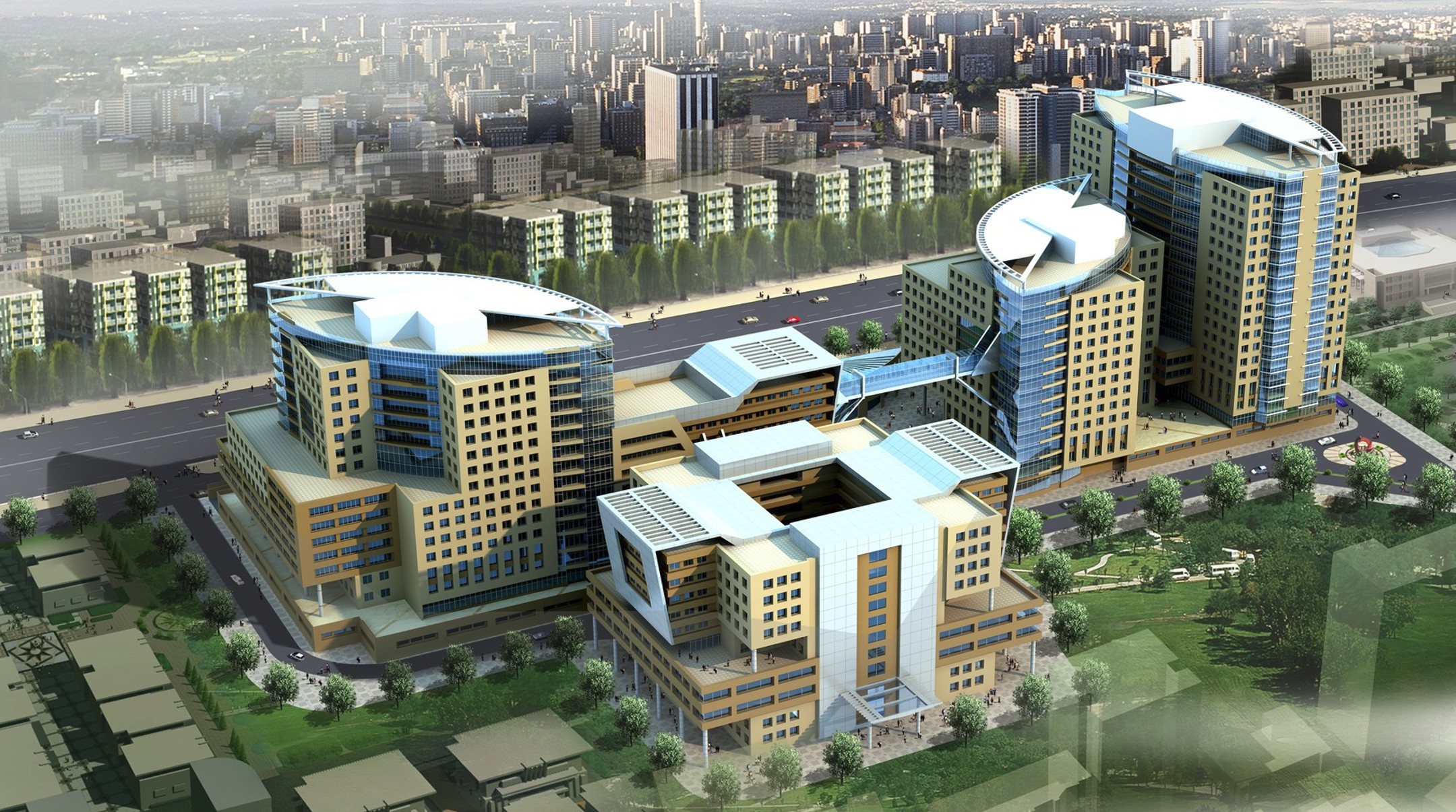
Kasturba Hospital is a proposed healthcare development for the MCGM Mumbai at Arthur Road, Mumbai, spanning 139,732 square meters. The project approaches the demanding requirements of intensive public medical infrastructure with a design philosophy rooted in functional rigor, operational clarity, and a dignified institutional presence that communicates stability and care from the exterior inward.
The architecture features a robust, multi-story rectilinear block organized around centralized clinical cores, a planning strategy specifically chosen to minimize internal travel distances and optimize the operational efficiency of the building's complex medical workflows. The facade is defined by a rigid, repetitive grid of fenestration, carefully designed to ensure standardized, predictable daylighting across patient wards, consultation rooms, and clinical areas, supporting the well-being of both patients and medical staff throughout the day. A pronounced, horizontal entrance canopy marks the primary arrival zone, scaled and positioned to accommodate the high volumes of vehicular drop-offs and emergency access that a major public hospital demands, with dedicated emergency portals clearly delineated from general public entry.
The building envelope employs durable, low-maintenance cladding systems specifically suited to the demanding hygienic and operational requirements of a healthcare environment. Roof-level mechanical plants and service infrastructure are organized with care and concealed behind stylized architectural louvers, maintaining the building's composed institutional character. The planning maintains a strict separation of movement between patients, staff, and essential services, ensuring that the facility operates with the efficiency and predictability that critical healthcare infrastructure requires. The overall aesthetic is stoic, highly disciplined, and institutional, projecting an image of stability, hygiene, and absolute functional reliability. Kasturba Hospital is a building designed first and foremost to serve, and the architecture makes no compromise on that commitment.
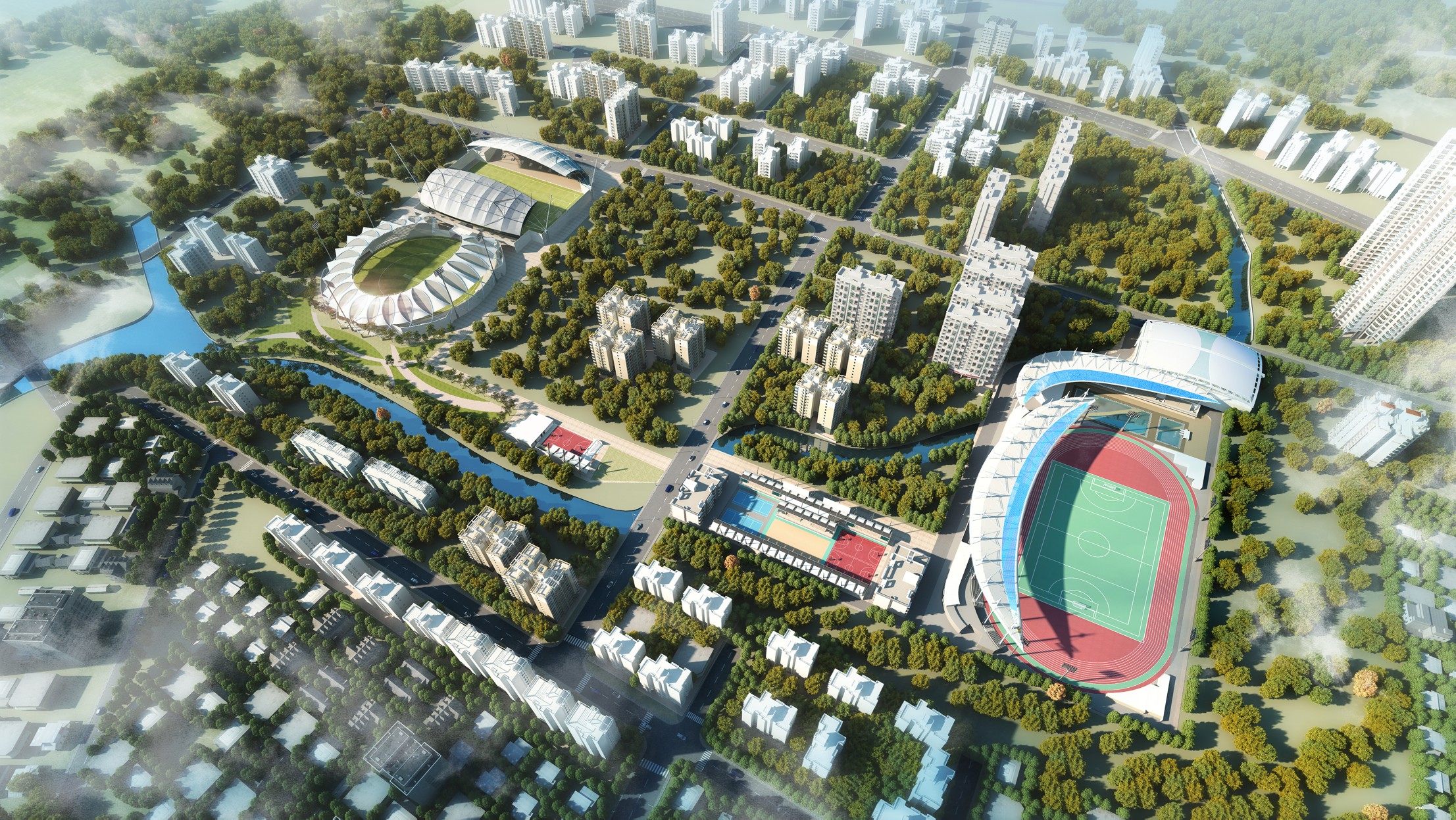
The Balasaheb Thakare Stadium is a proposed large-scale sports infrastructure project by the MCGM in Borivali West, Mumbai, sprawling across a generous 54-acre site. The project is conceived not merely as a sports facility but as a comprehensive urban sports park, embedding monumental athletic infrastructure within a rich landscape framework that serves the broader community well beyond match days.
The master plan centers around a multi-purpose sports arena featuring a highly expressive, long-span roof structure as its defining architectural element. The stadium's canopy is designed as a series of repeating, sculptural, leaf-like segments that arc elegantly over the continuous seating bowl, providing extensive shading for spectators while establishing a striking, organic silhouette that becomes a recognizable presence on the Borivali skyline. The surrounding complex is organized into clearly defined functional zones, including secondary athletic fields, aquatic centers, and organized residential clusters, all connected by a formalized network of pedestrian promenades, water channels, and dense landscaping that together create an integrated urban park environment.
The spectator experience is given careful consideration throughout the planning. Seating is organized within a continuous bowl that ensures unobstructed sightlines from every position, while spectator movement is distributed efficiently along peripheral concourses that connect entry points to seating zones with clarity and minimal congestion. Structural elements are expressed rhythmically along the perimeter, reinforcing the scale and order of the arena's perimeter edge. The outer facade integrates access points and service functions within a controlled, coherent architectural language that maintains the stadium's monumental character at the street level. Balasaheb Thakare Stadium represents an ambitious vision for publicly accessible sports infrastructure at its most civic and community-minded.
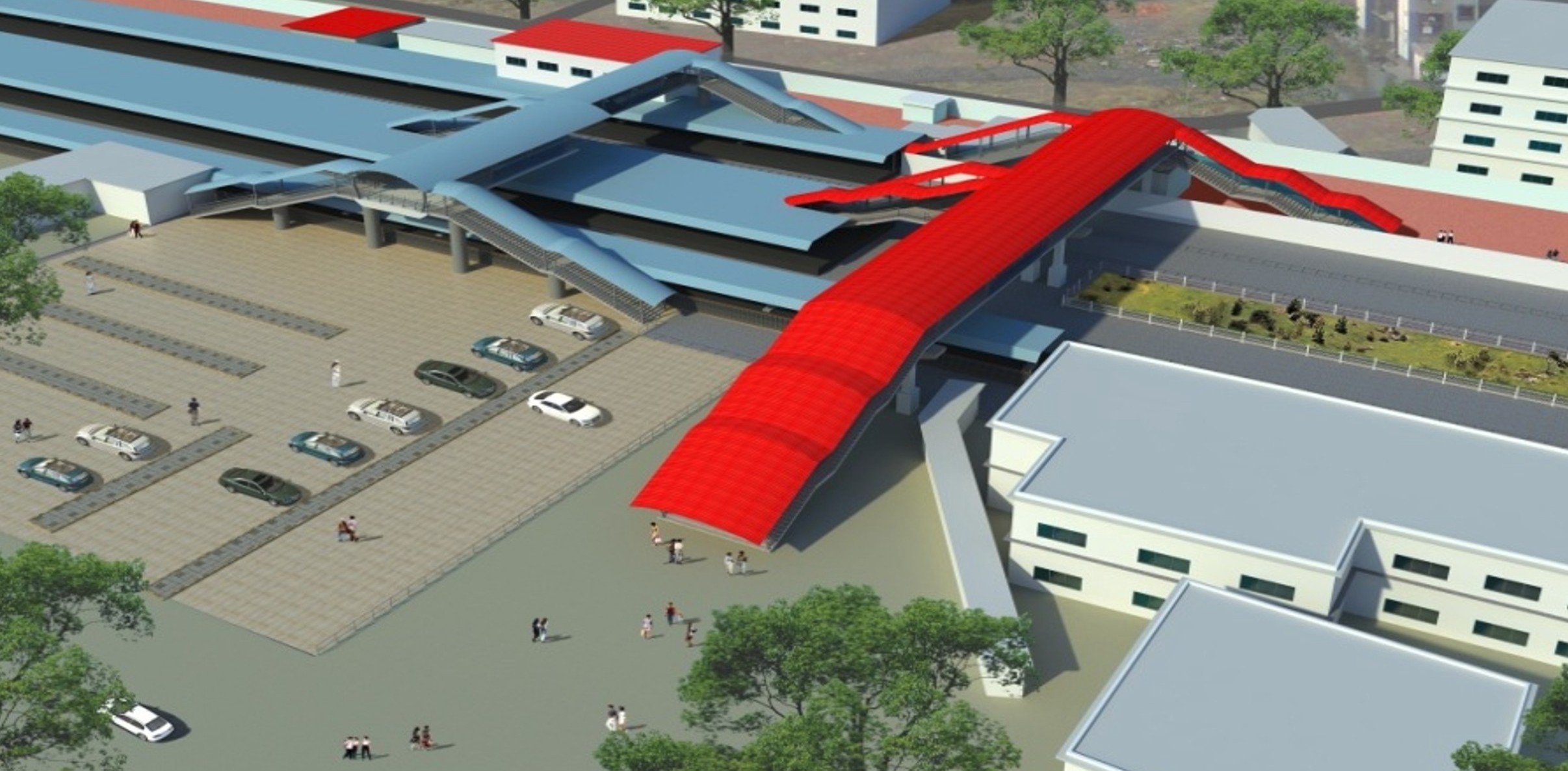
Bandra Terminus is a completed infrastructure facility in Bandra, Mumbai, developed for Western Railway. The project takes on the complex spatial and operational challenge of upgrading a heavily used urban rail terminus with a design approach that is both structurally bold and civically considerate, prioritizing the experience of the commuter above all else.
The architectural concept focuses on fundamentally reorganizing passenger movement through a prominent, continuous elevated concourse system that cleanly separates passenger flow from the immediate vehicular and rail infrastructure below. This elevated spine functions as the primary spatial armature of the terminal, structuring all movement with clarity and directing passengers through the facility with minimal confusion. It is sheltered by a striking, rhythmically undulating canopy structure that provides critical environmental protection from Mumbai's weather extremes while establishing a dynamic linear visual rhythm that gives the terminus a recognizable identity from the surrounding street. The exterior envelope of the supporting transit blocks employs a disciplined grid of robust, low-maintenance materials suited for a high-traffic urban rail environment, ensuring durability without sacrificing visual coherence. A clear architectural hierarchy is maintained between the solid, opaque service cores and the highly permeable, transparent passenger transition zones, making the distinction between back-of-house and public-facing spaces immediately legible to all users. The structural framework is deliberately exposed throughout, celebrating the engineering required for large-scale infrastructure at this density and complexity.
The planning establishes clearly defined entry points and movement pathways that lead intuitively through the terminal, while waiting areas, service zones, and concession spaces are organized within a coherent, functional layout. Bandra Terminus delivers a resilient, operationally optimized transit environment that imposes a thoughtful modern civic order on one of Mumbai's most complex and heavily used urban rail nodes.
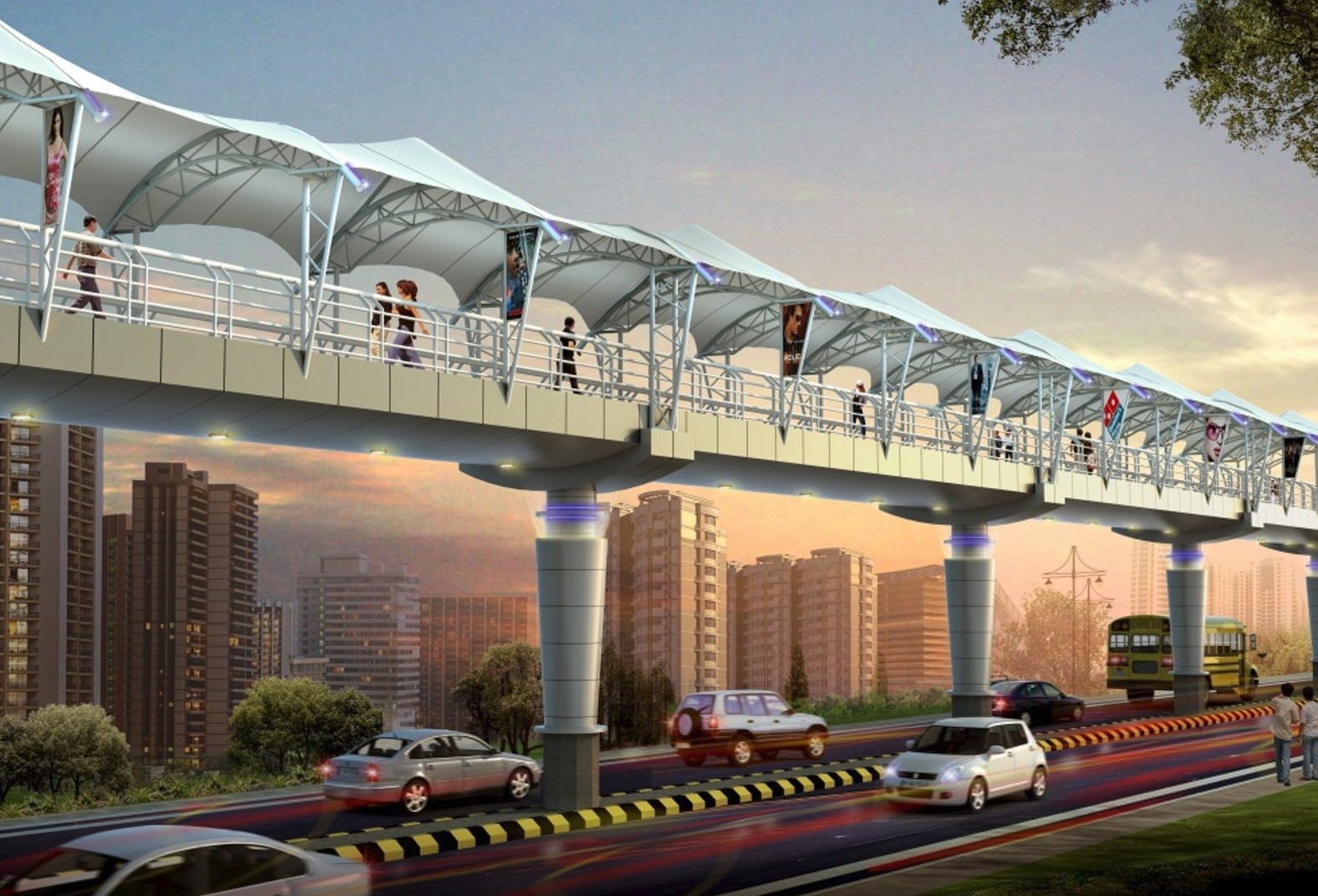
The Skywalk system is a completed elevated pedestrian infrastructure network across dense urban corridors in Mumbai, designed for the Mumbai Metropolitan Region. Conceived to meaningfully improve the safety and efficiency of daily commuter movement, the project connects suburban railway stations with high-footfall commercial areas through a rational, well-engineered elevated walkway system that systematically removes pedestrians from conflict with vehicular traffic at the ground level.
The structural system is expressed with complete transparency throughout, built from repetitive, modular steel spans supported at regular column intervals, creating a rhythmic and highly legible framework that is immediately understood by commuters navigating the network. The walkways feature clear, unobstructed widths designed to accommodate continuous, high-volume flow without congestion, a fundamental requirement given the enormous pedestrian volumes of the Mumbai Metropolitan Region. Protective canopies extend along the full length of the walkways, shielding users from rain and direct sun while transparent side screens maintain essential visual permeability, preserving the commuter's orientation within the city below.
Entry and exit points are strategically positioned to align directly with existing pedestrian desire lines, ensuring that the skywalks feel like natural extensions of the existing movement network rather than detours imposed upon it. The design language throughout is utilitarian and honest, with the structural engineering itself serving as the primary architectural expression. Accessibility is a consistent priority, with ramps and lift provisions integrated at key nodes. The Skywalk system demonstrates that the most effective infrastructure design is ultimately a deeply empathetic one: built from a precise understanding of how people move, where they want to go, and what makes a daily journey safer and less demanding.
This completed infrastructure initiative covers detailed design upgrades for 11 railway stations and 22 specific trespass-control spots across Maharashtra, undertaken for the Mumbai Railway Vikas Corporation and funded by the World Bank under MUTP-III. The project represents a significant investment in the safety, accessibility, and operational efficiency of suburban rail infrastructure serving millions of daily commuters.
The design prioritizes pragmatic functionality and high-capacity passenger flow throughout. At each station, modular, repetitive roof structures composed of sweeping, aerodynamic canopies provide extensive weather protection across the platforms, creating comfortable environments for commuters regardless of season. The integrated skywalk systems are engineered with robust, exposed steel truss frameworks enclosed within continuous, transparent glazing, ensuring maximum safety and natural lighting along elevated pedestrian paths. Massive cylindrical concrete piers anchor the pedestrian walkways and foot over bridges, creating a durable, utilitarian network that connects each transit hub with the surrounding urban fabric with structural clarity. Anti-trespassing fences and enclosures at the 22 designated track-side spots address a critical safety requirement, integrating these protective elements within the overall design language without disruption to the passenger flow.
The planning framework at each station is organized linearly along the platform alignment, establishing direct physical and visual connectivity between entry points, concourses, and boarding areas. Large-span roof structures define primary circulation spaces, creating unobstructed volumes that enhance visibility and support rapid multi-directional commuter movement. A clear segregation of arrival, departure, and service flows is maintained throughout, eliminating conflict and improving the safety and legibility of the entire system. This project demonstrates how rigorous infrastructure design, guided by a thorough understanding of movement patterns and human-scale spatial requirements, can dramatically improve the daily experience of public transportation for an enormous number of people.
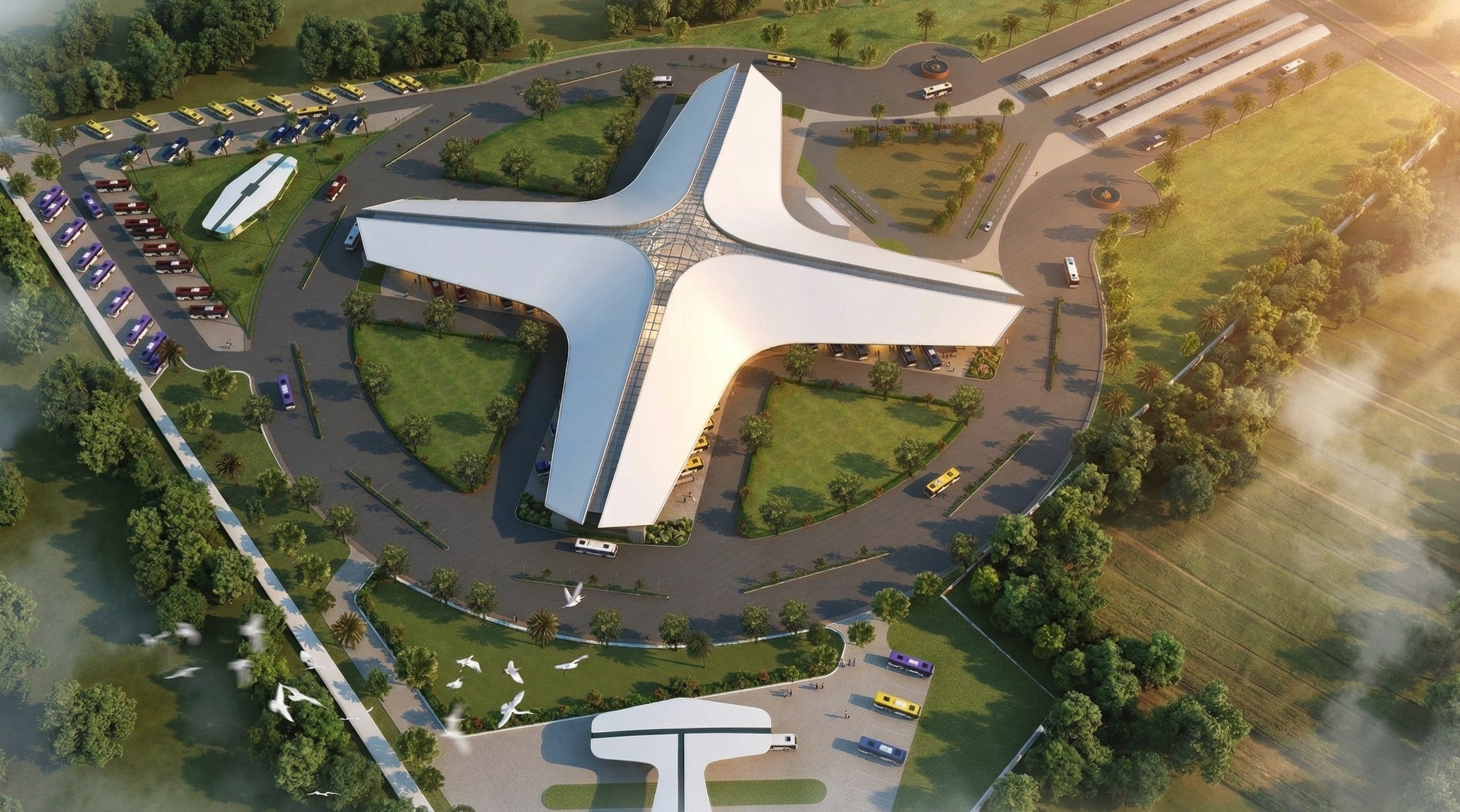
The Inter-State Bus Terminal is a proposed regional infrastructure landmark for the BSRTC in Purnea, Bihar, spanning a massive 121,405.7-square-meter site. The project is conceived as a civic infrastructure investment of real significance, and the architecture responds to that responsibility with a design language of structural clarity, operational efficiency, and modern civic dignity.
The primary design gesture is an expansive, sweeping canopy that unifies the terminal's diverse functional zones under a single, cohesive architectural element. This monumental roof structure provides critical weather protection for passenger concourses and boarding bays while its form actively communicates the idea of continuous movement, making the building's purpose legible from the exterior. The overall massing follows a clear, linear organizational logic, deliberately separating heavy vehicular traffic from all pedestrian circulation paths to ensure operational safety and intuitive wayfinding for the thousands of passengers the terminal will serve daily. Robust structural columns are explicitly expressed throughout, supporting the lightweight roof form with a tectonic honesty that speaks to the scale and civic importance of the infrastructure. Extensive clerestory glazing is strategically integrated into the concourse levels, maximizing natural daylight penetration deep into the waiting areas below and reducing the terminal's dependence on artificial lighting during the day.
The planning organizes waiting areas, circulation paths, and service zones within a highly legible, coherent framework, with defined entry and exit points for both vehicles and pedestrians ensuring smooth, conflict-free operational flow. The architectural expression is functional and structural throughout, with minimal ornamentation and a clear focus on usability and passenger experience. The Inter-State Bus Terminal synthesizes complex infrastructural logistics with a highly legible modern civic aesthetic, delivering an enduring and functional regional transit hub calibrated precisely for high-volume public engagement.
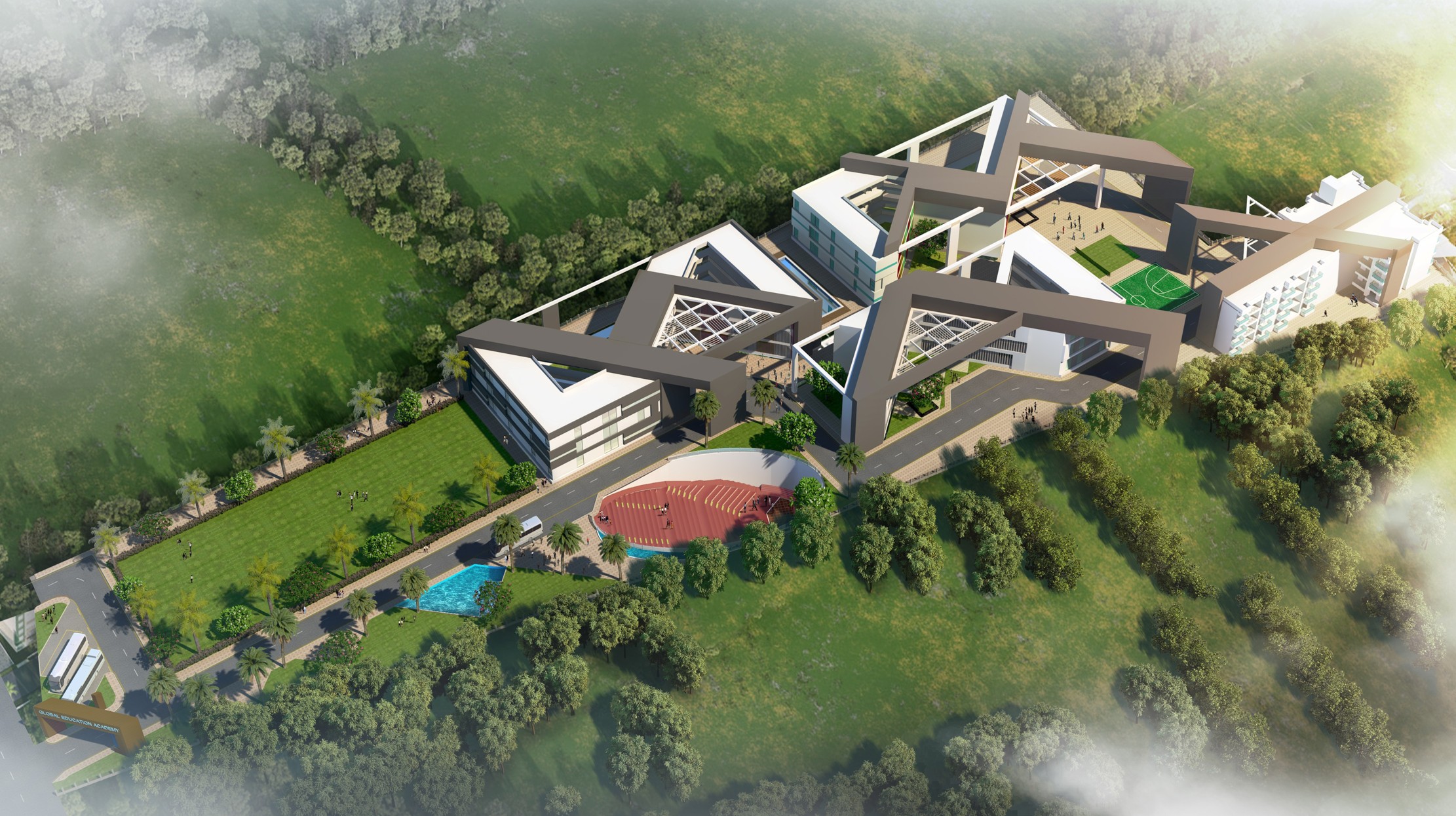
Bharat Global Academy is an ongoing institutional development for Bharat Global Pvt. Ltd. in Sudrasan, Rajasthan, spanning 13,936 square meters. The project approaches educational architecture with a distinctive deconstructivist confidence, making it one of the more visually assertive institutional buildings in the portfolio.
The educational complex employs a highly dynamic massing strategy where buildings are arranged around a central, open-air courtyard that functions as the primary social and organizing hub of the campus. The architectural form is characterized by aggressive, intersecting geometric volumes that resist conventional resolution, producing an inherently dynamic spatial composition. A defining feature is the use of massive, angled structural frames that form an intricate, skeletal canopy over the primary circulation routes, a bold tectonic gesture that simultaneously provides shade and announces the building's architectural intent to anyone approaching. The elevations deploy a high-contrast palette of dark and light materials paired with sharp, angular fenestrations that reinforce the fragmented, energetic quality of the overall composition. A monumental, standalone concrete portal marks the entry threshold, establishing a strong formal boundary between the campus and the surrounding context.
Beneath the expressive exterior, the planning is pragmatic and well-organized. Academic blocks and functional spaces are distributed around the central courtyard with a clear emphasis on spatial efficiency, ensuring every classroom receives adequate natural light and cross-ventilation through strategic orientation and spacing. Circulation is direct and legible, with clearly defined pedestrian pathways looping around the central open space and connecting all parts of the campus without ambiguity. Landscaped areas are integrated at the ground level to enhance the quality of the learning environment and encourage informal interaction between students. Bharat Global Academy successfully balances a strong, provocative visual identity with the functional pragmatism that a contemporary learning environment demands.
The ICAI Institute is a completed 51,096.7-square-meter research and education campus in Chaksu, Jaipur, developed for the Institute of Chartered Accountants of India. The project is built around one of architecture's most enduring organizational principles, the nine-square grid concept, translating an ancient spatial framework into a thoroughly contemporary and highly functional professional education campus.
The master plan relies on a highly organized, decentralized layout structured along a strong central axis that connects the key academic and administrative functions with clarity and formal order. The primary academic block asserts a commanding institutional presence through rigorous rectilinear geometry, punctuated by internal courtyards that optimize natural daylighting and cross-ventilation throughout. A striking, expansive reflection pool is integrated directly into the main approach axis, functioning simultaneously as a visually anchoring landscape element and as a passive cooling device that contributes to the thermal comfort of the surrounding spaces. The site planning demonstrates a clear programmatic zoning strategy, effectively separating the dense academic core from the linearly arranged accommodation blocks situated along the sweeping access spine, ensuring that each zone maintains its own spatial identity and operational independence.
Facade articulation across the campus relies on a consistent, disciplined grid of rhythmic fenestration and integrated shading devices that deliver a functional climatic response while reinforcing a unified and coherent institutional aesthetic. Shaded corridors and transitional spaces along the primary movement routes enhance the experience of daily campus life while protecting occupants from the demanding Rajasthani climate. Pedestrian circulation is seamlessly woven through expansive, carefully manicured landscapes, fostering the serene, focused environment that continuous professional education demands. Through formal symmetry, spatial hierarchy, and an unwavering commitment to organizational clarity, the ICAI Institute delivers a campus that genuinely reflects the precision and discipline of the profession it serves.
UPACA Academy is a completed institutional campus for U. P. Agarwal Shiksha in Abu Road, Rajasthan, spread across 45,062.06 square meters at the dramatic foothills of Mount Abu. The project is a bold exercise in brutalist institutional architecture, where raw structural expression and rigorous spatial planning combine to create an academic environment of genuine gravity and presence.
The campus is organized along a radially placed layout anchored by a strong axial framework that connects all key functional zones with clarity and purpose. The architecture exhibits an uncompromising brutalist design language, characterized by massive, monolithic concrete forms and aggressive geometric angles that project intellectual rigor and institutional permanence from every vantage point. Sharply sloped facades and deep cantilevers generate intense shadow patterns across the elevation throughout the day, while deep horizontal slot windows emphasize the sheer mass of the walls, grounding the building firmly in the traditions of raw concrete architecture. Built volumes are composed as rectilinear blocks with consistent proportions, establishing a unified and coherent academic identity across the entire development.
Courtyards are strategically introduced between blocks to bring natural light, cross-ventilation, and opportunities for informal student interaction into the heart of the built fabric. A clear, legible circulation network of pedestrian pathways guides movement across the campus, connecting large paved plazas, geometric water features, and formalized gathering spaces that give the campus its stoic, ceremonial character. The ground plane integrates landscape elements that soften the hard edges of the concrete forms while reinforcing the spatial organization of the master plan. UPACA Academy masterfully balances raw structural expression with rigorous spatial hierarchy, delivering a disciplined and enduring academic environment worthy of its remarkable natural setting.
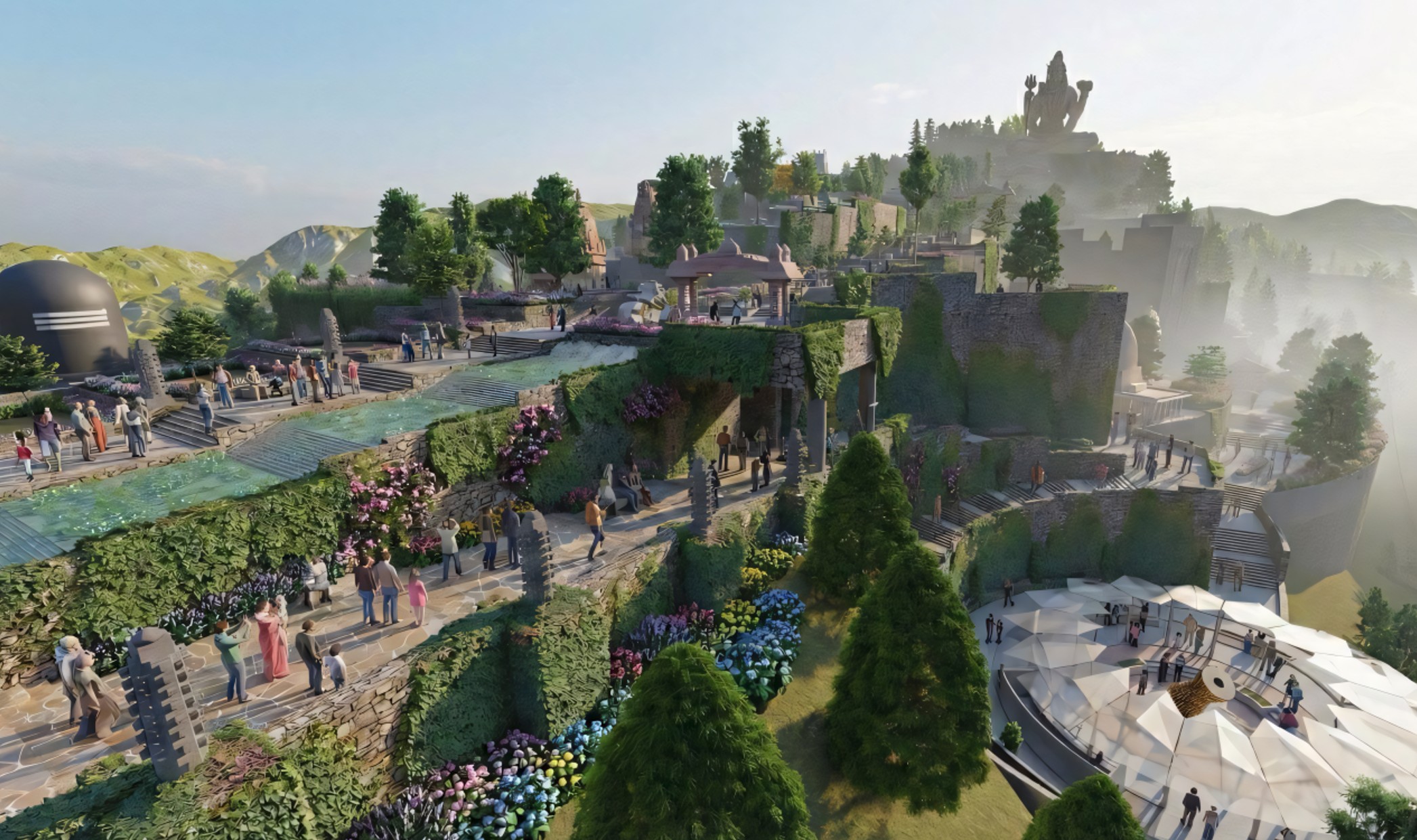
The Shivdham Spiritual Complex is a proposed monumental spiritual destination by the HPTDC in Mandi, Himachal Pradesh, spanning 142,835.475 square meters. Situated in a city of profound religious significance, often revered as the Varanasi of the East, the project carries an immense responsibility: to give physical and spatial form to a deeply held spiritual and cultural identity.
The foundational master plan concept is drawn directly from the sacred sound "Om," the symbol of ultimate reality in the Indic tradition. This powerful idea is not applied as surface decoration but as the very organizing geometry of the entire complex, making the plan itself an act of devotion and symbolic intent that permeates every spatial experience within the site. The architectural concept employs dramatic terraced landscape urbanism integrated carefully into a steep, mountainous topography, organizing ceremonial plazas, monumental sculptures, and processional pathways across a series of descending, heavily planted stone retaining walls that transform the challenging terrain into a series of purposeful, sacred thresholds.
The architecture draws deeply from the traditional temple vernacular of the region, incorporating intricately carved stone gateways, classical pavilions, and richly detailed classical motifs that resonate with the devotional culture of the site's context and community. Extensive, interconnected water channels and reflective pools cascade through the terraces, animating the processional journey with the sound and movement of water, a deeply sacred element in this spiritual tradition. The entire layout is structured along a clear central axis that establishes movement, spatial hierarchy, and ceremonial sequence from arrival to the inner sanctum. The monumental central idol is placed at the visual and spiritual apex of the entire composition, ensuring that every path, every plaza, and every framed view ultimately directs the visitor toward it, creating a deeply intentional and profoundly moving spiritual journey through architecture.
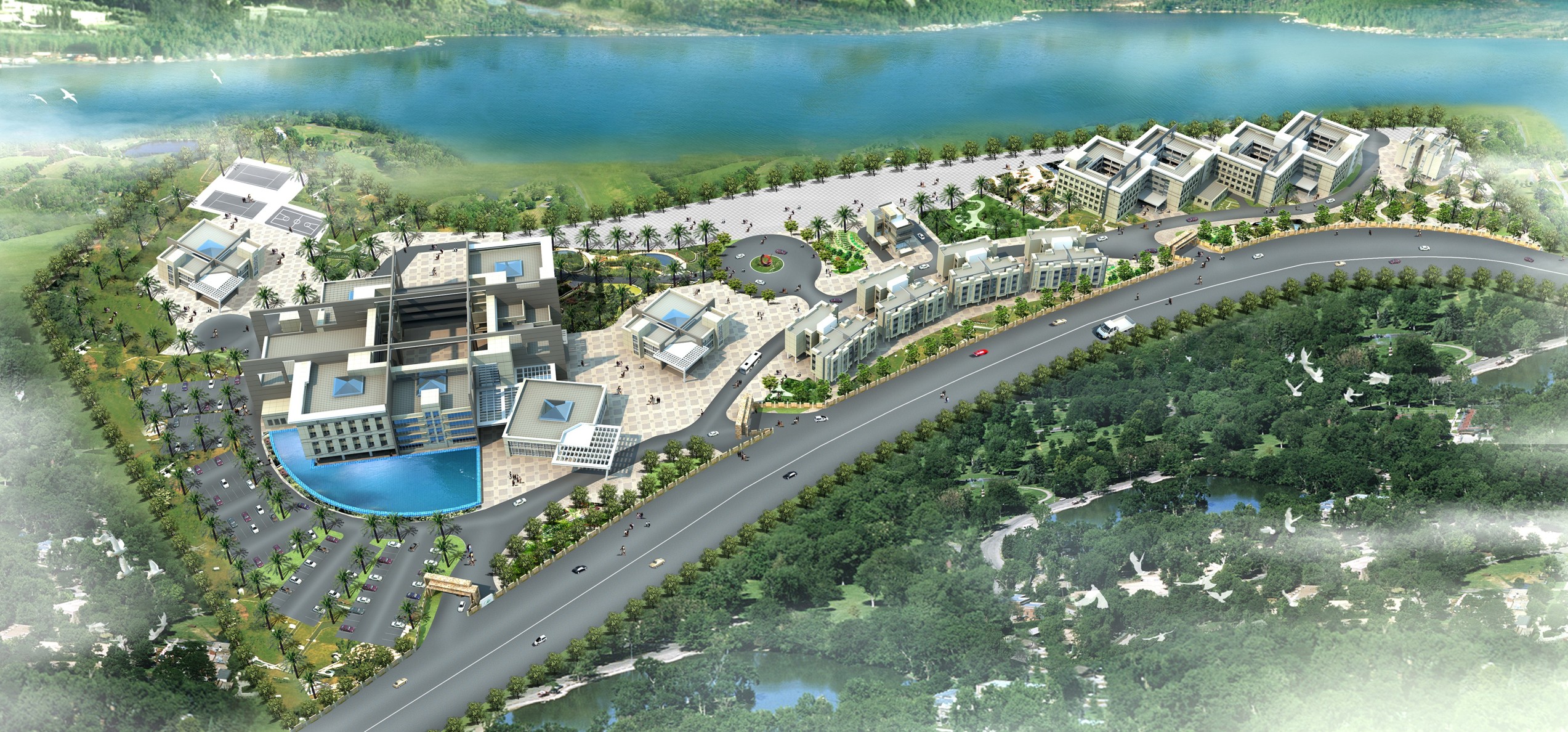
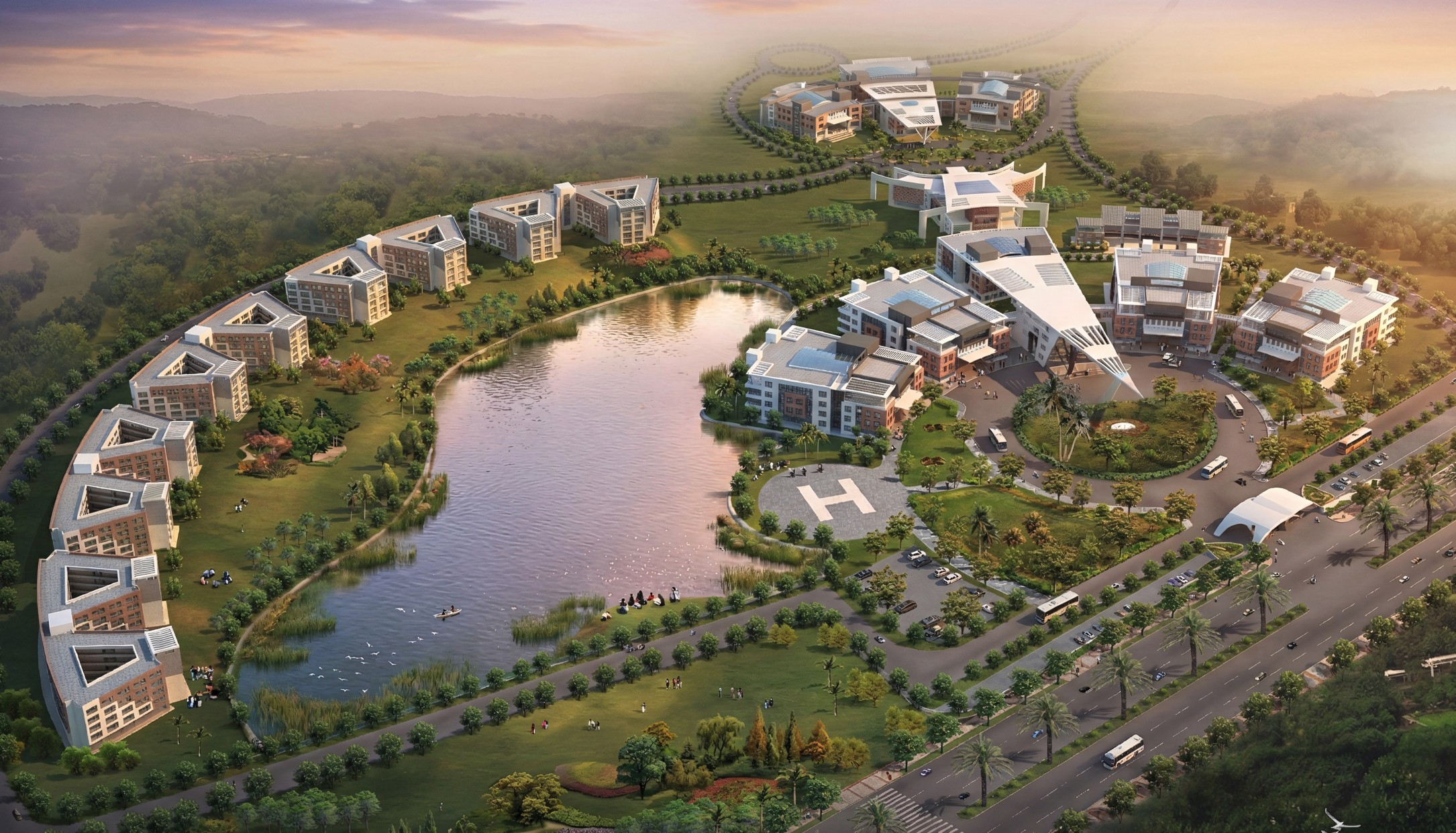
Sanjay Ghodawat Institute is a completed institutional campus in Kolhapur, Maharashtra, developed for the Sou Sushila Dhanchand Ghodawat Charitable Trust, spanning 55,686.82 square meters. The campus conducts Management and Engineering programs alongside an IB School, and its planning reflects the broad, multidisciplinary ambition of the institution it serves.
The defining element of the master plan is a sweeping, crescent-shaped layout conceived on a highly contoured site, wrapping elegantly around a large, central water body that serves as both the visual heart of the campus and a natural functional divider, separating the institutional academic blocks from the residential hostels with a graceful landscape gesture rather than a hard boundary. The academic buildings are arranged in a continuous, arc-like formation that ensures every primary structure orients toward this central water feature, giving the campus a strong sense of collective identity and shared focus. The architecture is characterized by rigorous, geometric facades utilizing a combination of exposed concrete, masonry, and punched windows that project intellectual discipline and institutional permanence in equal measure.
A dramatic, cantilevered structure projects aggressively toward the lake, functioning as a campus focal landmark that announces the institution's architectural ambition from a considerable distance. The grand campus threshold is defined by a monumental, parabolic gateway arch that establishes a formal and memorable arrival sequence for students, faculty, and visitors alike. The planning creates a clear hierarchy of distinct zones for academic, administrative, and recreational functions, connected by pedestrian pathways and framed by well-integrated courtyards and open spaces that facilitate both programmed activity and the spontaneous social interaction that defines a healthy campus community. The facade language is consistent and proportional throughout, with repetition and restraint reinforcing the cohesion of the academic environment.
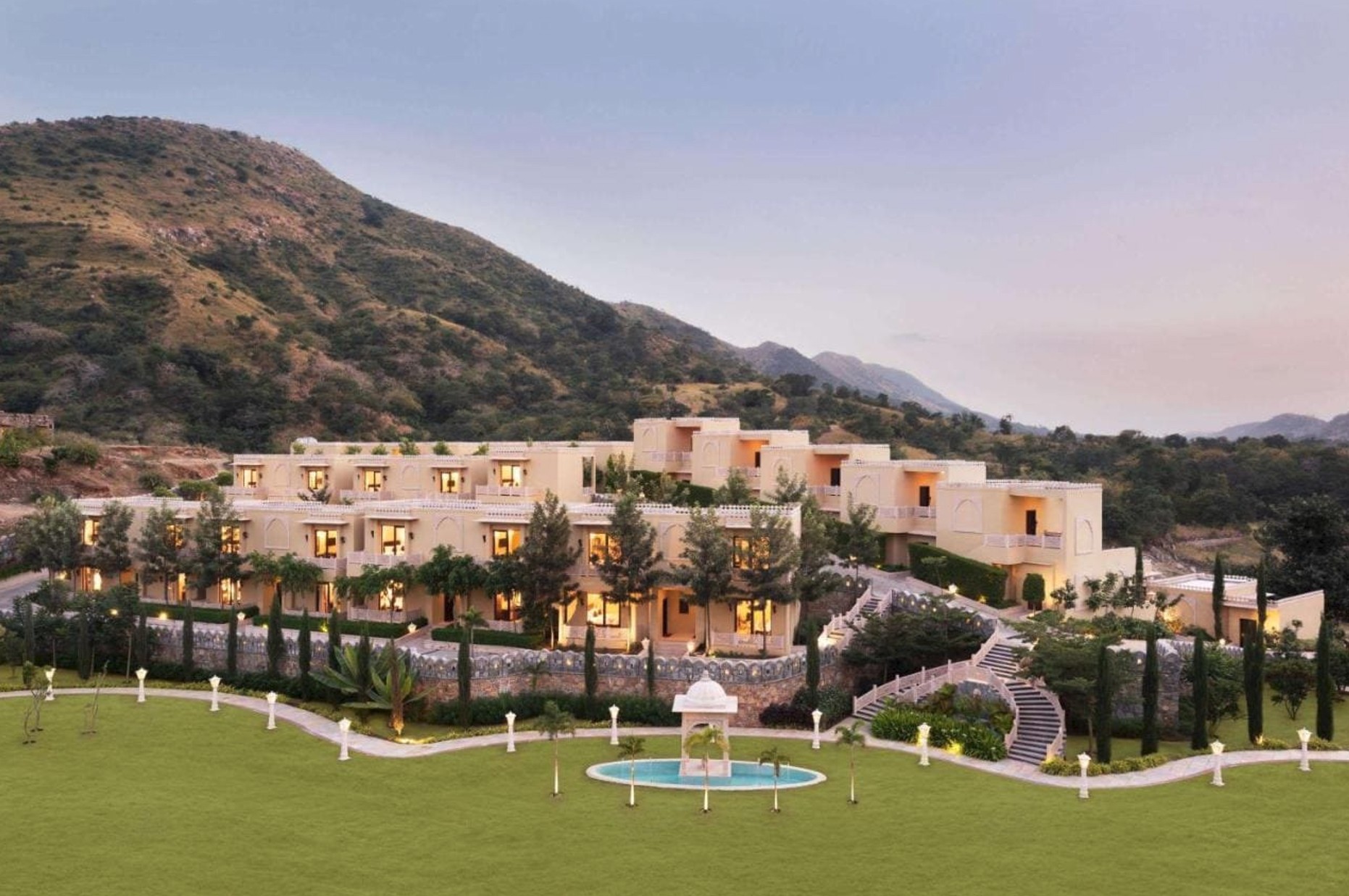
Raajsa at Kumbhalgarh is a completed resort complex by Avani Buildcon, situated within the historically and naturally exceptional landscape surrounding the great fort of Kumbhalgarh, Rajasthan. The project draws its architectural language directly from the historic fortified settlements of the region, translating those traditional forms and spatial principles into a contemporary hospitality framework with remarkable sensitivity and skill.
The design embraces a contextual, vernacular architectural style that integrates deeply with the rugged, rocky natural topography of the site. The massing consists of low-slung, stepped building blocks that cascade organically down the hillside, minimizing the visual impact of the development on the landscape and allowing the architecture to feel as though it has grown from the earth rather than been imposed upon it. The facades are defined by thick wall profiles, earthy textured finishes, traditional arched openings, and intricate stone detailing that establish a powerful sense of enclosure and fortification, recreating the spatial atmosphere of the region's historic architecture in a contemporary residential context. The site strategy relies on extensive, multi-level terracing, using native stone retaining walls to carefully carve out manicured lawns, swimming pools, and intimate courtyards from the difficult terrain.
Courtyards are introduced as the primary organizing elements of the plan, structuring guest movement while simultaneously providing shaded, protected transitional spaces that are among the most pleasurable social environments in the resort. Openings throughout are strategically positioned to frame specific views of the surrounding landscape while maintaining the privacy within each area of the complex. Circulation follows a sequential, layered pattern that gradually unfolds the resort's spaces as guests move through it, creating a journey of progressive discovery that culminates in the most dramatic panoramic views the site has to offer. Raajsa at Kumbhalgarh is resort architecture at its most contextually responsible and experientially rewarding.
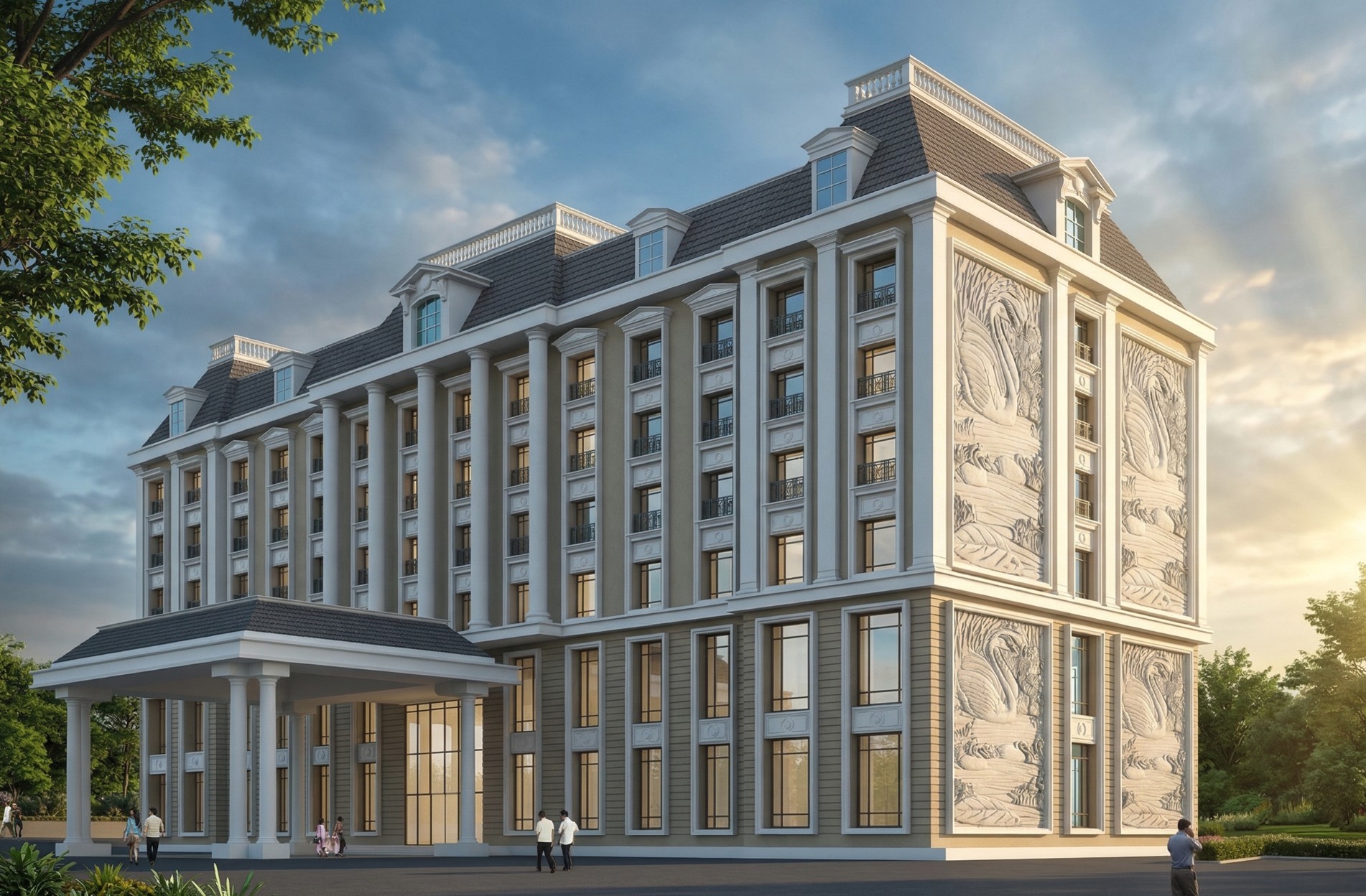
Eden Greenz is an ongoing Novotel-branded hotel development by the N. Kumar Group in Nagpur, Maharashtra, spanning 39,414.11 square meters. The project adopts a strict neo-classical design language, translated with full conviction into the scale and requirements of a sprawling luxury hospitality complex.
The buildings are defined by rigid symmetry, pronounced rusticated bases, and highly structured fenestration grids that immediately communicate institutional permanence and classical authority. The elevations are richly articulated with traditional architectural elements, including decorative pilasters, ornate bas-relief panels, and classic mansard roofs complete with dormer windows, creating facades of considerable depth and decorative richness that stand in deliberate contrast to the minimalism that defines much of contemporary hospitality architecture. The resort complex is organized into distinct wings that elegantly enclose a large, formalized central courtyard, with expansive swimming pools and geometric hardscaping occupying this protected communal heart.
Extended rooflines and generous open terraces emphasize a commanding horizontality, ensuring seamless visual connectivity between the interior public spaces and the surrounding manicured landscape. The planning strategy prioritizes fluid public circulation and clearly defined entry thresholds, with indoor and outdoor public zones converging in ways that heighten the experience of luxury from arrival through every communal space. The architectural expression throughout is designed to convey historical permanence and formal elegance, qualities that position Eden Greenz as a destination hotel of genuine distinction within the Nagpur hospitality landscape.
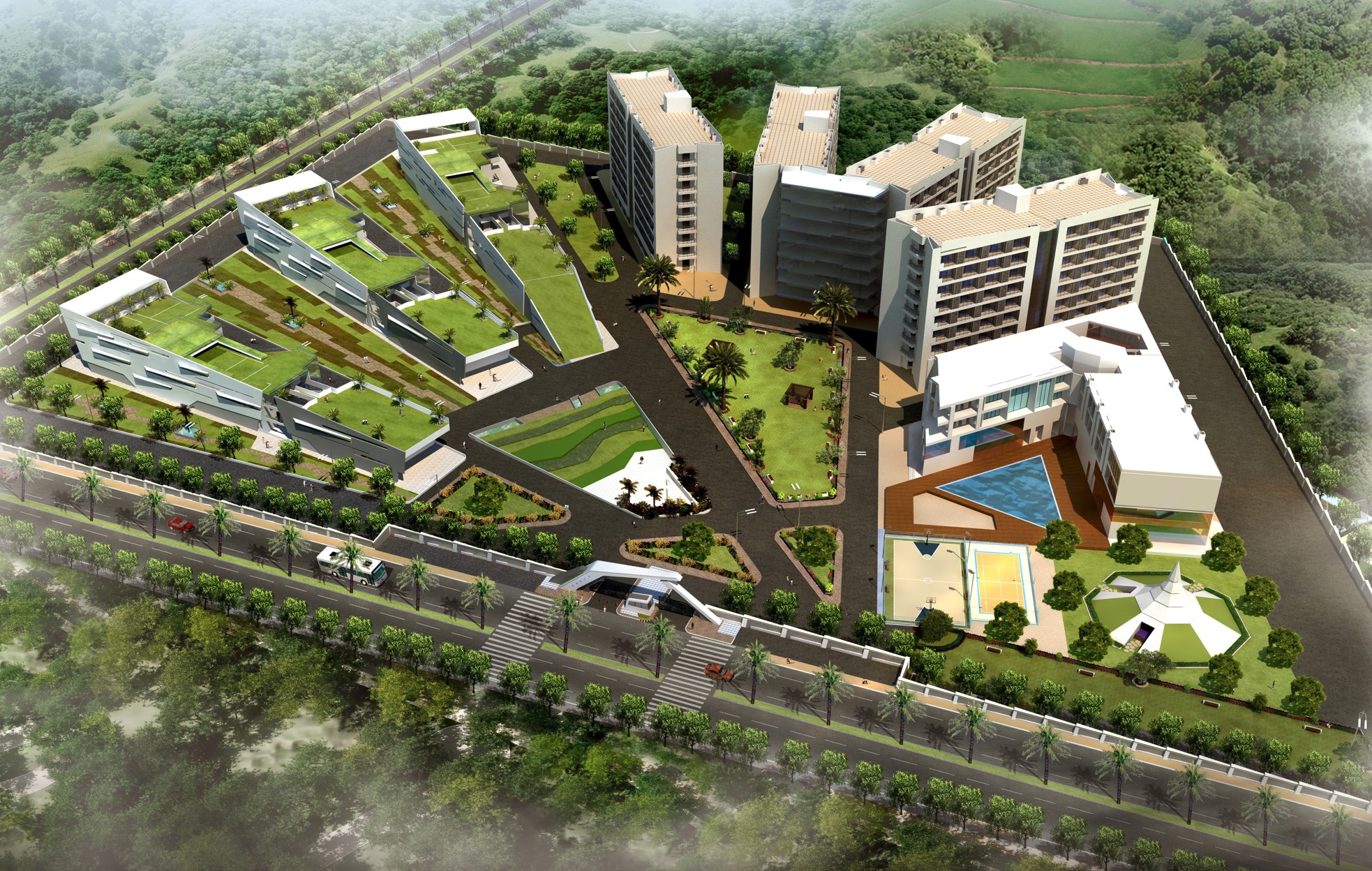
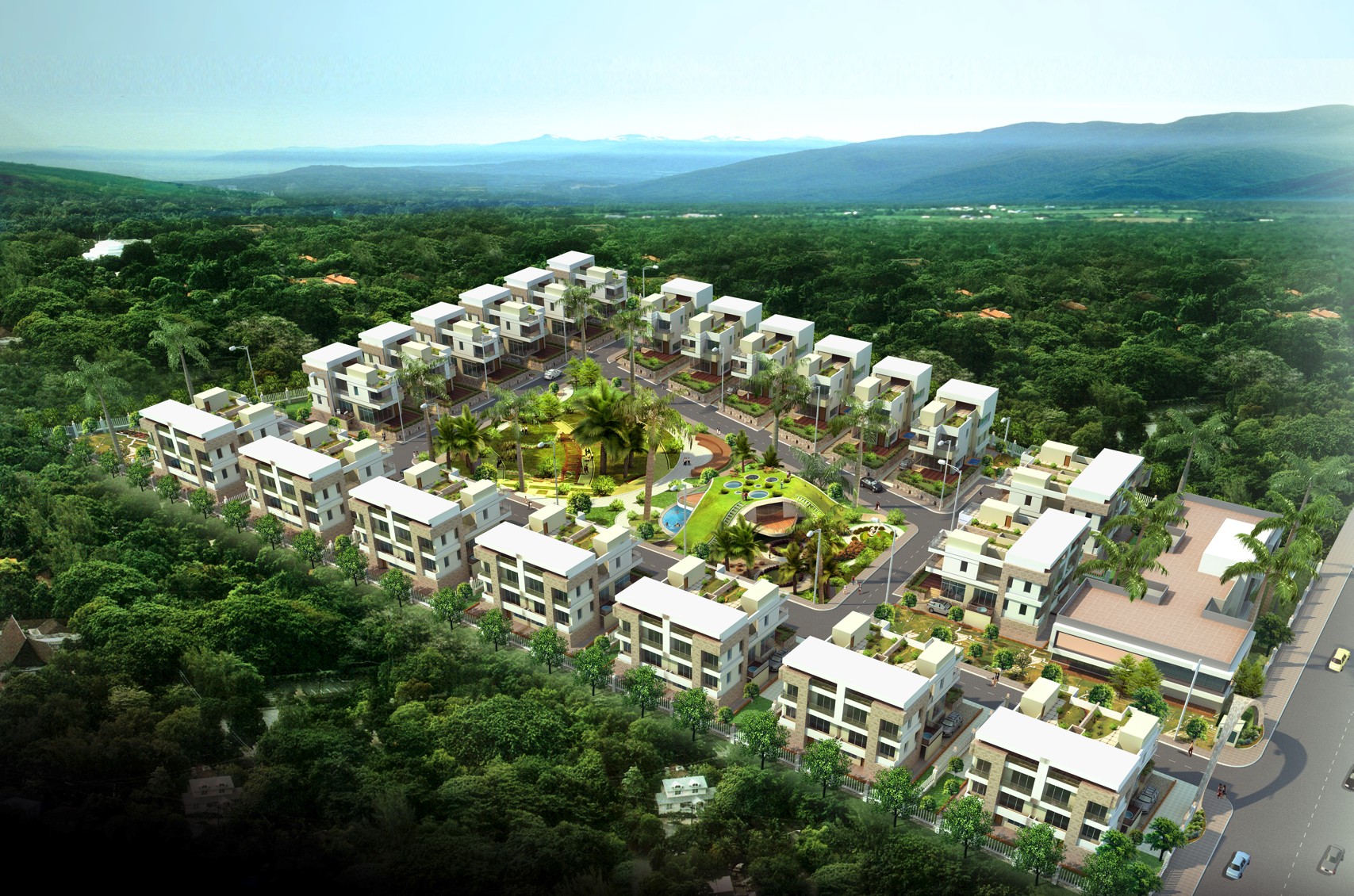
Nivvasa Green is a completed premium 5-acre bungalow enclave by the Nivvasa Group in Karla, Lonavala, spanning 20,234.3 square meters amidst lush green valleys. The project is conceived as a serene residential escape for those seeking understated luxury and a genuine, daily commitment to environmental consciousness.
The architecture relies on a terraced, low-impact massing strategy that follows the natural slopes of the terrain, carefully minimizing cut-and-fill operations while maximizing panoramic valley views for every unit. The residential bungalows are arranged in a staggered, cascading formation that ensures each structure benefits from unobstructed landscape views without imposing upon its neighbor. The architectural vocabulary is deeply biophilic and contextual, utilizing earth-covered structures, rich stone cladding, timber-clad overhangs, and deep verandahs that allow the built form to settle quietly into the surrounding environment rather than asserting itself above it. Extensive green roofs, planted terraces, and living walls are integrated throughout, camouflaging the built forms within the lush landscape and reinforcing the visual continuity between architecture and nature at every scale.
A standout feature of the development is an innovative earth-covered clubhouse topped with a green roof, a structure that merges directly and almost imperceptibly into the natural topography, making it one of the more quietly remarkable built elements on the site. Organically shaped swimming pools and quiet walking trails weave through the native plantings, supporting biodiversity and enhancing the local microclimate while creating a genuine sense of daily retreat. Openings are carefully positioned throughout to frame specific views and encourage cross-ventilation, while muted tones and natural textures consistently reinforce the contextual character. Circulation throughout the site is designed to minimize intrusion, with pathways integrated gently within the green network. Nivvasa Green subordinates architecture to landscape with rare conviction, delivering a residential sanctuary where the built and natural worlds feel, for once, genuinely inseparable.
Poonam Complex Wathoda is a proposed large-scale bungalow scheme for N. Kumar in Wathoda, Nagpur, spread across an expansive 133,100-square-meter site. The project is structured as a highly organized, master-planned residential community where disciplined planning, spatial order, and architectural consistency collectively define the character of the entire enclave.
The development features a cohesive master plan of standardized residential plots arranged in a clear, linear configuration, with individual bungalow units employing a compact, cubic massing strategy with flat roofs and subtle parapet detailing. The facades are defined throughout by a rhythmic sequence of recessed fenestrations and projecting horizontal bands that function simultaneously as integrated shading devices and as the primary elements of architectural identity. A minimalist palette of smooth render and contrasting architectural fins is applied consistently across the enclave, creating a unified and disciplined streetscape that projects calm and order. Dynamic geometric privacy screens and carefully considered openings ensure adequate natural light and cross-ventilation for every unit while maintaining the privacy that a residential community of this character requires.
The site planning is organized around a clear hierarchy of primary and secondary internal road networks, complemented by dedicated pedestrian pathways and formalized communal green spaces that break up the built density and provide shared breathing room across the site. Landscaped buffers are distributed thoughtfully between units and along street edges, enhancing the environmental quality of the residential environment. By enforcing a stark, disciplined architectural language across the entire scheme, Poonam Complex Wathoda ensures absolute visual coherence and demonstrates a systematic, highly rational approach to low-density residential planning at a considerable scale.
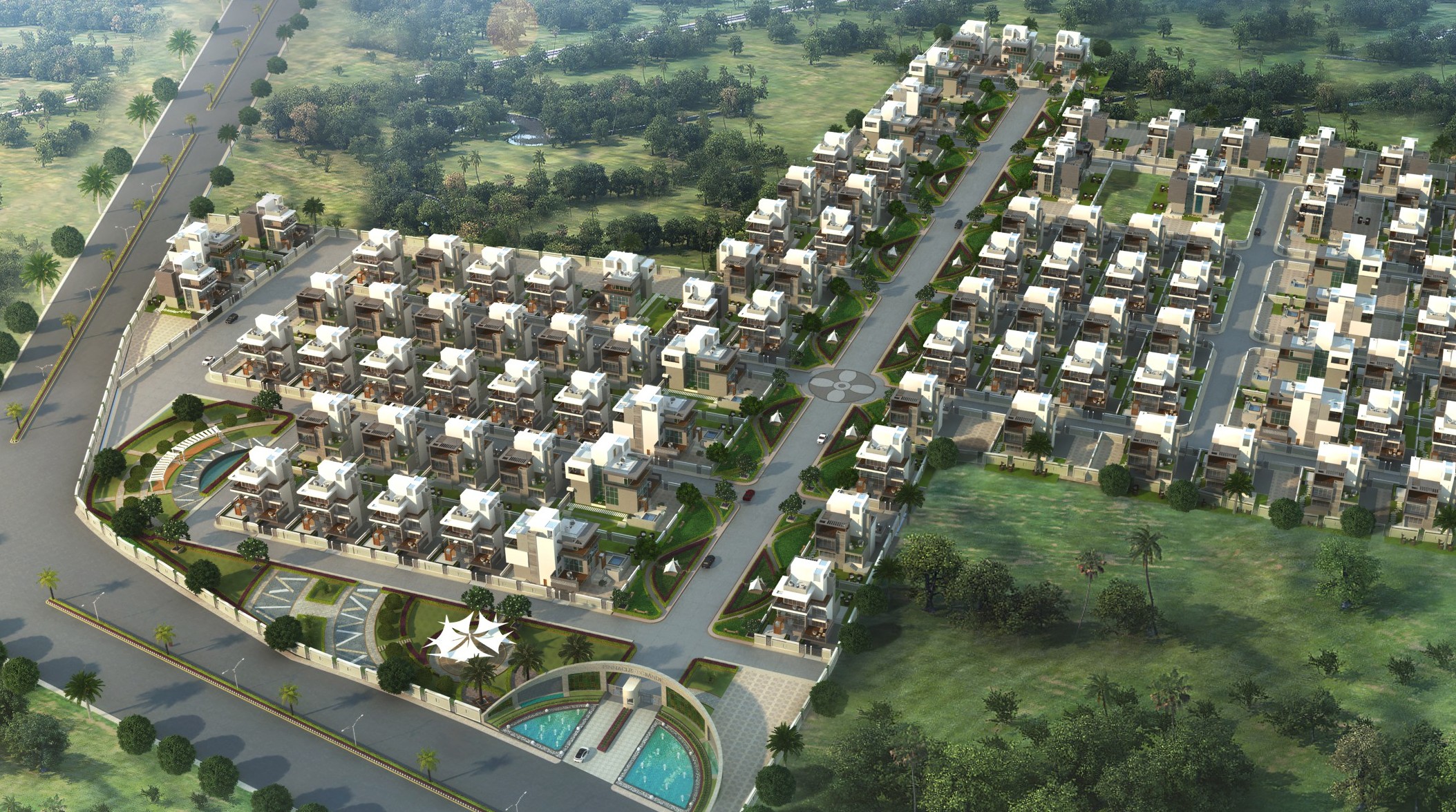
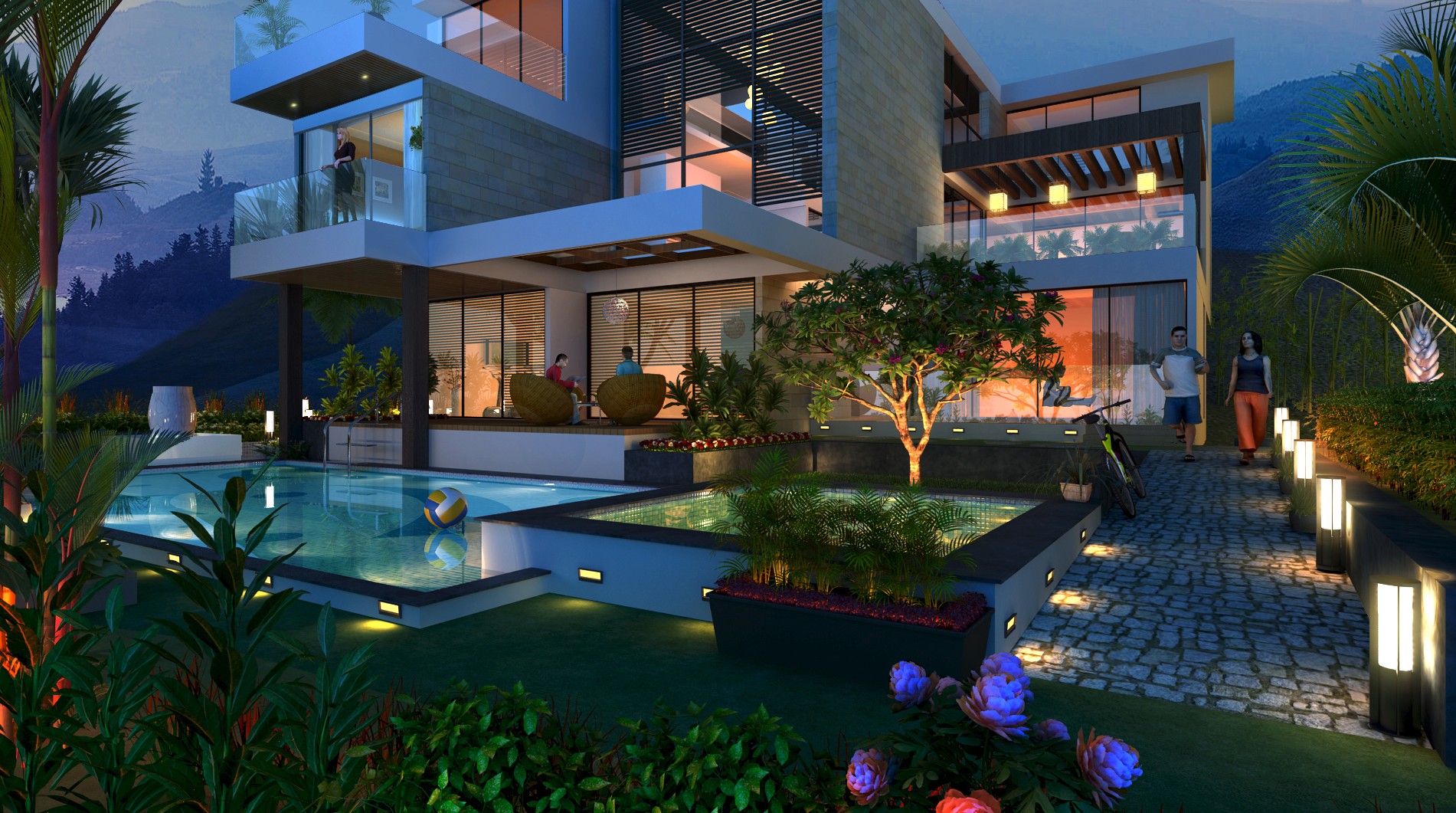
Pinnacle D'Grande is a completed high-end villa and bungalow development by Pinnacle Industries Ltd. in Indore, Madhya Pradesh. The project carries a singular ambition: to translate the serene, relaxing qualities of a tropical resort into the daily rhythms of modern suburban living, and it pursues that ambition through both bold architectural expression and a deeply considered landscape strategy.
The architecture presents a highly sculptural residential character, defined by aggressive volumetric shifting and bold cantilevered forms that give each unit a dynamic, unmistakably contemporary identity. The massing consists of stacked rectangular blocks that push and pull decisively against a central vertical circulation core, creating an inherently dynamic aesthetic while generating deep, sheltered terraces that serve as generous private outdoor living spaces at every level. The facade is a sophisticated composition of smooth render, textured cladding panels, and massive expanses of frameless glass, wrapped at key sections by a structurally expressive architectural framework that adds a layer of tectonic depth and complexity. A carefully articulated entrance sequence at the ground plane, featuring specialized hardscaping and integrated water features, establishes the development's premium tone from the very first moment of arrival.
Each villa unit follows a consistent, unified architectural language across the development while maintaining its own individual expression through facade articulation, ensuring that the enclave reads as a coherent community rather than a collection of isolated structures. The landscape architecture plays an equally central role, structured around a distinctive entrance and a beautifully articulated boulevard enveloped in layered hard and softscapes. Native plantings integrated throughout reinforce the tropical resort quality, creating a daily residential environment defined by lush greenery, spatial generosity, and a sense of genuine retreat from the surrounding city.
Ambitech Villa is a completed contemporary residential development for Ambitech Industries Pvt. Ltd. in Indore, Madhya Pradesh, spanning 25,180 square meters. The project is conceived as a resort-caliber living environment rooted in biophilic principles, where the relationship between built form, open space, and natural landscape is the defining design ambition.
The architecture employs a modular pavilion typology set within a richly landscaped enclave, with intersecting rectilinear volumes defined by crisp planar geometry and clean, flat rooflines that project an atmosphere of ordered calm. Full-height structural glazing wraps the building envelope throughout, dissolving boundaries between the interior living spaces and the surrounding outdoor terraces and gardens, while deep overhanging canopies provide both horizontal articulation and effective passive solar shading. The facades are given life and texture through dynamic geometric privacy screens and integrated planters that introduce a generous vertical green element, softening the strict architectural geometry and reinforcing the development's biophilic character at every scale.
The planning strategy organizes all functional spaces around a central living core, with private zones radiating outward in a considered sequence that ensures privacy and natural light for every area. A sprawling linear swimming pool anchored within the central communal zone, surrounded by associated recreational hardscaping, establishes the resort-style character that defines the lived experience of the development. Large openings and clearly organized transitional spaces extend indoor living areas seamlessly outward, with outdoor terraces functioning as true extensions of the interior. Circulation throughout is efficient, intuitive, and scaled for the unhurried rhythms of private residential life. Ambitech Villa achieves what resort-style residential design at its best always does: a sophisticated balance between the geometric certainty of a refined architectural frame and the fluid, organic warmth of a landscape that feels genuinely alive.
Villa Princessa is a completed premium residential townhouse enclave for Maharani Royal in Jaipur, Rajasthan, spanning 14,362.81 square meters. The project navigates the refined balance between classical architectural tradition and contemporary residential living with considerable sophistication and skill.
The architecture employs a high-density townhouse typology defined by a formal, symmetrical composition and a clearly established central axis that organizes the entire development with a sense of order and regal purpose. The building envelope is a complex, contemporary layering of staggered volumes, projecting glass balconies, deeply recessed planes, and elegantly floating architectural frames that together break down visual bulk while maintaining overall compositional unity. The facade beautifully integrates distinct, illuminated vertical elements alongside textured stone cladding, warm exposed brick, and intricate CNC-cut screens, each material contributing to a nuanced, multi-layered visual identity that is simultaneously contemporary in detail and grounded in the warm architectural traditions of Rajasthan. At the ground level, secured, gated vehicular access is seamlessly integrated into the base of the building, establishing a composed and private arrival threshold appropriate for a premium residential address.
Interiors prioritize vertical circulation via private lifts in each unit, and expansive front-facing glazing ensures that natural light floods the living spaces throughout the day. The architectural expression incorporates classical elements such as columned entries, arched thresholds, and layered roof forms that establish a clear sense of hierarchy and ceremonial order, translated with contemporary precision. The planning achieves a careful balance: each unit maintains an individual character through its unique staggered volume and facade articulation, while the overall composition reads as a coherent, unified urban ensemble. Villa Princessa delivers a genuinely regal residential address that earns its name through proportion, quality, and architectural intent.
Qing Villa is a on-going residential estate for Sahara India in Aamby Valley, Pune, spanning 4,046.86 square meters. The project embodies an ultra-modern, minimalist architectural philosophy where geometric purity, material restraint, and a seamless relationship with the natural landscape define every design decision from the ground up.
The design relies on a severe, orthogonal geometry, composing the estate as a sequence of intersecting, box-like volumes that appear to hover effortlessly above the landscape through a combination of cantilevered forms and a recessed base. The primary facade is entirely transparent, deploying massive, uninterrupted planes of structural glass and expansive sliding partitions that completely dissolve the boundary between the interior and the surrounding environment, making the distinction between inside and outside a matter of light and weather rather than walls. Deep, cantilevered roof planes provide essential passive solar shading while powerfully accentuating the building's dramatic horizontality, ensuring that the structure reads as a bold, extended presence across the site rather than a vertical object imposed upon it.
The estate is organized as a low-density sequence of interconnected, low-profile pavilions that spread generously across the site to frame semi-private courtyards and open terraces, each providing carefully considered gradations from communal to entirely private space. The signature feature of the development is a spectacular, cantilevered infinity pool that projects aggressively outward from the main structure, seemingly defying gravity and offering an uninterrupted visual merge between the water's edge and the valley beyond. Openings are carefully positioned throughout to frame specific landscape views and enhance cross-ventilation, while the planning ensures intuitive circulation that links indoor and outdoor spaces with absolute fluency. Qing Villa achieves an exquisite balance between openness and privacy, between architectural precision and the sensory richness of its natural surroundings.
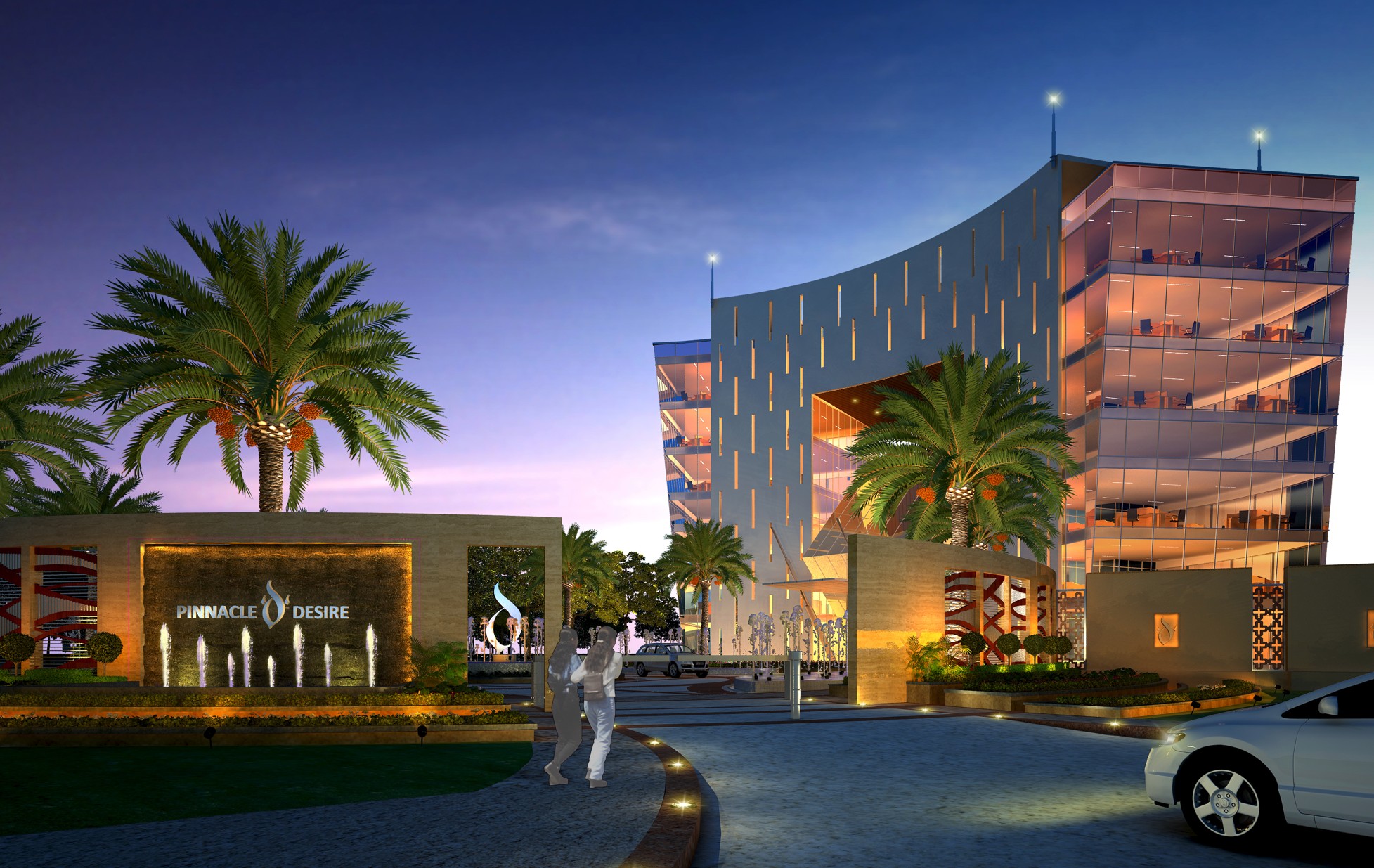
Pinnacle Desire is a completed, expansive 51-acre plotted villa and bungalow community along the Super Corridor in Indore, delivered by Pinnacle Group and JSM Devcon India Pvt. Ltd. across a footprint of 218,500 square meters. The development represents a thoroughly considered vision for low-density luxury living, where contemporary architectural design, thoughtful landscape planning, and sustainable community principles converge into a single, cohesive residential enclave.
The master plan is structured around a dominant central boulevard that serves as the spine of the entire community, complemented by immersive forested trails that weave through the landscape and define the natural character of the development. A collection of highly contemporary cubic villas is arranged around a monumental, formalized central plaza, each unit employing a pure modernist aesthetic characterized by intersecting rectilinear volumes, flat roofs, and expansive floor-to-ceiling glazing. Prominent cantilevered terraces and integrated vertical screening elements articulate each residence's facade, providing privacy while maintaining the visual openness and lightness that define the overall architectural language. The centerpiece of the development is a massive geometric water plaza featuring concentric rings of fountains and richly patterned hardscaping, anchoring the communal heart of the enclave with a dramatic, sculptural presence.
Individual plot sizes range from approximately 139 to 279 square meters, accommodating a diverse spectrum of bungalow typologies that cater to varied household requirements and preferences. The internal road network is thoughtfully designed to trace the terrain's natural contours, seamlessly organizing vehicular and pedestrian circulation while preserving the residential tranquility that defines Pinnacle Desire's character. Residents enjoy access to a comprehensive suite of lifestyle amenities including a clubhouse, a swimming pool, and dedicated jogging tracks. The integration of native plantings throughout reinforces the development's commitment to environmental sensitivity and sustainable, low-impact living. Pinnacle Desire demonstrates with great clarity that density is not a prerequisite for a remarkable residential address.
Conceived as an immersive Experience Pavilion, the Anubhava Mantapa is intricately designed to symbolize the core principles of the Sharana Philosophy. Serving as a profound architectural homage to the original 12th-century institution established by Basavanna, this monumental complex visually brings to life the legacy of what is celebrated as the world’s first religious parliament.
The design embraces a majestic neoclassical language characterized by strict symmetry, formal proportions, and a commanding civic scale. At its heart lies a massive, centralized dome—a prominent skyline identifier that houses a vast, cavernous internal rotunda. Flanked by sprawling linear wings, the building is heavily articulated with grand colonnades, decorative cornices, and extensive stone cladding to project historical permanence. A monumental elevated entrance portico serves as a ceremonial threshold, while the highly formalized site plan, complete with axial routes and symmetrical water features, further reinforces the architecture's inherent grandeur and authoritative presence.
The Customs Department Complex is a monumental institutional project in Wadala, Mumbai, developed for the NBCC. Spanning an extraordinary 1,035,211.77 square meters, the project represents one of the most significant civic architectural undertakings in the portfolio, and the design responds to that responsibility with a vocabulary rooted in transparency, institutional authority, and civic dignity.
The architectural concept is anchored by a prominent, floating pavilion-like volume that visually detaches from a solid, grounded base, a compositional choice that symbolizes an elevated standard of government operations while maintaining an approachable civic character. Extensive, uninterrupted curtain wall glazing wraps the primary elevations, explicitly designed to maximize visual permeability between the public realm and the interior administrative functions within, communicating openness and accountability through architectural means. This broad transparency is held in balance by a robust framework of expressed structural columns and deep horizontal fascias, which provide essential solar mitigation and give the facades a sense of measured, institutional order.
At the ground plane, a welcoming and deeply recessed entry plaza serves as a generous transitional gathering space, setting a composed and dignified tone before entry. The built form is organized into distinct blocks arranged around structured open spaces, creating a clear spatial framework that supports efficient circulation and a hierarchy of uses across the complex. A disciplined grid of repetitive openings establishes rhythm and proportion across the facades, while the central open spaces provide visual relief and facilitate interaction across the campus. The overall composition reflects a formal institutional character where spatial clarity, structural expression, and a deeply considered civic sensibility converge into a development of genuine architectural significance.
Tivona City is a large-scale residential township in Udaipur, Rajasthan, shaped by a decentralized master plan that places horizontal spatial flow, connectivity, and environmental responsiveness at the foundation of every design decision.
The primary built mass asserts a commanding presence through a rigorous rectilinear geometry, punctuated by significant internal courtyards that facilitate natural ventilation and optimize daylighting across the development. A striking, expansive central plaza is integrated directly into the main approach axis, functioning as a visually anchoring element for the entire scheme while contributing to passive cooling across the ground plane, a particularly considered response to the demands of the Rajasthani climate. The site planning employs a clear programmatic zoning strategy, dividing the development into distinct clusters of residential units linked by a well-defined network of internal roads and open spaces. This structure creates meaningful visual corridors and interconnected landscapes that enhance spatial continuity throughout.
Facade articulation across the township relies on a consistent, disciplined grid of rhythmic fenestration combined with integrated shading devices, ensuring a unified aesthetic while delivering a functional climatic response appropriate to the region. Pedestrian circulation is seamlessly woven through expansive, carefully maintained landscapes, fostering a serene and genuinely connected environment for daily life. Primary and secondary circulation routes are organized hierarchically, ensuring efficient movement without disrupting the open, breathing character of the open spaces. Tivona City exemplifies a comprehensive approach to township planning, where density, openness, and architectural coherence are brought into a carefully balanced and enduring relationship.
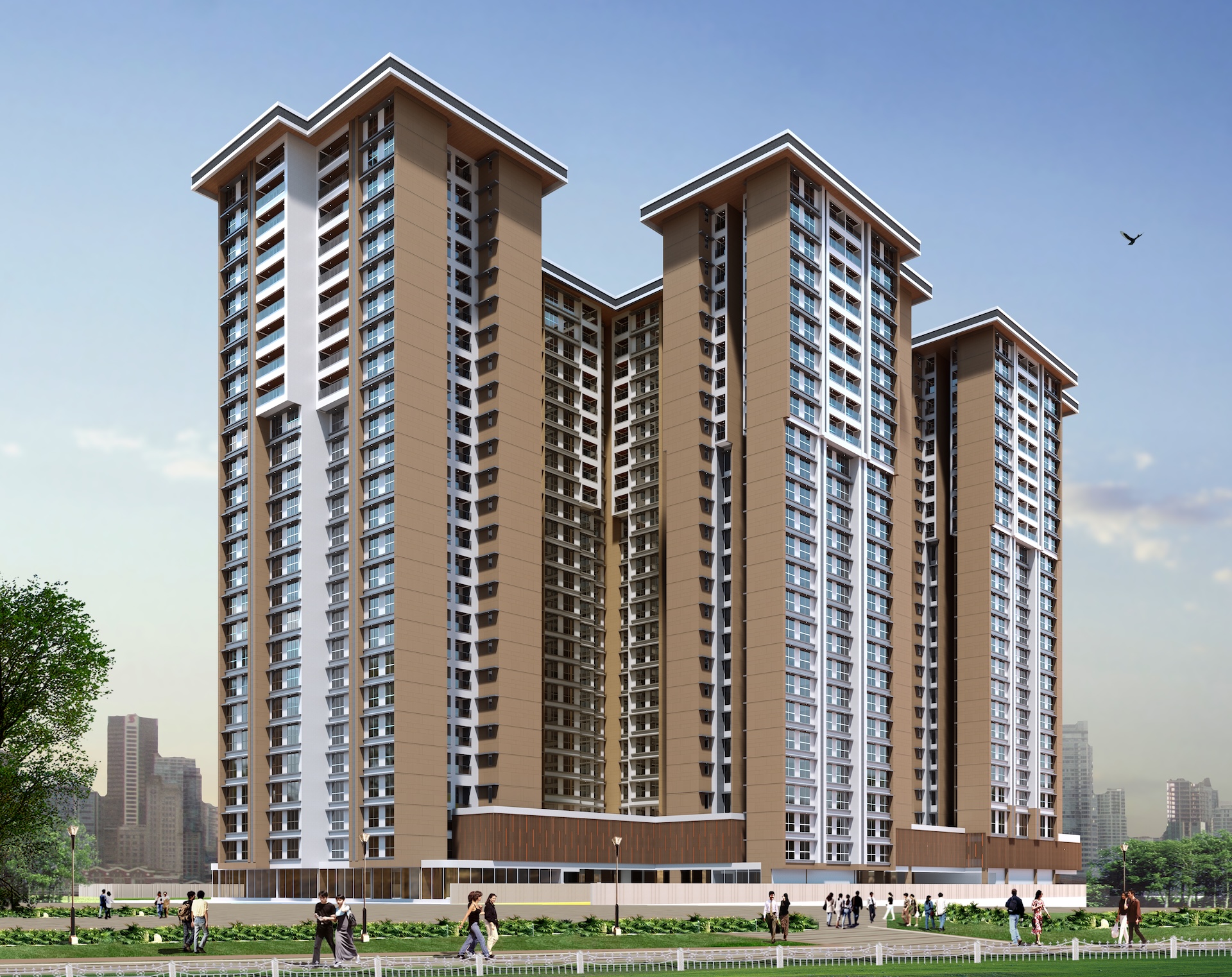
RSG Universe is a landmark development, envisioned as a multi-tower residential enclave conceived around a comprehensive master planning approach. The project is designed to establish a strong visual and spatial identity within its urban context through a massing strategy that emphasizes slender proportions and disciplined verticality.
The towers are carefully positioned to frame a central landscaped courtyard that functions as the social spine of the entire development, giving the project a clear organizing principle and a generous communal heart. The facade is defined by a rhythmic arrangement of repetitive balcony modules and extensive fenestration, ensuring deep daylight penetration and effective cross-ventilation for all residences. Vehicular circulation is relegated to subterranean levels, freeing the ground plane entirely for safe, uninterrupted pedestrian movement across richly landscaped shared spaces. Through its restrained architectural language, precise detailing, and careful integration of private residential domains with active communal landscapes, RSG Universe delivers a visually coherent and highly functional environment rooted in the values of premium community living.
Commerce Bank is a premium commercial development, conceived as a highly functional financial and corporate headquarters that projects institutional stability, transparency, and unwavering professional authority. The foundational design intent centers on a robust volumetric composition structured around an optimized grid that accommodates expansive, flexible floor plates designed to adapt to the evolving requirements of a modern corporate banking institution.
The facade is anticipated to employ a disciplined combination of high-performance curtain wall glazing and solid structural framing, creating a measured interplay of natural light penetration and passive solar shading. Internally, circulation networks are designed to be intuitive, establishing clear hierarchies between public banking halls, secure administrative zones, and executive suites. By prioritizing geometric legibility, flush detailing, and structural clarity, Commerce Bank establishes a commanding urban presence that functions as both a functional workspace and an enduring architectural asset within a contemporary commercial environment.
Ekta Invictus is a completed residential development by Ekta World Pvt. Ltd., situated in the prominent urban hub of Dadar, Mumbai, and occupying an efficiently planned footprint of 9,879.75 square meters. The project stands as a testament to high-end vertical living, delivering a premium residential address within one of the city's most established and well-connected neighborhoods.
The design strategy prioritizes a commanding vertical presence paired with sophisticated spatial planning and an elegant facade treatment that reflects the developer's consistent commitment to luxury. Grounded by an inviting, high-capacity entrance experience and supported by premium interior amenities, the project maximizes its site constraints to deliver exceptional natural light, ventilation, and panoramic cityscape views to its residents. Ekta Invictus blends structural integrity with refined modern detailing, establishing an upscale residential sanctuary that balances privacy, operational efficiency, and sophisticated urban elegance within a dense metropolitan setting.
Borkar Compound is a redevelopment scheme in Borivali East, Mumbai, conceived to reorganize an existing constrained site into a highly structured, efficient, and livable urban layout. The project demonstrates how a thoughtful redevelopment strategy, guided by clear spatial priorities, can dramatically improve the quality of a residential environment without excess or architectural indulgence.
The architectural concept revolves around creating a dynamic residential hub through the deliberate articulation of distinct, stacked volumes. The massing strategy deploys a series of offset, rectilinear blocks that interrupt the vertical reading of the tower, introducing horizontal visual interest at regular intervals while simultaneously creating opportunities for landscaped terraces at the structural intersections. A rigid, rhythmic grid governs the primary fenestration, using a well-proportioned unitized system that balances optimal daylight penetration with the thermal efficiency demands of the climate. The lower podium level is distinguished by a highly transparent and permeable frontage that establishes an inviting pedestrian interface directly at the street, softening the transition between the development and the surrounding neighborhood. Deep overhangs firmly anchor this base, providing effective solar shading and weather protection across the public-facing edges.
The planning maximizes land utilization while actively introducing open spaces that improve daily livability. A consistent facade grid system creates visual coherence across the entire scheme. Circulation is clearly organized throughout, with shared ground-level spaces designed to encourage community interaction. Borkar Compound reflects a rational, measured approach to urban redevelopment, where density and spatial quality are not treated as opposites but as complementary goals within a well-ordered architectural framework.
Astapad is a residential development in Mulund, Mumbai, that establishes a highly legible and distinctly contemporary identity through a refined, carefully considered articulation of its central built volume. The project makes an immediate architectural statement through its massing strategy, featuring a prominent cantilevered upper section that rests cleanly on a recessed, highly transparent base, producing a compelling illusion of weightlessness at the pedestrian level that draws the eye upward.
The primary elevation is defined by a rigorous curtain wall system where pristine, expansive glazing maximizes daylight penetration into the interior living spaces while maintaining a sleek and uninterrupted exterior surface reading. This transparent envelope is given order and discipline through the systematic application of strong horizontal banding and vertical structural fins, which together provide essential solar mitigation and impose a rhythmic, organized cadence on the facade. The primary entrance sequence is announced by a striking grand atrium, functioning as a luminous interior volume that effectively draws residents and visitors inward from the street.
The planning adopts a pragmatic approach to residential organization, with repetitive openings and balconies creating a consistent rhythm across the facades while guaranteeing adequate light and cross-ventilation for every home. Adequate spacing between built volumes further ensures a comfortable residential environment. Shared open areas are integrated to enhance community interaction, and streamlined circulation through clearly organized vertical cores maintains functional clarity and ease of use throughout the development. Astapad is a building that earns its presence through restraint, structural honesty, and a thoroughly modern clarity of purpose.
Aiko Complex is a residential development in Mira Road East, shaped by a highly rational, precision-driven architectural concept that aligns structural efficiency with the practical demands of modern urban living. The design asserts a clear, legible identity rooted in strict orthogonal geometry and a consistently applied structural grid that governs both the massing and the facade articulation from base to crown.
The primary elevation presents a sophisticated interplay between opaque solid panels and well-organized ribbons of glazing, carefully calibrated to optimize natural daylighting for interior spaces while effectively mitigating glare. A defining feature of the composition is the prominent, projecting entrance canopy that breaks the otherwise strict planar geometry of the facade, establishing a clear spatial hierarchy and intuitively guiding visitors toward the main lobby. The building corners are sharply defined, underscoring the volumetric solidity and clarity of the overall form.
The architectural aesthetic is unapologetically contemporary and functionalist. Clean lines, flush detailing, and a disciplined proportional system collectively convey a sense of operational order and enduring structural permanence. The planning organizes the complex around a systematic layout of buildings and internal open spaces, with interconnected pedestrian pathways linking distinct zones across the site. A repetitive facade system reinforces a cohesive identity throughout, while integrated open spaces enhance environmental quality and encourage community interaction. Circulation is clearly defined, ensuring ease of movement at every scale. Aiko Complex demonstrates how structural precision and rational planning can produce a residential environment of genuine character and reliability.
Oasis Height is a large-scale, ongoing residential landmark in Kandivali West, Mumbai, by ACME Housing India Pvt. Ltd. and Glomore Construction, spanning 375,654.1 square meters. The project is conceived as a highly visible, magnetic residential destination, and the architecture delivers on that ambition through bold volumetric expression and a strong commitment to facade transparency and spatial energy.
The primary architectural strategy employs a massive, well-articulated box typology, punctuated by expansive, multi-height glazed atriums that function as the visual and functional core of the development. The exterior envelope presents a dynamic interplay of large-scale solid planes and extensive window systems, explicitly designed to allow the internal spatial activity to read outward into the surrounding urban context. Prominent, deeply projecting canopies and expressed structural frames establish a commanding presence at the street level, effectively managing the building's considerable scale while providing essential weather protection for high-volume pedestrian movement into the lobbies.
The design prioritizes clear internal sightlines and intuitive circulation throughout, using the architecture itself as a luminous, dramatic backdrop for upscale residential life. The residential towers emphasize verticality and efficient planning, with continuous balcony lines creating a beautifully layered visual effect across the facades. The ground plane incorporates landscaped areas that soften the interface between built mass and street, while centralized circulation cores maintain functional clarity and ease of movement throughout. Oasis Height is a development where clarity, efficiency, and an exceptional standard of modern living converge into a single, powerful urban statement.
Supreme Signature is a located in Chembur, Mumbai, conceived around a commanding architectural vocabulary that foregrounds structural transparency, civic presence, and an elevated standard of residential living.
The core design concept is anchored by a prominent, floating pavilion-like volume that visually detaches from the solid base below, creating a powerful sense of architectural levitation that communicates an aspirational quality from afar. Extensive, uninterrupted curtain wall glazing wraps the primary elevations, explicitly designed to maximize visual permeability and frame panoramic urban views from within. This openness is thoughtfully balanced by a robust framework of expressed structural columns and deep horizontal fascias that provide essential solar mitigation while framing the interior spaces with a sense of order and structure. At street level, a highly articulated, deeply recessed entry plaza creates an elegant transitional gathering space that gives the building an inviting and considered pedestrian presence.
The planning organizes residential units around efficient spatial layouts, with a consistent grid of openings and balconies establishing a clear visual rhythm across the facades. Rather than relying on decorative ornamentation, the building's identity is built entirely through clean repetition, precise proportions, and structural clarity. Supreme Signature masterfully balances the need for security and residential privacy with an outward-facing aesthetic confidence, resulting in a development that dominates the skyline not through volume or excess, but through pure architectural finesse.
The One is an exclusive premium residential development situated in the coveted enclave of Pali Hill, Bandra West. The project carries the distinction of its address with full confidence, employing a conceptual framework that embraces sweeping horizontality and fluid organic forms to create a residential experience that is genuinely immersive and unlike the typical high-rise offering.
The massing moves deliberately away from rigid orthogonal boxes, instead utilizing elongated, curvilinear volumes that feel as though they have grown in dialogue with the surrounding natural landscape rather than been imposed upon it. The primary facade is defined by undulating ribbons of solid fascia that weave elegantly across the elevation, framing large, carefully considered expanses of glazing that provide vital visual connectivity between the interior living spaces and the world outside. The arrival sequence is treated as a considered architectural journey: a prominent, grand entrance acts as a central focal point, guiding residents through a moment of spatial compression before releasing them into a vast, naturally lit interior lobby that opens the experience outward. Extensive terracing and projecting balconies are integrated across the facades, breaking down the building's overall scale while providing each residence with generous private outdoor spaces.
The planning is structured around the values of exclusivity and clarity. A limited number of units ensures a generous spatial hierarchy, and the ground plane is treated as a landscaped buffer that thoughtfully enhances the separation between this refined residential enclave and the urban fabric surrounding it. Circulation is streamlined and discreet, maintaining the quiet, composed atmosphere that defines the character of The One from arrival to residence. Proportion and controlled articulation do the work here, resulting in a development that achieves spatial grandeur through restraint, and luxurious contemporary living through sophistication rather than spectacle.
Ariisto Symphony is a residential development by Ariisto Developers in Santacruz West, Mumbai. The project is built around an architectural concept that places the relationship between mass and void at the very center of the design, using that tension to craft a residential environment that is simultaneously deeply private and spatially expansive.
The massing strategy employs carefully intersecting rectilinear volumes to clearly define distinct programmatic zones within the development. Deeply recessed fenestration and prominent cantilevered overhangs are utilized extensively across the elevation, providing crucial passive solar shading that significantly reduces heat gain while establishing strong, grounding horizontal datum lines. The street-facing facade adopts a deliberately opaque and composed character, using solid planar elements to create the fortified sense of privacy that the residential program demands. This is placed in striking contrast with the internal elevations, which dissolve into extensive glazing to maximize natural light penetration and foster a seamless visual and physical connection with the enclosed courtyard and the landscaped areas beyond.
The multiple towers are arranged to create a cohesive spatial composition, with open landscaped areas acting as the primary organizing elements that structure both movement and visual connectivity across the development. The facade is articulated through repetitive, rhythmic modules that maintain coherence and build a clear architectural identity. Circulation is efficiently structured to ensure accessibility throughout without disrupting the residential calm. The result is a development that achieves geometric purity and structural clarity while delivering the standard of sophisticated, high-quality metropolitan living expected of its prestigious address.
Satra Heights is an expansive 560,000-square-meter residential enterprise by Satra Properties India Ltd. in Ghatkopar, Mumbai. At this scale, the architecture's primary task is to establish a commanding, credible urban presence, and the design meets that challenge through strong volumetric composition and robust, deeply considered facade articulation.
The exterior envelope is defined by a rigorous grid of prominent vertical and horizontal structural fins that work in concert to create deep shadow lines across the facade, giving the building significant texture and depth at every hour of the day. These structural projections serve a dual purpose, functioning simultaneously as defining aesthetic elements and as integrated passive shading devices that reduce direct solar exposure to the glazed surfaces behind them. A clear hierarchy is carefully maintained between the solid, monumental framing elements and the transparent fenestration, producing a balanced and highly structured exterior that projects stability and permanence.
At the ground level, high-capacity arrival is handled through a continuous recessed arcade, which creates a generously shaded transitional zone between the public street and the primary interior circulation spaces. This device transforms what could be a perfunctory entry sequence into a genuinely grand architectural arrival experience. The residential planning employs repetitive balcony bands across the facade to build a consistent visual identity at scale, while adequate spacing between built volumes ensures natural light and effective cross-ventilation throughout. Ground-level shared spaces foster community interaction, and clearly organized circulation systems maintain functional efficiency across the entire development. Satra Heights demonstrates how disciplined, structured architectural language can successfully give coherence and identity to residential development at an extraordinary urban scale.
Satra Signature is a 12,000-square-meter premium residential and corporate development by Satra Properties India Ltd., located in the prestigious neighborhood of Juhu, Mumbai. The project is shaped by a highly disciplined architectural concept rooted in rational geometry, structural clarity, and a consistent commitment to refined, understated elegance.
The exterior articulation relies on strict rectilinear framing, utilizing deep reveals and contrasting solid planes to provide precise structural definition to the building's face. This geometric discipline extends seamlessly into the interior, where open-plan layouts are designed to maximize operational clarity and visual connectivity. Rather than relying on heavy partitions to divide space, distinct functional zones are cleverly delineated through subtle ceiling plane variations and carefully integrated lighting strategies, maintaining a continuous and uninterrupted spatial flow throughout. Thoughtfully placed indoor planting acts as natural spatial dividers, softening the rigorous orthogonal grid and contributing to the quality of the interior environment.
The detailing throughout emphasizes clean lines, flush transitions, and a minimalist material palette that collectively convey a sense of corporate professionalism and measured refinement. The premium residential component prioritizes exclusivity and a carefully controlled spatial hierarchy, with refined facade elements creating depth and proportion. Strategic orientation ensures privacy between units, and a landscaped buffer at the ground plane establishes a composed, calm separation from the surrounding urban context. Satra Signature is a building that communicates quality without excess, delivering an architectural environment perfectly calibrated for sophisticated professional and residential life.
Centrio is an 85,000-square-meter commercial and residential development in Chembur, Mumbai, defined by a bold and dynamic approach to architectural form that places it firmly among the most visually distinctive projects in the portfolio.
The primary design concept breaks decisively away from the conventional monolithic block through the application of an undulating, parametrically influenced exterior envelope. This kinetic facade system deploys a rhythmic arrangement of angled louvers and projecting fins that create a shifting play of light and shadow, continuously animating the building surface from morning to evening and giving Centrio a living, expressive quality that few developments achieve. The massing is firmly grounded by a highly transparent, double-height podium level that establishes an active, permeable interface with the streetscape, naturally drawing pedestrians into the retail and reception zones below. Above the podium, continuous horizontal banding further accentuates the sweeping architectural curves, reinforcing the building's sense of flowing, controlled movement.
The residential planning organizes towers around shared, well-landscaped areas that create a balanced and breathing relationship between built density and open space. A consistent grid of balconies and openings establishes rhythm and visual coherence across the residential facades, while efficient vertical cores ensure clear and functional circulation throughout. By marrying rigorous, workable floor plates with a highly expressive kinetic exterior, Centrio achieves what many large-scale developments aspire to: a landmark structure that communicates both corporate innovation and genuine urban vitality.
Indus Co-Op Housing Society is a residential project situated in Wadala, Mumbai. The project is structured as a cooperative housing development built around a commitment to efficient land utilization, clear spatial organization, and a strong, enduring urban presence.
The architecture prioritizes a robust multi-tower massing strategy, breaking down the scale of the development through distinct structural bays and deeply recessed balconies that establish a rhythmic interplay of light and shadow across the primary facades. A strong podium anchors the towers, establishing a clear spatial hierarchy while integrating essential communal amenities and providing an effective buffer between the residential zones and the street level. The exterior envelope employs a disciplined grid of fenestration that maximizes natural light penetration and cross-ventilation across all units. Strategically placed horizontal bands interrupt the verticality at measured intervals, offering visual relief and defining distinct programmatic zones within the elevation.
The planning organizes residential blocks to maximize light, ventilation, and privacy, while maintaining deep connectivity through shared communal open spaces at the ground level that are designed to foster interaction and a genuine sense of community. Circulation is efficiently managed through centralized cores and clearly defined access points that maintain legibility throughout the complex. The architectural expression relies on a repetitive, cohesive facade system that reinforces consistency and projects an image of modern stability. Indus Co-Op Housing Society demonstrates how cooperative housing can successfully navigate the competing demands of high urban density and the fundamental human need for spatial clarity, privacy, and shared community life.
Parshwa Darshan is an ongoing residential development by Aarsh Developers in Andheri West, Mumbai, spanning 9,122.15 square meters. The project is a notable departure from the prevailing modernist vocabulary, instead embracing a classical, symmetrical design language that is carefully adapted for a high-rise residential format.
The facade is highly ordered and composed, featuring a rigid grid of fenestration complemented by pronounced cornices and decorative vertical pilasters that together convey a strong sense of permanence and architectural grandeur. The massing is deliberately straightforward and monolithic, topped with a distinctive, meticulously detailed parapet that completes the building's classical silhouette. This exterior discipline carries seamlessly into the interior, where the entrance lobby continues the classical theme with expansive high-gloss marble flooring, paneled walls with refined brass inlays, and a central cascading crystal chandelier, creating an environment of enduring traditional luxury.
Beneath the aesthetic ambition, the project maintains a clear commitment to spatial efficiency. The building is organized as a compact vertical volume, with subtle projections and recesses introducing just enough depth to prevent visual monotony while preserving facade uniformity. The planning maximizes site utilization, ensuring that every unit receives direct access to natural light and ventilation. A centralized circulation core streamlines vertical movement and eliminates unnecessary common area footprint. At the ground level, minimal but considered landscaping softens the transition between the built form and the surrounding street. Parshwa Darshan demonstrates how classical architectural sensibility and modern spatial efficiency can coexist with remarkable coherence.
Opulence is an ongoing residential project by the Sonam Group in Bhayandar East, occupying a generous 32,771.25-square-meter site and proudly featured in the Hall of Fame portfolio. The project is conceived to deliver a high-density, luxurious residential experience shaped by disciplined massing, efficient spatial planning, and a commanding contemporary urban presence. While specific structural and programmatic details are currently unavailable, the development is expected to feature a robust podium structure that separates vehicular movement from pedestrian-friendly communal zones, alongside a rhythmic facade articulation that maximizes natural light and cross-ventilation for all units.
Green Field is a conceptual residential project envisioned for the Runwal Group in Andheri East, Mumbai, spanning a substantial 58,500 square meters. Featured in the Hall of Fame portfolio, the project carries a strong foundational ambition to redefine modern urban living through innovative spatial planning and integrated landscape design. As the development is currently in its conceptual phase, detailed architectural configurations and finalized design schematics are actively being formulated.
Rustomjee Crescent is an ongoing premium residential development by Keyvihar Realtors Pvt. Ltd., located in the exclusive enclave of Pali Hill, Bandra West, spanning 46,100 square meters. The project is conceived as a refined, architecturally ambitious residential address that speaks to the unique character of its prestigious setting.
The architecture is immediately defined by a dramatic twin-tower configuration, physically and visually anchored by a prominent, multi-story sky bridge that functions as both a structural and spatial connector between the two towers. The facades present a highly tectonic expression, characterized by deep, strategically angled structural fins that provide aggressive solar shading while simultaneously establishing a bold and rhythmic verticality across the elevation. A monumental multi-story void punctuates the building's lower section, framing expansive views of the surrounding urban landscape and introducing a sense of grand scale to the ground plane. The design carries a strong biophilic sensibility, with extensive greenery beautifully integrated across the podium decks and woven through the sky bridge itself, ensuring that nature remains a constant presence throughout the development.
The planning strategy is deliberately structured around exclusivity and privacy. Direct visual overlap between units is carefully minimized through strategic orientation, while the ground plane is designed as a generous landscaped buffer that separates the refined built form from the surrounding street. Efficient vertical circulation cores ensure minimal disruption to residential spaces. The architectural expression relies on clean lines and precise detailing rather than surface ornamentation, resulting in a development that communicates quality through restraint. A clear distinction between public, semi-private, and private zones reinforces the sense of elevated living that defines Rustomjee Crescent as one of Bandra's most considered residential offerings.
Indradhanush is an ongoing residential development by the Sonam Group in Mira-Bhayandar, spanning 46,451.52 square meters. The architectural concept is grounded in a highly rational, geometric approach that perfectly aligns modern residential efficiency with structural clarity, producing an environment that feels organized, purposeful, and enduring.
The design features a series of prominent, vertically oriented towers defined by a strict orthogonal grid that governs both the structural organization and the exterior articulation. The facade presents a dynamic interplay between articulated solid fascias and rhythmic fenestration, creating a crisp, highly structured visual reading that thoughtfully mitigates the development's considerable scale. Strategically placed horizontal banding provides visual relief across the elevation and clearly delineates distinct programmatic zones, lending the towers a sense of layered order without resorting to decorative complexity.
At the base, a comprehensive podium structure effectively buffers the primary living zones from the immediate street level while housing integrated recreational amenities and verdant communal landscaping. The towers are systematically arranged to ensure adequate spacing between buildings, guaranteeing natural light, cross-ventilation, and privacy for every residence. Central open spaces function as communal organizing zones, supporting both pedestrian movement and social interaction. Circulation is clearly structured through efficient vertical cores and well-defined access points. Avoiding heavy ornamentation in favor of clean repetition and thoughtful modularity, Indradhanush masterfully balances spatial optimization with a robust urban presence, delivering a highly organized and cohesive residential environment that is fully tailored to contemporary urban living.
Megha Lake View is an ongoing residential development by MEIL in Hyderabad, spanning 260,128.51 square meters. The project is fundamentally shaped by its relationship to its natural surroundings, with the built form conceived in direct response to an adjacent water body. The entire massing strategy is arranged to maximize panoramic lake views while establishing a compelling and refined urban skyline presence.
The architecture employs a commanding multi-tower configuration, with the towers organized in a linear layout that ensures an overwhelming majority of units benefit from unobstructed vistas across the landscape. A disciplined vertical articulation anchors the design, with continuous structural framing elegantly stretching the proportions of the towers toward the sky. Expansive, deeply recessed balconies are rhythmically integrated across the primary elevations, functioning both as passive shading elements and as generous private outdoor living spaces that bring residents into direct, daily communion with the views beyond. The building envelope features a sophisticated juxtaposition of opaque planar surfaces and high-performance glazing, ensuring optimal interior daylighting alongside effective thermal comfort across all seasons.
A robust, highly articulated podium firmly grounds the residential volumes to the site, seamlessly incorporating communal amenities and expansive landscaped terraces that extend the visual connection toward the lake, blurring the boundary between the built environment and the natural one. Efficient centralized cores organize vertical circulation clearly and without congestion, while deliberate spacing between towers guarantees adequate light and ventilation for every home. The architectural language throughout is contemporary and restrained, placing its confidence in proportion, repetition, and contextual sensitivity rather than visual complexity. Megha Lake View demonstrates how thoughtful orientation and spatial organization, guided by the presence of a significant natural feature, can elevate an entire residential development into something genuinely distinctive.
Hyde Park is an ongoing residential development by Aristone Developers in Mira Road East, spanning 50,167.64 square meters. The project is structured around a cluster-based master plan where multiple slender towers are organized around a central landscaped zone that functions as the primary communal organizing element, providing visual relief and social activation within the development.
The design utilizes a vertical extrusion strategy, producing soaring towers that maximize land efficiency while establishing a strong and confident presence on the skyline. The facade is defined by a dense, repetitive structural grid complemented by continuous balcony bands that reinforce the building's upward emphasis and maintain a highly disciplined architectural expression across all elevations. The residential towers are firmly anchored to the street by a robust, multi-level commercial podium that actively engages the public realm through continuous retail frontages and a dynamic, patterned facade screen. A massive, freestanding gateway portal marks the entrance with a clear, monumental transition from the surrounding street into the calm of the private residential enclave within.
By confining vehicular circulation strictly to the periphery and embedding shared amenities within the podium, the design ensures that internal pedestrian movement is uninterrupted and fully protected. Adequate spacing between towers is maintained to guarantee optimal natural light and effective cross-ventilation across all units. The architectural language remains consistent and proportioned, relying on repetition and careful modular coordination to build coherence across the entire site. Hyde Park reflects a well-balanced residential strategy where organized massing, integrated open spaces, and efficient circulation systems combine to deliver a dependable, livable urban address.
Sukan Apartments is an ongoing residential development by I-Space in Kandivali West, Mumbai, occupying a compact 4,141.61-square-meter footprint. The project demonstrates how a constrained urban site can yield a building of remarkable elegance and sophistication when guided by disciplined spatial thinking and refined architectural detail.
The tower is conceived as a singular, articulated vertical volume, with the facade utilizing a thoughtful combination of solid, textured cladding juxtaposed against expansive glazing to create a balanced interplay of opacity and transparency. The balconies are framed by distinctly extruded architectural boxes that introduce volumetric complexity and dramatic depth to the elevation, ensuring the building reads as carefully composed rather than repetitive. A podium featuring an expansive vertical green wall serves as a striking, lush backdrop for the communal amenity spaces at the base, grounding the tower within a moment of natural calm.
Internally, open-plan layouts and contemporary detailing define the residential experience, with the planning strategy maximizing usable floor area while guaranteeing adequate natural light and ventilation for every unit. A centralized circulation core streamlines vertical movement and eliminates common area inefficiency, keeping the building functionally taut. At street level, limited but thoughtfully placed landscaping softens the edge condition, creating a welcoming transition between the built form and the city around it. Despite its compact scale, Sukan Apartments delivers a confident, modern residential identity rooted in clarity and precision.
Pinnacle The Dreams is an ongoing residential development by JSM Devcon in Indore, Madhya Pradesh, encompassing 120,773.95 square meters. The project employs a high-density, clustered tower strategy where multiple distinct residential blocks are organized to enclose a vast, highly programmed central courtyard, placing the shared outdoor experience firmly at the center of the resident lifestyle.
The building facades are defined by continuous, rhythmic horizontal balcony lines that wrap seamlessly around the structures, establishing a strong and grounding horizontal emphasis that counterbalances the verticality of the towers. The focal point of the development is its expansive podium landscape, conceived as a richly layered communal environment featuring free-form swimming pools, interconnected pedestrian bridges, and sunken lounge areas that foster effortless interaction and relaxation among residents. To create a serene and genuinely safe shared environment, the ground plane is entirely pedestrian-oriented, with all vehicular circulation strictly relegated to the periphery and subterranean levels.
The architectural language is clean, contemporary, and restrained, with repetitive modules establishing visual consistency across the development. Efficient centralized circulation cores minimize internal travel distances, while thoughtful spacing between towers ensures adequate natural light and cross-ventilation throughout. The open spaces are not incidental but integral, designed as programmed components that provide meaningful relief from the built density. Pinnacle The Dreams reflects a carefully balanced approach to modern residential design, where form, function, and spatial organization converge to create a highly cohesive, livable urban address.
Sristhi Galleria is a completed, large-scale mixed-use township by Deepmala Infrastructure Pvt. Ltd. in Bhopal, Madhya Pradesh, spanning 240,727.47 square meters across an expansive 15-acre site. The design is a remarkable achievement in integrated urban planning, harmoniously retaining the site's natural 16-meter sloping topography to create a development that feels organically embedded within its landscape.
The architectural concept is that of an internal urban street, with the massing featuring a continuous, undulating roofline composed of expansive tensile fabric structures that diffuse natural light generously across the concourses below. The facade is highly porous, utilizing massive expanses of structural glazing to maximize visibility and dissolve the boundary between indoor and outdoor spaces. A central, monumental atrium serves as the primary circulation node, drawing together the township's various retail, entertainment, and commercial wings into one cohesive spatial experience.
The commercial lifestyle zone features a vibrant shopping arcade with an open external atrium alongside a comprehensive mall housing a snow park, an amusement park, a multiplex, and diverse food and retail experiences. The corporate Business Park consists of two 18-floor towers, each accommodating 225 offices ranging from approximately 56 to 139 square meters. The floor plates are efficiently organized around a central C-shaped corridor, with refreshing green wellness decks placed on every sixth floor to promote employee wellbeing and social interaction. Anchoring the hospitality offering is a luxurious 4-star, 180-key business hotel, featuring a majestic double-height entrance lobby, a boutique restaurant, and a dedicated business lounge.
The residential component presents 530 premium and super-premium 2.5, 3, and 4 BHK apartments spread across five 22-story towers connected over a shared leisure podium. A unique floating sky gym on the 12th floor links all residential wings, creating a signature communal landmark within the skyline of the development. An exclusive standalone 23-story tower provides lavish double-height 4 BHK residences, each featuring a private in-house swimming pool, a deck, and private car parking at the apartment level itself. Sristhi Galleria stands as a comprehensive, self-sustained urban environment where multiple functions integrate seamlessly under a clear and well-organized spatial hierarchy.
Sunteck is a completed residential development by Sunteck Pvt. Ltd., located in Naigaon East, Mumbai, spanning 39,456.5 square meters. The project is defined by a sprawling, radial master plan where multiple residential towers are oriented inward around a massive, centralized circular park, an organizational strategy that places community and open space at the very heart of the development.
This inward-facing configuration creates a protected, traffic-free green sanctuary that fosters a strong and genuine sense of community among residents. The towers exhibit clean, modernist facades characterized by pronounced vertical framing and carefully uniform balcony placements, achieving a consistent visual rhythm that reinforces the development's sense of order and cohesion. At the ground level, continuous retail arcades are thoughtfully integrated to ensure an active and vibrant streetscape, grounding the towers within the broader urban fabric.
The central landscape operates as the communal heart of the entire development, featuring highly sculpted sunken gardens, terraced amphitheaters, and geometric pathways that together create a dynamic, multi-level recreational environment for residents to enjoy daily. Adequate spacing between towers ensures optimal natural light and cross-ventilation throughout. The design prioritizes clarity and functionality in its straightforward massing, with open spaces providing essential relief from built density, making Sunteck a pragmatic yet highly livable residential enclave shaped by thoughtful spatial planning and an enduring commitment to community life.
Anantaara Park is an ongoing residential development by Paradigm Realty in Borivali West, Mumbai, spanning 48,625.17 square meters. The design centers on a robust, monolithic tower featuring a highly structured, orthogonal facade that immediately commands attention within its urban setting.
The building envelope is characterized by deep, continuous horizontal banding that provides effective solar shading while boldly emphasizing the structure's breadth. Ascending toward the sky, the crown elegantly steps back in a tiered formation to create exclusive penthouse terraces, giving the tower a refined, sculptural silhouette. The arrival experience is defined by a monumental, double-height entrance canopy whose meticulously perforated ceiling plane casts intricate, ever-changing shadow patterns across the threshold, making every entry a considered architectural moment. Above, elevated sky-lounges equipped with plush seating and fire pits serve as luxurious, semi-private social hubs for residents.
The master plan is structured as a cohesive residential cluster, with towers arranged to frame a central green zone that functions as the primary organizing element of the development. Vehicular movement is strictly confined to the periphery, freeing the internal landscape entirely for pedestrian pathways and communal open space. The facade language relies on a careful combination of vertical and horizontal elements, with balconies and projections adding measured depth to the elevation. Each unit is guaranteed natural light, ventilation, and direct visual connectivity to the central landscape, while the podium serves as a unifying base that accommodates shared amenities and clearly reinforces the spatial hierarchy from ground to tower.
Avinea is a large-scale ongoing mixed-use residential development by Vyom-Sigma Buildzone, situated in Hadapsar, Pune, spanning 208,413.5 square meters across an expansive 10-acre site. The project seamlessly blends luxury living with business convenience, integrating integrated commercial shops alongside seven soaring residential towers that rise over 28 stories.
The architecture employs a monumental, continuous linear massing strategy that creates a formidable urban edge. The interconnected residential blocks form a massive, continuous facade, carefully articulated through subtle shifts in plane and varying balcony depths that introduce rhythm and visual intrigue without breaking the overall compositional unity. A striking gateway-style entrance portal, defined by clean modernist lines and integrated lighting, marks the clear threshold between the vibrant public street and the private residential enclave within.
The ground plane is dedicated entirely to a rich, highly programmed landscape featuring large central lawns, water features, and specialized recreational nodes that anchor social life across the site. An amenity-laden podium creates a deliberate and functional separation between public and private zones. The seven towers are strategically positioned to maximize spatial permeability, ensuring that wind movement and daylight penetrate deeply into the site. The facade language relies on repetition and modularity, with each tower positioned to optimize views while preserving privacy between units.
The 2 to 5 BHK residences are Vaastu compliant, featuring sweeping decks that ensure excellent cross-ventilation and abundant natural light. Elegantly designed lobbies establish a seamless visual connection to the surrounding context, setting a refined tone from arrival. Five dedicated parking levels provide efficient, organized infrastructure for all occupants. Avinea reflects a thoroughly disciplined approach to high-density residential planning, where density is thoughtfully managed through structured open spaces, efficient circulation, and a consistently coherent architectural identity.
Ariisto Sommet is an ongoing residential development by Ariisto Developers in Goregaon West, Mumbai, spanning 135,618.46 square meters. The project is defined by a slender, elegant residential tower resting atop a massive, horizontally expansive commercial and retail podium, creating a bold compositional contrast between the delicate verticality above and the activated urban base below.
The residential tower is distinguished by a highly articulated facade with deep, staggered balconies that not only provide essential solar shading but also produce a dynamic, rhythmic interplay of light and shadow across the elevation. The sprawling podium functions as a distinct architectural element in its own right, heavily activating the street level through large-scale digital displays, integrated vertical green walls, and extensive retail frontage. Separating this vibrant commercial base from the serene residential environment above, a highly landscaped transition deck operates as a lush, elevated buffer zone, ensuring the two programs coexist without compromise.
The massing strategy strongly emphasizes verticality while ensuring generous spacing between built volumes to maintain openness and privacy across the development. A central open space serves as a focal point, seamlessly organizing circulation and communal activities. The architectural expression is contemporary, thoughtfully balancing solid and void through a consistent facade treatment and efficient unit planning. By combining a clearly legible spatial hierarchy with practical functional clarity, Ariisto Sommet demonstrates a masterful understanding of large-scale mixed-use residential planning within the demands of a high-density urban environment.
Developed by Riddhi Siddhi Developers in Malad East, Mumbai, F-Residences is a completed residential project spanning 47,845 square meters. The project embodies a sleek, contemporary aesthetic rooted in minimalist geometry, pristine surfaces, and an unwavering commitment to spatial efficiency.
The tower is conceived as a singular vertical volume organized around a compact, efficient footprint that maximizes site utilization. A highly uniform, glazed facade enhanced by subtle vertical mullions emphasizes the building's slender proportions and establishes a sense of refinement from the exterior. A consistent grid of recessed and projected balconies introduces necessary depth to the facade, reducing visual monotony while maintaining a strictly disciplined and coherent architectural envelope. The planning strategy ensures direct access to natural light and ventilation for every unit, supported by a centralized circulation core that streamlines vertical movement and minimizes common area footprint.
The architectural focal point of the development is its dramatic, organically shaped entrance pavilion and lobby, a space of remarkable contrast to the restrained exterior. Fluid, sweeping structural ribs transition seamlessly from the columns into the ceiling plane, forming a cavernous and highly sculptural interior environment. The spatial experience within this lobby is further heightened through a high-contrast material palette, where polished black stone surfaces are boldly juxtaposed against stark white, curvilinear architectural elements, creating a truly memorable arrival sequence. At the ground level, a semi-open transitional zone incorporates landscaped elements that gently soften the interface between the built form and the surrounding street, grounding the tower within its urban context with care and intention.
Livience Aleenta is a prestigious ongoing residential project located in Pashan, Pune, developed collaboratively by Welworth Realty and Kohinoor Groups. Spanning 313,207.75 square meters, the master plan disperses five slender, rectilinear towers rising over 30 stories across a generous 6-acre site, bringing together resort-caliber amenities, environmentally responsive planning, and a refined residential offering.
The master plan adopts a large-scale dispersal approach, organizing the towers in a staggered formation that maximizes privacy, natural light penetration, and cross-ventilation across the entire development. Rather than concentrating built mass, the design emphasizes openness, with generous spaces between buildings functioning as connective tissue that structures visual corridors and social interaction zones. The towers share a unified, continuous mega-podium that conceals extensive five-level parking infrastructure behind an intricate, parametrically designed louver system. This massive podium roof is brilliantly activated as an elevated urban park, featuring an integrated running track, large-scale swimming pools, and dedicated sports courts. The project also introduces Pune's first-ever Sky Track, a landmark amenity that sets a new benchmark for residential lifestyle offerings in the city. An additional state-of-the-art multi-level club spanning approximately 2,323 square meters further elevates the resident experience.
The residential facades are highly repetitive and efficient, utilizing a rigid grid of expansive balconies and floor-to-ceiling glazing to maintain clean horizontal and vertical lines across all five towers. The luxurious homes range from 3 and 4 BHK residences to 4.5, 5, and 6 BHK configurations, culminating in exclusive duplex and penthouse residences on the higher floors. Every home is thoughtfully designed to be Vaastu compliant, with sweeping decks and effective cross-ventilation ensuring abundant natural light throughout. Pedestrian and vehicular movement are clearly separated across the site, reinforcing safety and continuity, while the central landscape anchors social life and community across the entire development.
Adhirit Towers is a completed residential development by Mundara Developers in Malad West, Mumbai, spread across 40,052 square meters. The project comprises elegantly designed tower encompassing a total of 461 exclusive residences, delivered across an expansive 1.85-acre site.
The architecture presents a bold, geometric form defined by a sharply angled, multi-faceted crown that acts as a distinctive skyline identifier, giving the towers a strong and memorable presence. The verticality of each tower is powerfully accentuated by continuous, uninterrupted vertical fins that span the full height of the facade. An irregular building footprint intelligently optimizes site constraints while generating unique and varied floor plates. The towers are anchored on a shared transitional podium, where slender proportions are complemented by horizontal slab lines and recessed balconies that create a layered visual effect, deliberately reducing perceived mass. The podium maintains a clear separation from the urban street while integrating landscaped areas and a comprehensive suite of amenities, including a swimming pool, a fully equipped gym, a jogging track, and a dedicated children's play area.
The arrival experience is defined by a dramatically sweeping, organically contoured timber ceiling that creates a highly sculptural, fluid interior landscape within the entrance lobby. The 461 residences range from premium 2 and 3 BHK apartments to expansive 4 and 6 BHK penthouses, spanning from approximately 74 square meters to 445 square meters, all featuring striking floor-to-ceiling glazing that maximizes natural light and frames sweeping cityscape views. Centralized circulation cores minimize internal travel distances, while vehicle-free pedestrian pathways across the site foster a safe, serene, and community-focused environment. Highly efficient multi-level parking facilities complete the infrastructure, reinforcing a well-rounded, thoughtfully planned residential address.
Located in the heart of Worli, Mumbai, the Redevelopment of BDD Chawl is a large-scale, ongoing residential initiative undertaken for MHADA. Spanning an extraordinary 2,787,091.2 square meters, this project boldly reimagines the traditional horizontal chawl typology, transitioning it into a contemporary, high-density vertical community without sacrificing the essence of collective living that has always defined it.
The design presents a high-density vertical urbanism strategy at its core, organizing the built form as a series of linear and orthogonal blocks that define generous internal courtyards. These courtyards are central to the project's identity, ensuring natural light penetration and cross-ventilation across a deeply dense residential fabric. A cluster of rectilinear high-rises is interspersed with multi-level sky bridges that function as elevated communal spaces, directly preserving the social continuity of the original chawl fabric at a vertical scale. A standalone signature tower, defined by a striking porous exoskeleton facade, anchors the development as a distinct urban landmark visible across the city skyline.
The spatial planning consistently prioritizes community interaction by structuring semi-public and shared open spaces at multiple levels. The interconnected podium and sky-deck framework optimize the ground plane for both vehicular and pedestrian circulation while simultaneously encouraging social engagement. Landscaped terraces and recreational amenities are woven directly into the vertical infrastructure, reinforcing a self-contained community model. The facade articulation relies on a consistent grid language, using balconies and recessed openings to create depth while maintaining architectural uniformity across towers. Circulation cores are strategically positioned to break visual monotony and improve accessibility throughout. The result is a disciplined, ordered urban redevelopment framework that honors the spirit of collective living through visual permeability, human-scaled interfaces, and thoughtfully interconnected open spaces.
Prestige Siesta is a completed residential development in Mulund West, Mumbai, delivered for the Prestige Group across a 332,856-square-meter footprint. Comprising two striking 55-story towers that rise to a commanding height of 229 meters, the project serves as a vital component of an expansive master-planned community spanning approximately 1,300,642 square meters.
The design employs a staggered, stepped-terrace massing strategy that successfully breaks down the scale of the high-rise volume, placing a clear emphasis on horizontality. Expansive curtain wall glazing is paired with cantilevered balconies to maximize natural light and ensure a seamless indoor-outdoor integration across all residential levels. The project adopts a cluster-based planning approach, with the residential blocks elegantly arranged to frame a central landscaped open space that functions as the primary organizing element, a communal spine connecting all buildings. Circulation is clearly defined along the periphery, allowing uninterrupted pedestrian movement within the inner zones.
At the base, an eight-level smart podium accommodates 681 parking spaces, with access efficiently managed through 6-meter-wide paired scissor ramps. The podium level is highly activated with infinity-edge pools, cascading water features, and heavily planted green decks that create a refreshing micro-climate softening the urban environment. A bold, slatted pergola structure marks the entrance, providing dynamic shading and defining a grand arrival threshold. A magnificent double-height entrance lobby further anchors the arrival experience, while double-height garden decks at the podium corners introduce vibrant greenery to the building's base. Residents enjoy access to two dedicated amenity levels located directly above the podium on the 10th and 11th floors. The residential offering includes spacious 2 and 3 BHK cross-ventilated apartments with generous 3.45-meter floor-to-floor heights, with exclusive triplex penthouses at the crown offering breathtaking 360-degree panoramic views. Double-height eco-decks elegantly frame the residential wings, providing lush green buffers that significantly enhance natural ventilation throughout.
Bhoomi Celestia is a completed residential development in Malad West, Mumbai, delivered for Shaswat Construwell Pvt. Ltd., spanning a footprint of 104,051.4 square meters. The project adopts a clustered tower configuration, with the residential towers elegantly organized around a central, expansive landscaped courtyard that establishes the defining relationship between built mass and open space.
The towers feature a dynamic, highly articulated facade where alternating balcony profiles create a textural, woven effect across the vertical plane. Varied heights and thoughtful structural setbacks break down the overall visual bulk of the development, lending the massing a sense of movement and lightness. The architectural language is contemporary and restrained, relying on clean geometries and repetitive modules to achieve a strong sense of cohesion across the entire development. The multi-story podium serves as a unifying base, dedicated entirely to a comprehensive suite of recreational amenities that seamlessly integrate hardscape and softscape elements. It also achieves a clear functional separation, keeping active pedestrian movement well apart from vehicular circulation.
The design strictly prioritizes panoramic sightlines, ensuring that all residential units are oriented toward either the lush internal green oasis at the center or the surrounding urban context. Balconies are conceived as continuous extensions of the living areas, effortlessly enhancing the indoor-outdoor relationship that defines comfortable, contemporary residential living. Generous separation maintained between buildings guarantees privacy and effective natural ventilation for every home. The central open space functions as the primary organizing element, structuring visual corridors and communal activities across the development. The project demonstrates a highly balanced approach to high-density living where disciplined planning, open space integration, and visual connectivity converge to create a coherent and livable residential environment.
One Avighna Park is a completed luxury residential landmark situated at Curry Road, Mumbai, developed for Avighna India Ltd and Nish Developers. Spanning 241,547.9 square meters, the project stands as a testament to ambitious, design-led high-rise living. For a period of 18 months, it held the record as the tallest fully occupied high-rise residential tower in the country, rising to a commanding height of 257 meters across its twin towers.
The architecture is defined by a sweeping, curvilinear footprint that gives the towers an aerodynamic massing, effectively reducing wind loads while offering expansive, unobstructed panoramic views from every level. The facade is wrapped in deep, continuous balconies that serve as horizontal brise-soleils, naturally mitigating solar heat gain while extending interior living spaces seamlessly outward. At the building's core, a dramatic multi-story open-to-sky void introduces natural ventilation and creates a visually striking sky garden. The towers are conceived as a pair of sculpted vertical forms emerging from an eight-level, intelligently designed podium that accommodates a highly efficient parking facility with 1,150 spaces, accessed via two dedicated separate ramps.
The arrival experience is defined by a majestic 24-meter-high entrance canopy and a double-height lobby that is home to the world's largest algorithmic parabolic chandelier. Residents have exclusive access to a verdant three-level valley garden, a grand banquet hall, a full-sized basketball court, dynamic duplex amenity levels, and a luxurious clubhouse. The residences include exceptionally designed, cross-ventilated 3, 4, and 5 BHK apartments boasting expansive 3.85-meter floor-to-floor heights, private plunge pools, and beautifully crafted interlocking sundecks. Round peripheral columns are strategically placed to ensure corner rooms enjoy completely unobstructed views. The project also demonstrates a strong commitment to sustainability, integrating four double-height wind tunnels equipped with vertical-axis wind turbines to harness renewable energy, earning the sale tower an IGBC Platinum Rating and the rehab tower an IGBC Gold Rating.
Avighna IX is a completed 34-story premium residential tower located on Curry Road, Mumbai, developed for Avighna India. Positioned directly opposite the ITC Grand Central, the building occupies a compact 1.25-acre plot and embodies a refined, contemporary character rooted in precision and clarity of form.
The architectural expression is defined by a sleek, monolithic vertical extrusion featuring a highly rhythmic, gridded facade system. Fenestrations are systematically organized into distinct vertical bands, producing a strong upward thrust that emphasizes the tower's height. A prominent multi-level, transparent podium anchors the base, housing parking and communal amenities and characterized by horizontal louvers and deep recesses. The transition from this solid podium to the glazed residential tower above is thoughtfully articulated through a beautifully landscaped transition deck. A massive, cantilevered port-cochere at the entrance provides a sheltered, monumental arrival sequence that sets the premium tone from the moment of arrival.
The massing is defined by a rhythmic arrangement of balconies wrapping continuously around the facade, maximizing usable perimeter space and ensuring that every unit benefits from external exposure, adequate natural daylight, and effective cross-ventilation. The architectural footprint is meticulously planned to respond to these environmental requirements. Circulation is efficiently organized with minimized corridor lengths and optimized vertical movement, keeping common areas purposeful and uncluttered. Despite the site's compact footprint, the development dedicates over a third of the plot entirely to lush, landscaped open areas, elegantly balancing density with openness. In keeping with contemporary green building practices, the project is equipped with comprehensive sewage treatment, advanced water conservation systems, and energy-efficient lighting throughout the premises.
The Redevelopment of Ambedkar Nagar is an ongoing residential initiative located in Worli, Mumbai, undertaken for Hiranandani. Spanning 15,281.8 square meters, the project is centered on a pragmatic, high-efficiency massing strategy thoughtfully tailored for the specific demands of large-scale urban rehabilitation.
The building employs a rigid, orthogonal grid that maximizes spatial utility while maintaining structural economy, making it a disciplined and measured response to the constraints of mass housing. The facade is defined by repetitive, rhythmic fenestration and pronounced vertical piers that bring a clear sense of architectural order and scale to the street. At the base, a substantial multi-level podium is designed specifically to accommodate intensive parking and essential building services. This podium is articulated with decorative, geometrically patterned screens that promote natural ventilation while maintaining a cohesive, unified street wall.
The built form is organized into compact blocks arranged to maximize open space within a highly constrained site. Careful calibration of the spacing between buildings ensures that every residential unit receives adequate natural light and cross-ventilation. The architectural language is intentionally minimal and repetitive, with functionality prioritized over ornamentation. Systematically aligned balconies and openings create a uniform facade while enhancing the practical usability of each home. The ground level is activated through shared spaces that encourage social interaction, reinforcing a strong sense of community within a dense residential framework. Streamlined circulation with clearly defined cores and access points reduces congestion and improves the everyday experience of residents. The project reflects a rational, disciplined approach to mass housing, where spatial efficiency and livability are carefully balanced through structured planning and a clear understanding of urban density constraints.
Satra Corporate Park is a completed 55,000-square-meter large-scale commercial complex by Satra Properties India Ltd. in Vashi, Navi Mumbai. The project commands its prominent location through a sweeping, aerodynamic architectural form that establishes a powerful and confident presence along the street frontage.
The massing integrates a dense, linear commercial block of interconnected office towers with a soaring, sail-like vertical tower rising ten stories at one end of the composition, creating a memorable silhouette that draws the eye from a distance. The primary envelope employs a repetitive grid of mullions and transoms that generates a uniform, finely textured surface across the expansive facade, balancing solid and glazed elements with a measured, professional restraint appropriate for a corporate address. A continuous, transparent retail arcade at the ground level is structured along a rhythmic sequence of structural columns, creating a generously shaded pedestrian frontage that actively engages the surrounding urban activity. This active base houses a ground-plus-two-storied shopping area with a three-screen multiplex, a food court, and a restaurant, ensuring a rich and varied public activation at street level.
The office component rises above in a clearly organized ten-story tower, with car parking provided at every floor of the office building itself, a notably efficient and user-centric infrastructure solution that ensures convenient access for all tenants. Two levels of basement parking further supplement the development's considerable capacity. The planning establishes a clear circulation framework with internal roads and pedestrian pathways connecting the development's various parts, while landscaped areas and entry plazas enhance accessibility and the quality of the shared environment. Satra Corporate Park is a development where scale, commercial energy, and operational efficiency converge into a coherent and enduring corporate destination.
The Head Office of T-Series is a commercial media headquarters for the iconic entertainment brand in Andheri West, Mumbai, spanning 7,033.61 square meters. The architecture takes its cue directly from the dynamic, fluid, and energetic nature of the entertainment industry it represents, translating that spirit into a building of genuine sculptural ambition.
The design concept employs a striking, curvilinear massing strategy where sweeping, continuous lines dissolve traditional rigid corners, creating a wrap-around facade that implies constant movement and kinetic energy. The exterior envelope is dominated by sleek, high-performance glazing that is strategically integrated with continuous horizontal shading fins that trace the building's organic contour, serving the dual purpose of providing critical environmental solar control and visually reinforcing the strong horizontal fluidity of the design across every elevation. Grounding this expressive, fluid envelope is a dramatic, recessed entrance portal that anchors the form firmly to the ground plane while establishing a grand and memorable arrival sequence appropriate for a landmark media address.
Internally, the planning integrates distinct zones for varied workspace functions, with flexible floor plates accommodating production areas, administrative offices, and corporate meeting spaces within a clearly organized spatial framework. Openings are strategically positioned to balance natural light with controlled internal conditions, particularly important for production-sensitive areas. Circulation is clearly structured through efficient vertical cores and direct movement pathways, maintaining operational clarity throughout. The Head Office of T-Series succeeds in doing what only the best corporate architecture achieves: the building does not merely house the brand but actively expresses it, projecting a forward-looking and thoroughly contemporary corporate identity through bold geometric sweeps and pristine surface detailing.
Malhar Mall is a completed commercial retail destination in Indore, Madhya Pradesh, developed for Pintoo Chhabra. The project centers on the comprehensive modernization and strategic refurbishment of a major retail environment, transforming an existing structure into a bold, high-impact commercial destination through a thorough rethinking of both its exterior identity and its internal spatial logic.
The updated architecture employs bold, angular geometric forms that break emphatically away from the traditional box-like mall structure. The facade is a complex and visually energetic composition of solid textured panels, expansive LED video walls, and deeply recessed, multi-level terraces that together give the building a dynamic and contemporary presence on the city's commercial landscape. One of the most memorable architectural features is an elevated, enclosed pedestrian sky bridge that spans across the urban street, physically and visually connecting distinct retail blocks into a unified, seamless destination experience.
The refurbishment strategy reorganizes the building's existing footprint to significantly improve movement efficiency, arranging retail components along highly structured, streamlined internal pathways that reduce congestion and enhance the clarity of the user journey. Openings and transitional spaces are redefined to improve both visibility and accessibility, while integrated vertical circulation systems connect all levels with greater clarity and ease than before. The design integrates dynamic lighting as a core tool of the commercial experience, creating a vibrant and engaging atmosphere that draws visitors in. Malhar Mall demonstrates how strategic spatial reorganization and a bold facade intervention can successfully revitalize a retail environment, maximizing user engagement, commercial appeal, and spatial clarity without altering the fundamental footprint of the development.
Moksh Plaza is a completed commercial retail development by the Rohan Group in Borivali West, Mumbai, spanning 6,187.85 square meters. The project is conceived as a highly visible, magnetically engaging retail destination, and its architecture delivers on that ambition through bold volumetric expression and a thoroughgoing commitment to facade transparency and spatial energy.
The primary architectural strategy employs a massive, well-articulated box typology, strategically punctuated by expansive, multi-height glazed atriums that function as the visual and functional core of the development. The exterior envelope showcases a dynamic interplay of large-scale solid planes and extensive curtain wall systems, explicitly designed to allow the internal retail activity and energy to read directly outward into the surrounding urban context. A characteristic glass staircase serves as one of the building's most memorable visual features, making the act of moving between levels a visible, animated spectacle from the street. The entire central volume is crowned by a sweeping tensile roof structure, while strategically placed skylights flood the interior concourses with natural light throughout the day. Prominent, deeply projecting canopies and expressed structural frames create a commanding street presence that generously manages the building's scale while providing essential weather protection for high volumes of pedestrian movement.
The planning organizes retail units along a linear, loop-like internal circulation spine that maximizes frontage exposure for every unit and ensures intuitive, uninterrupted navigation for visitors across all levels. Vertical circulation elements are positioned to reinforce the centrality of the atrium, connecting floors without disrupting the continuity of the retail flow. The overall design prioritizes clear internal sightlines and spatial legibility, resulting in a highly extroverted, commercially optimized environment focused entirely on seamless pedestrian engagement and commercial accessibility.
Lake City Mall is a completed 34,281-square-meter large-scale mixed-use development by Riddhi Siddhi Infra Pvt. Ltd. in Udaipur, Rajasthan. The project achieves the rare feat of elegantly fusing two entirely distinct programs into a single, coherent architectural statement: a full-scale shopping mall occupying the first four levels and the luxurious Radisson Blu / Park Plaza Hotel commanding the floors above in this seven-story landmark.
The architecture embraces sweeping horizontality and fluid organic forms to create a retail and hospitality environment that feels genuinely immersive rather than merely functional. The massing breaks decisively away from rigid commercial boxes, instead deploying elongated, curvilinear volumes defined by undulating ribbons of solid fascia that weave elegantly across the elevations. Pristine expanses of glazing wrap the structure, forming vital visual connectivity between the internal concourses and the Udaipur landscape beyond. A grand entrance acts as a powerful central focal point, guiding visitors through a moment of spatial compression before releasing them into a vast, naturally lit interior atrium that serves as the spatial and social anchor of the entire development.
The planning employs an intuitive loop circulation system organized around this central atrium core, ensuring that all retail levels maintain a direct spatial relationship with the central volume and that continuous pedestrian movement is naturally supported across all floors. Large openings and extensive glazing enhance visibility and draw the exterior landscape into the interior experience. Terraced public spaces and projecting balconies break down the building's considerable scale while introducing generous outdoor areas for visitors. Vertical circulation elements are positioned to reinforce the atrium's centrality, creating a seamless, highly engaging experience. Lake City Mall is a development where retail energy and hospitality grace coexist within a fluid, contemporary commercial environment of genuine architectural distinction.
March On is a completed commercial development by Suraksha Realty Ltd. in Andheri East, Mumbai, spanning 5,759.98 square meters. The project is driven by an architectural concept that fundamentally disrupts the conventional, monolithic commercial tower typology, producing a building of genuine sculptural confidence within a compact urban footprint.
The massing strategy involves the precise articulation of distinct structural blocks deliberately offset from one another, creating an inherently dynamic and visually engaging form that reads differently from every approach. This shifting geometry is not merely aesthetic but functionally generous, providing integrated outdoor terraces at multiple intervals across the height of the building, introducing vital green spaces directly into the vertical work environment and giving occupants a meaningful connection to the open air. The facade treatment employs a rigorous, modular unitized glazing system that ensures maximum daylight penetration across all floor plates while maintaining a crisp and highly structured exterior reading. A robust, solid podium firmly grounds the composition, housing active retail frontages that directly engage the street level and animate the pedestrian realm around the building's base.
Internally, the planning optimizes spatial efficiency through flexible office floor plates organized around a centralized core that minimizes common area wastage and maintains functional clarity throughout. Circulation is organized through clearly defined entry points that flow intuitively into the building's vertical movement systems. The architectural language is consistent and restrained, relying on repetition and clarity to build coherence across the shifting geometry. March On unapologetically showcases engineering precision through its cantilevered sections, delivering a highly efficient, thoroughly modern workplace within a bold and purposeful urban statement.
Aspee House is a corporate commercial building for Aspee in Malad West, Mumbai, spanning 29,264 square meters. The project exhibits a highly rational, precision-driven architectural concept that perfectly aligns with the demands of corporate and industrial efficiency, communicating organizational strength and enduring stability from the exterior inward.
The design is characterized by a strict orthogonal geometry and a clearly legible structural grid that governs both the overall massing and the rhythm of the facade articulation. The primary elevation presents a sophisticated interplay between opaque, solid panels and well-organized ribbons of glazing, carefully calibrated to optimize natural daylighting for interior workspaces while effectively mitigating glare. A defining feature of the composition is the prominent, projecting entrance canopy that breaks the otherwise strict planar geometry of the facade, establishing a clear spatial hierarchy and intuitively guiding all circulation toward the main lobby without ambiguity. The building's corners are sharply and precisely defined, underscoring the volumetric solidity and architectural clarity of the overall form.
The planning emphasizes highly flexible floor plates that can comfortably accommodate varied office layouts, ensuring the building remains adaptable to changing organizational requirements over time. The ground level is designed as a considered transitional interface, incorporating entry zones and circulation areas that connect the building to its urban surroundings with clarity and ease. Vertical movement is efficiently managed through centralized cores throughout. Relying on clean lines, flush detailing, and a disciplined proportional system throughout, Aspee House consistently conveys operational order, industrial strength, and a corporate permanence that serves both its occupants and its prominent location with equal distinction.
The Press Club in Nagpur, Maharashtra, is an institutional commercial development conceived with a commanding architectural vocabulary that gives physical form to the values of transparency, civic accessibility, and institutional authority that define the press.
The core design concept is anchored by a prominent, floating pavilion-like structure that visually detaches from a solid, grounded base, a compositional choice that powerfully symbolizes the freedom and elevated purpose of the institution it houses. Extensive, uninterrupted curtain wall glazing wraps the primary elevations, explicitly designed to maximize visual permeability between the public realm and the interior civic functions, communicating openness and accountability through architecture itself. This broad transparency is thoughtfully balanced by a robust framework of expressed structural columns and deep horizontal fascias that provide essential solar mitigation while giving the facades a sense of measured institutional order and strength. At the ground level, a welcoming, deeply recessed entry plaza functions as a generous transitional public gathering space, establishing an appropriate civic threshold before entry.
The planning organizes all spaces around a central gathering zone that acts as the primary hub for interaction, events, and informal exchange among members. A clear programmatic separation is maintained between public areas such as lounges and conference halls and semi-private zones including offices and editorial rooms, ensuring the club functions efficiently without sacrificing its democratic, open character. Intuitive circulation is structured through clearly defined entry points that lead naturally into a central distribution space, with transitional zones managing movement between public and restricted areas with ease. The Press Club masterfully balances the security and exclusivity of a members' institution with an outward-facing civic dignity, achieving a refined, thoroughly modern institutional presence.
Empresa is a premium commercial development in Khar West, Mumbai, conceived as a commercial-institutional hybrid that seamlessly integrates public engagement with progressive workspace functions under a single, architecturally expressive envelope.
The primary design concept breaks decisively away from the conventional monolithic commercial block through the application of a sweeping, undulating exterior envelope shaped by a parametrically influenced system of angled louvers and projecting fins. This kinetic facade configuration generates a continuously shifting play of light and shadow across the building's surface throughout the day, giving Empresa a dynamic, living quality that makes it an immediate and memorable addition to its urban setting. Firmly grounding this expressive upper volume is a highly transparent, double-height podium level that creates an active and permeable interface with the streetscape, naturally drawing pedestrians into the retail and reception zones at the base. Above the podium, continuous horizontal banding further accentuates the building's sweeping curves, reinforcing the sense of fluid movement across the entire composition.
The planning organizes the building around a central interface zone that serves simultaneously as a gathering space and a programmatic distribution hub, connecting offices, media facilities, and meeting areas within a clearly legible spatial framework. The built form is articulated as a layered composition of horizontal and vertical planes, carefully balancing extensive transparency with controlled enclosure to meet both the visibility and privacy requirements of its varied occupants. Circulation is structured through clearly defined entry points and efficient vertical cores that ensure seamless movement between public and restricted zones. By marrying rigorous, well-organized floor plates with a highly expressive exterior, Empresa achieves what a great commercial building always aspires to: a landmark structure that projects corporate innovation and genuine urban vitality in equal measure.
Pooja House is a completed compact commercial building by Pooja Constructions in Juhu, Mumbai, spanning 3,521 square meters. The project is a refined exercise in architectural economy, demonstrating how a constrained urban footprint, handled with discipline and precision, can yield a building of genuine coherence and quiet confidence.
The built form is articulated as a singular, well-proportioned volume defined by a consistent structural grid that establishes rhythm and order across the elevation. Glazed surfaces are carefully integrated within a controlled enclosure to balance natural light penetration with the private workspace conditions required internally. The massing employs intersecting rectilinear volumes that generate clean horizontal datum lines across the elevation, lending the building a layered visual quality that prevents the compact form from reading as simple or plain. At the ground level, a considered transitional interface handles entry zones and circulation spaces with clarity, connecting the building naturally to the surrounding urban context.
The internal planning prioritizes highly flexible floor plates, allowing the layout to be configured for varied office and corporate functions around an efficient, centralized circulation core. The architectural language throughout is contemporary and restrained, consistently relying on proportion, repetition, and geometric clarity rather than decorative elaboration. The result is a building that achieves its goals through understatement and exactness: spatial efficiency, visual coherence, and a clean geometric purity that wears well within the mixed-use character of its Juhu setting.
Pinnacle Corporate Park is a completed commercial complex by Pooja Construction in Mumbai's premier business district, BKC, spanning 17,280 square meters. The project makes a bold and unmistakable statement within one of the city's most competitive commercial environments, deploying a design language that is simultaneously high-tech and deeply tectonic.
The building is defined by a dynamic, asymmetrical massing composed of a sweeping, curved primary volume enveloped in structural glazing. This smooth, flowing glass surface is then dramatically interrupted by an aggressive, faceted exoskeleton that appears to fracture the facade, layering an industrial tectonic expression over the otherwise fluid exterior. The result is a building of considerable visual complexity and energy, one that reads differently from every angle and resists easy categorization. At the ground level, a recessed colonnade supported by slender columns allows the massive commercial volume above to appear to float free of the earth, creating a moment of architectural surprise at the human scale of the street. Ground-level plazas and transitional spaces activate the pedestrian realm generously, establishing an engaging and accessible public interface before entry.
Internally, the planning prioritizes efficient circulation, with clearly defined entry points and vertical cores ensuring seamless movement across all programmatic levels. The development demonstrates a comprehensive approach to commercial design, successfully integrating high-density workplace functionality with a structural dynamism and visual clarity that make Pinnacle Corporate Park one of the most architecturally assertive addresses in BKC.
Viacom is an ongoing media-oriented commercial development for Gufic Science in Vile Parle East, Mumbai, spanning 4,043.53 square meters. The project establishes a highly legible and thoroughly contemporary corporate identity through a refined articulation of its central commercial volume, delivering a workplace that is as functional as it is architecturally considered.
The massing strategy features a prominent cantilevered upper section that rests cleanly on a recessed, highly transparent base, producing a compelling illusion of weightlessness at the pedestrian level that immediately communicates the building's forward-thinking character. The primary elevation is defined by a rigorous curtain wall system of pristine glazing that maximizes daylight penetration into the interior workspace while maintaining a sleek, uninterrupted exterior surface. This transparent envelope is given discipline and rhythm through the systematic application of strong horizontal banding and vertical structural fins, which together provide essential solar mitigation while establishing a measured, orderly facade cadence. The primary entrance sequence is anchored by a striking grand atrium that functions as a luminous, deeply expressive interior volume, drawing visitors inward with a sense of arrival befitting a media-focused corporate address.
The internal floor plates are organized with a deliberate emphasis on flexibility, comfortably accommodating diverse workspaces, meeting areas, and production-related zones within an adaptable open layout. Glazed surfaces are incorporated strategically to allow controlled natural light while preserving the necessary privacy for internal operations. A centralized circulation core and clearly defined entry points ensure seamless movement between all zones. Viacom demonstrates how a compact commercial building, guided by geometric clarity and spatial generosity, can project a powerful and enduring corporate identity.
Lotus Trade Centre is a completed mixed-use commercial development by Lotus Developers Pvt. Ltd. in Andheri West, Mumbai, spanning 13,471 square meters. The project seamlessly integrates retail shops, banquet facilities, and office spaces within a single, cohesive architectural framework that is both functionally versatile and visually assured.
The architecture presents a highly rational, geometric commercial block defined by intersecting volumes and a clear programmatic order. The lower two floors, dedicated to retail, are clad in glass to maximize transparency and street-level engagement, creating an active and inviting commercial frontage. Above, a pristine, flush-glazed curtain wall wraps the office levels, reflecting the surrounding environment and contributing to the building's sleek contemporary presence. This glazed upper volume is placed in deliberate and effective contrast with the solid, massive base clad in dark, textured materials, establishing a clear visual distinction between the retail and office programs. Deep horizontal recesses and integrated lighting accentuate the base's strong horizontal character. A prominent large-scale blank facade plane is dedicated to monumental branding, making a confident statement in the surrounding commercial landscape. Extensive terrace gardens at the podium levels soften the strict geometric forms, introducing a welcome layer of greenery to the composition.
The planning relies on centralized circulation cores to organize movement clearly and efficiently throughout the building. Flexible upper-floor layouts accommodate a range of commercial functions with ease, while the ground plane is designed as an accessible, well-activated interface between the building and the city. Lotus Trade Centre delivers a building of clear programmatic logic, functional efficiency, and a confident architectural identity.
West 19 is an ongoing commercial development for Taghure in Nagpur, Maharashtra, spanning 39,895 square meters. Rising over 25 stories, the project establishes itself as a premier business landmark in the city through a design approach that balances bold visual ambition with rigorous functional logic.
The architectural concept employs an offset, stacked volumetric configuration, where a series of displaced rectilinear blocks deliberately interrupt the tower's verticality, introducing dynamic horizontal interest at regular intervals and carving out opportunities for landscaped terraces at each structural intersection. A rigid, rhythmic grid governs the primary fenestration, composed of a high-performance, glass-dominant curtain wall system specifically engineered for energy efficiency and optimal natural daylight penetration across all floor plates. The lower levels are defined by a highly transparent retail frontage that engages the street directly and honestly, supported by deep overhangs that provide passive solar shading and generous weather protection for pedestrians. Large-scale digital displays are seamlessly integrated into the facade, underscoring the development's commercially dynamic character and modern identity.
Internally, the flexible planning accommodates a rich mix of premium corporate offices and collaborative co-working environments, all organized around centralized vertical circulation cores that ensure seamless, efficient movement across all levels. Eco-conscious infrastructure, including rainwater harvesting systems, is integrated throughout the building, complementing the efficiency of the curtain wall glazing. West 19 delivers a coherent commercial identity rooted in geometric precision, functional adaptability, and a disciplined architectural expression that confidently announces itself on the Nagpur skyline.
Pinnacle Business Park is a completed commercial complex by Pooja Construction in Andheri West, Mumbai, spanning 48,187.59 square meters. The project also serves as the corporate headquarters for VBA, making it a building with a strong institutional identity layered within its commercial program.
The design diverges decisively from traditional orthogonal commercial architecture, anchored instead by a striking curvilinear massing strategy. A central, sweeping concavity naturally draws the eye inward, establishing a commanding focal point for the primary approach. A rounded-atrium block flanked by two angled wings defines the building's profile, giving it a dynamic, fluid quality that sets it apart from the surrounding commercial fabric. Horizontally banded glazing dominates the exterior elevations, both expressing the fluid geometry of the built form and maximizing natural light across the interior workspaces. These continuous horizontal bands project outward, functioning simultaneously as integrated sunshades that effectively mitigate solar heat gain without sacrificing panoramic external views. A double-height reception lobby creates an appropriately grand arrival moment, while a robust continuous canopy at the building base provides a sheltered pedestrian transition zone that carefully negotiates the building's considerable scale with the human scale of the street below.
The complex is organized around a central circulation spine that connects all functional zones and supports efficient movement through the development. Two basement levels accommodate parking for the development's considerable capacity. The facade language is consistent and cohesive, relying on repetition and alignment to reinforce the building's identity. Pinnacle Business Park demonstrates how clarity of circulation, disciplined facade articulation, and a boldly sculptural massing strategy can combine to produce a commercial environment of genuine distinction.
Kratos is an ongoing commercial development for Ramesh Chhabria in Hinjewadi, Pune, spanning 1,622.66 square meters. Despite its compact scale, the project carries a sophisticated and sharply contemporary architectural identity that speaks confidently to the progressive corporate culture of its technology-driven location.
The architecture employs a pure, rectilinear massing strategy enveloped in a high-performance, floor-to-ceiling glass curtain wall that maximizes visual lightness and transparency. This expansive glazed envelope is given dramatic spatial interest through the carving of deep, recessed terraces that create bold architectural voids from the primary volume, providing sheltered outdoor spaces for building occupants and introducing a welcome play of depth and shadow to the otherwise sleek elevation. At street level, a recessed, continuous retail colonnade provides a shaded pedestrian walkway that activates the building's ground edge and draws the surrounding urban activity into its immediate threshold.
The internal floor plates are designed with a clear emphasis on flexibility and adaptability, organized as open, unobstructed workspaces that can be easily configured to meet varied commercial and office requirements. A centralized circulation core ensures efficient vertical movement throughout the building while minimizing disruption to the productive floor area. Characterized throughout by sharp lines, geometric precision, and an emphasis on visual lightness, Kratos exemplifies the best qualities of modern commercial architecture: clarity of form, spatial adaptability, and an elegant economy of means.
C21 Commercial is a completed large-scale commercial complex by Babylon Infrastructure in Indore, Madhya Pradesh, spanning 63,174 square meters. The project commands its urban setting through a strategy of strong volumetric presence and robust, deeply considered facade articulation.
The exterior envelope is defined by a rigorous grid of prominent vertical and horizontal structural fins that generate deep, dynamic shadow lines across the building's face, lending the facade significant texture, depth, and visual weight. These structural projections serve a dual function, operating simultaneously as defining aesthetic elements and as integrated passive shading devices that reduce direct solar exposure to the glazed surfaces behind them. A clear visual hierarchy is maintained between the solid, monumental framing members and the transparent fenestration, producing a balanced and highly structured exterior that projects stability and institutional permanence.
At the ground level, a continuous recessed arcade creates a generously shaded transitional zone between the public thoroughfare and the primary commercial interior, providing efficient, protected ingress for high volumes of pedestrians while establishing an inviting street-level presence. Multiple entry points and circulation paths are distributed across the site to ensure accessibility and fluid movement for all users. Central open spaces and interaction plazas provide areas for pause and engagement between programmatic zones. The planning strategy incorporates highly adaptable floor layouts that accommodate the varied requirements of a large-scale commercial program. C21 Commercial is a project that achieves its commercial identity not through novelty but through the enduring confidence of well-proportioned architectural geometry.
J Kumar House is a completed corporate commercial building for J. Kumar in Vile Parle East, Mumbai, occupying a compact but efficiently planned 4,617.28-square-meter footprint. The project is a study in architectural discipline, demonstrating how a small-scale commercial building can project genuine authority and refinement through precision of form and clarity of intent.
The exterior articulation relies on strict rectilinear framing, using deep reveals and contrasting solid planes to provide clear structural definition without resorting to decorative devices. A simple geometric volume is structured through a balanced grid of openings and glazed panels, with horizontal slab lines and vertical elements creating a well-composed facade that communicates corporate professionalism from the street. This exterior logic carries seamlessly into the interior, where open floor plates are organized to maximize operational workflow and promote strong visual connectivity across the workspace. Distinct functional zones are delineated through subtle ceiling plane variations and carefully integrated lighting strategies, eliminating the need for heavy structural partitions and maintaining a continuous, uninterrupted spatial flow. Carefully placed indoor planting serves as natural spatial dividers, gently softening the rigorous orthogonal grid while contributing positively to the interior environment.
The detailing throughout emphasizes clean lines, flush transitions, and a restrained, minimalist material palette that consistently conveys corporate efficiency and understated quality. A centralized vertical circulation core organizes movement efficiently throughout, maintaining the building's functional clarity. J Kumar House is a building that earns its presence through discipline and precision, delivering a highly refined architectural environment that is perfectly calibrated for contemporary professional life.
DLH Park is a completed 20-story commercial landmark by Dev Land Housing in Goregaon West, Mumbai, spanning 12,874 square meters. The project is defined by an uncompromisingly sculptural and futuristic approach to commercial tower design, making it one of the more visually distinctive office buildings in the area.
The architectural concept employs a bold, flared geometry that widens expressively at the base before tapering toward the crown, creating a massing profile that immediately sets it apart from the rectilinear conventions of the commercial typology. A sweeping, curved curtain wall system clads the primary facade, its fluid geometry heavily accentuated by aggressive horizontal brise-soleil elements that animate the elevation while providing essential solar control. Dramatically angled corner volumes house integrated digital display screens, reinforcing the building's extroverted and commercially energetic character. The building is anchored at the ground level by a massive, sweeping entrance canopy supported by slender columns, creating a grand, modern civic plaza that graciously integrates the building with its urban context.
The interior program is rich and varied, featuring a third-floor restaurant and pantry complete with water pools, a compelling destination amenity that enlivens the building beyond its office function. Luxurious duplex offices on the upper floors provide an exclusive corporate offering for tenants seeking a premium address. A substantial 400-car parking facility ensures ample capacity for the building's diverse occupants. Open spaces and flexible floor layouts are designed to prioritize natural light, creating a welcoming, productive ecosystem thoughtfully tailored for contemporary corporate operations. DLH Park is a building that takes its presence on the skyline seriously, delivering visual energy and functional generosity in equal measure.
Heading

Location
Heading
Status
Heading
Area
Heading
Heading 1
Heading 2
Heading 3
Heading 4
Heading 5
Heading 6
Lorem ipsum dolor sit amet, consectetur adipiscing elit, sed do eiusmod tempor incididunt ut labore et dolore magna aliqua. Ut enim ad minim veniam, quis nostrud exercitation ullamco laboris nisi ut aliquip ex ea commodo consequat. Duis aute irure dolor in reprehenderit in voluptate velit esse cillum dolore eu fugiat nulla pariatur.
Block quote
Ordered list
- Item 1
- Item 2
- Item 3
Unordered list
- Item A
- Item B
- Item C
Bold text
Emphasis
Superscript
Subscript